Crucial Cyrus Ching

Cyrus Ching, a renowned labour mediator in the United States, was born in Prince Edward Island, but I hadn’t heard of him before reading about him in the October 26, 1949 edition of the Charlottetown Guardian.

I am familiar with his dry wit, though, and I wonder if it came from his early PEI childhood, which sounded quite challenging. I’ve known a few farmers possessed of a dry wit, usually accompanied by the calm and goodnatured mien necessary to persevere in an occupation where you are constantly at the mercy of weather and fortune. I have benefited from being on a couple of community boards with some intelligent, dry-witted farmers, and have learned a lot from them about curbing my chatterbox tendencies and making few, brief comments after all the other chatterboxes have exhausted themselves. It is a powerful technique, and people listen.

Here’s the entire article (including, unfortunately, a bit of the casual racism of the time):

Dry Native Humor Of Islander Is Noted In Refereeing Labor Spats

Washington  D.C., Oct. 25 – One of the few reassuring sights in strike-tense Washington these days is a massive man with a shy grin and a huge pipe who lumbers in and out of the White House, the least mysterious participant to enter mysterious meetings.

If you were to point him out to a stranger and say, “That’s the man who is in the middle of one of the most crucial strikes in U.S. history,” the stranger wouldn’t believe you. Cyrus P. Ching, Director of the Federal Mediation and Conciliation Service, just doesn’t look like the “crucial” type.

Only clue to the tremendous responsibility which he has carried around for the last couple of years in the job, and which today is at peak-load, is a slight stooping of his huge frame and a minor hesitation in his step. Even stooped shoulders, however, don’t bring his six-foot, seven-inch frame down to the level of average men.

Few persons have the privilege of becoming legendary while they are still alive. Ching has that honor. There just seems to be a sort of legendary quality about the constant, semi-amused, yet quietly profound manner of the man.

Many Anecdotes

There’s almost no limit to the anecdotes involving his dry humor and the subtle devices he has used to get labor and management in a friendly mood. He calls these things “establishing better communications with people.”

Once he was having a particularly difficult time with a union man named Lee, during a tough negotiation. Lee was about to walk out when Ching said: “Maybe we’d better get out of this labor business altogether and start a little laundry.” After the moment it took for all present to catch the gag, there was a big guffaw which relaxed the tension and greased the way for a successful settlement. His favorite line to use on a negotiator who has his dander up is to ask him if he ever heard of “rule six” of the British Navy. That brings the question of what rule six is, and then Ching tells this story:

“During World War I U.S. Navy Secretary Josephus Daniels was visiting British Admiral Beatty. In their presence a captain started sounding off about how the war was being run. Beatty said to him in a sharp voice. ‘You are violating rule six of the British Navy.’ That shut him up and later Daniels asked Beatty what rule six was. Beatty replied, ‘Never take your self too damn seriously.'”

Nation’s Foremost Mediator

Ching is the nation’s No. 1 labor mediator for many more reasons than having a good collection of stories. He has had a key part in the most controversial piece of labor legislation in history, the Taft-Hartley Act, and after two years still has the confidence and friendship of both labor and management leaders.

Ching sums up his philosophy on labor relations in this way:

“Promoting proper labor relationships is nothing you can do overnight. It isn’t anything you can do by law. You can set up machinery to soften the blows of people not inclined to get along together. You can pad their gloves a little, and it may be necessary to have a referee to do that. But in the last analysis labor relations begin down in the bottom department of the plant between the foreman and employee.”

On his job as boss of the Conciliation Service he says:

“We cannot measure the efficiency of a conciliation service by the number of fires it extinguishes. We can measure it only by the machinery we build up to encourage people to settle their own disputes. In other words, the test of conciliation is how few disputes lead to strikes and how many disputes are settled directly by the parties, with whatever help we can supply. My job is to contribute to fire prevention.”

Born In P.E.I.

Ching knows the hard road of success. At 13 he took over management of the Prince Edward Island, Canada, farm on which he was born. After a stint of fur trading and commercial fishing following his farming, he went to a Canadian business school. Soon after graduation at 19, he took off for the big city of Boston. It has been written:

“All he had at the time, when he stepped off the train, was a gripsack, a copy of Bryce’s “The American Commonwealth,” which he had read at 14, and $31.”

First job was on the Boston Elevated Railway Co. Not too many years later he was assistant to the traction company’s president. He had studied law by that time and personnel matters were his specialty. Then labor relations became his sole endeavor and he wound up director of that activity for the U.S. Rubber, just before he came to Uncle Sam.

When people ask him about his Chinese-sounding name – which is Welsh – he replies: “I am three-quarters Scotch and one-quarter soda.”


The article notes that Cyrus had “a slight stooping of his huge frame and a minor hesitation in his step,” but the writer neglected to mention that Cyrus was 73 years old in 1949! According to his Wikpedia entry, he worked up until his death in 1967 at age 91. His Wikipedia entry links to a National Archives clip of Cyrus on an early US television program, and it’s worth a look to try to hear his Island roots in his speech.

Meadow mushrooms

In my 1970s rural PEI childhood, fresh mushrooms were a seasonal thing that we gathered ourselves; winter mushrooms came from cans.

Every autumn I would go with my parents to Ellerslie to pick meadow mushrooms in a pasture near the farm where my father was born and raised. Dodging cow pats, we would harvest the little white mushrooms, checking they had soft pinkish gills underneath. That was the only mushroom we knew to be edible, and I assumed or was told that the “toadstools” (ie. every other type of mushroom) would be poisonous. That turns out to not be true, but we didn’t need to be adventurous as the meadow mushrooms were plentiful and we could pick what we needed, never putting a dent into the crop that was in the huge field.

We had a summer cottage on the land where we now have a year-round house. We would stay at the cottage until after Thanksgiving, which was always a huge family gathering with lots to eat and a big roaring fire in the fireplace. I would walk our long lane each weekday morning in September and October to catch the school bus and, on my way back in the afternoon, would pick the meadow mushrooms that occasionally popped up in our yard for my mother to fry to have with our supper.

This morning I put sunflower seeds out for the blue jays and chickadees, our year round friends and neighbours. I picked four lovely meadow mushrooms (Agaricus campestris, iNaturalist tells me) that popped up overnight, and cooked them for my mother to have with her supper. I gently moved them around in a bit of butter, and they were soft and tasted of the past, when the labour that went into such a treat meant they were regarded as precious gifts.

Trifluvians

People from TroisRivières/Three Rivers, Quebec are known as Trifluviens/Trifluvians.

People from the recently-created municipality of Three Rivers, Prince Edward Island, are known as residents of Three Rivers.

I don’t think any of the three rivers (Cardigan, Brudenell and Montague) that make up Three Rivers count as fleuves rather than rivières, but it sure would be fun to add Trifluvians to our Island lingo. Let’s do it!

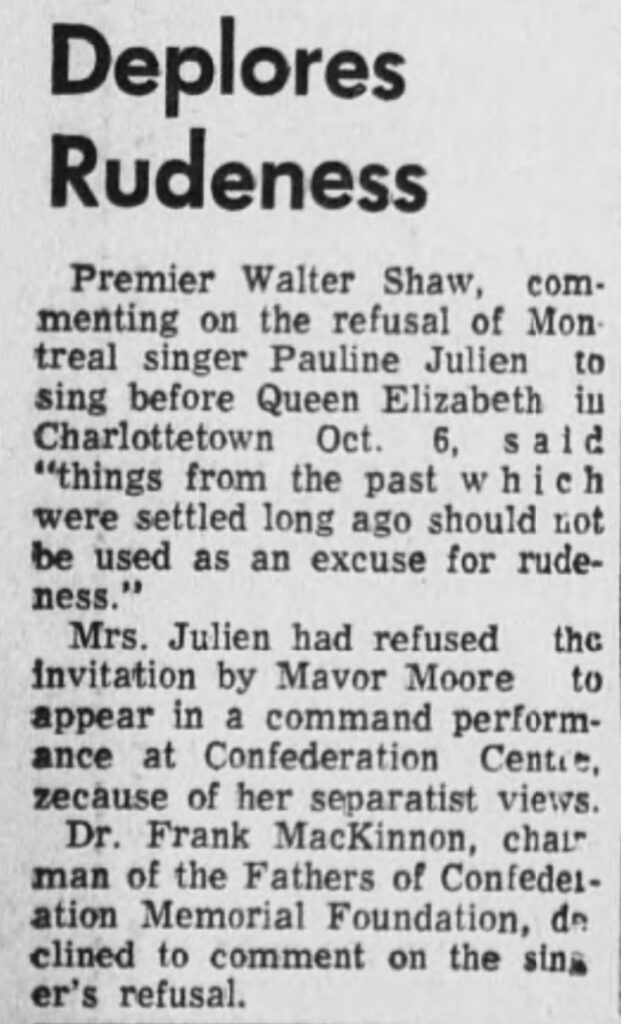
(I came to all this through a 1964 article about Quebec singer Pauline Julien declining an invitation to perform for Queen Elizabeth II during her visit to PEI in October 1964 to mark the centenary of the Charlottetown Conference. Julien’s Wikipedia entry notes she was born in TroisRivières and was “the companion of the poet and Québec provincial MLA Gérald Godin, another Trifluvian and sovereignist.” Julien and Godin were both arrested and held for eight days during the 1970 October Crisis, then released without charge. I don’t know if her refusal to sing for QEII had anything to do with her arrest under the War Measures Act, but I doubt it helped.)

The Guardian, September 21, 1964, page 2

Tremors

The Journal Pioneer is larger than The Guardian this morning, with a huge white border around each page. The Guardian is the same size as it was yesterday.

There have been a few drips of change here and there since Postmedia bought the Saltwire network in August. Yesterday the cartoons in The Guardian were in colour for the first time I can remember. The Saltwire branding has been almost completely removed from both papers.

Will Postmedia keep two papers on PEI? Only time will tell. I hope we didn’t witness the Journal supernova today.

Quilts of Valour

My mother, Vivian, received a lovely gift last week from a group of quilters in Kensington. The women are part of a volunteer program called Quilts of Valour where quilters donate their time and money to create quilts for military veterans to honour their service and provide comfort.

The program started in Edmonton in 2006 and nearly 24,000 quilts have been distributed in Canada since then. My mother is now one of the few Second World War veterans left on Prince Edward Island, and it was so thoughtful of them to honour her in this way.

Both my mother and father served in the RCAF during the Second World War. They only wore their medals on Remembrance Day and then would put them back into a cardboard box in their dresser. It was only recently I realized their medals had been mailed to them. They had filled in a form, mailed it to Ottawa, and their medals, ribbons, clasps and pin bar was sent to them. There was no presentation ceremony like you imagine from Hollywood movies, no generals, no salutes or photographs.

In contrast, this quilt presentation was a touching and personal event. One of the quilters came to our home and, in that PEI way, she happened to be someone who had gone to my high school a bit ahead of me and who had also later gotten to know my mother as they swam at the same fitness facility; she was thrilled to be able to do the presentation and we were equally pleased to see her again after many years. She explained the origins of Quilts of Valour, told about the women who had created the quilt, and then asked my mother to stand so she could wrap it around her.

My mother was amazed to receive such a beautiful gift and touched by this unexpected kindness. The colourful quilt has a soft, flannel backing and radiates the love that was put into every stitch.

A hug from a grateful nation.

A brief history of barbed wire fence telephone networks

Using barbed wire fences to create a telephone network makes so much sense, but it was new to me until I stumbled upon this fascinating article. Always enjoy reading about rural ingenuity. Favourite fact: the barbed wire networks sometimes used corn cobs, cow horns, or glass bottles as insulators!

Lori Emerson’s website seems full of interesting projects, and I especially love the table of contents from her upcoming book Other Networks: A Radical Technology Sourcebook.

New 9V Connector

I woke up the other night to a faint buzzing downstairs, looked around for the source and finally clued in it was coming from the laundry room. The little plastic water leak detector behind the washing machine was beeping away, but thankfully there was no water, so I decided it must be a low battery level warning.

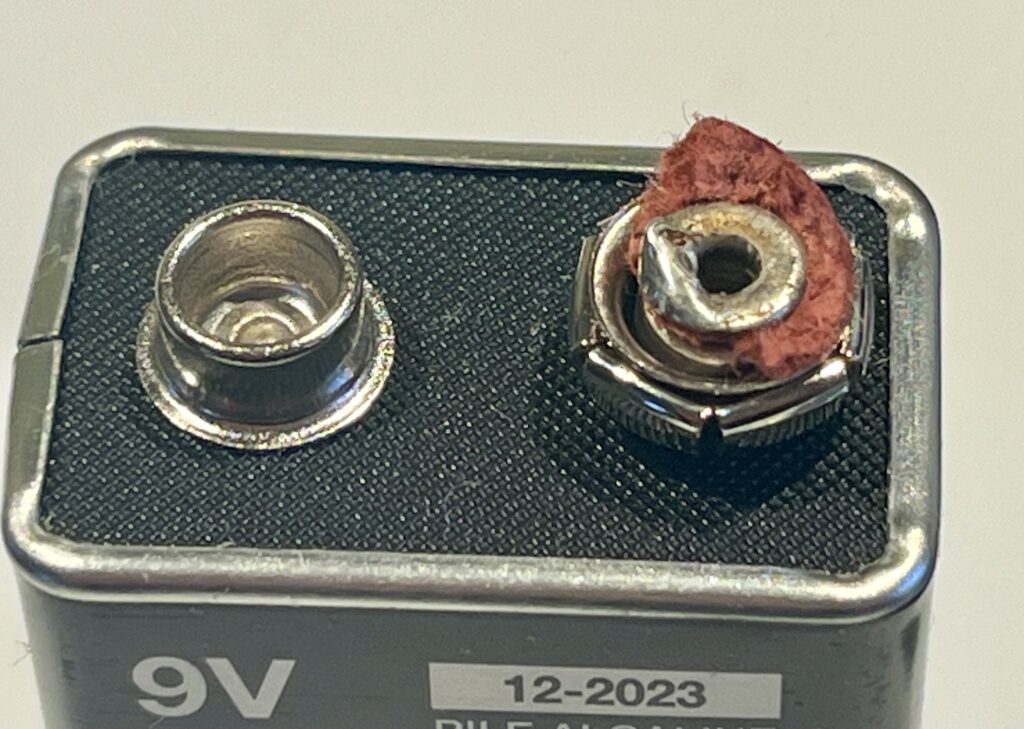
The only way to stop the noise was to remove the 9 volt battery, so found a screwdriver to pry open the detector. Still half asleep, I pulled too roughly on the battery connector and left the negative terminal stuck inside the battery. A drag, but the noise stopped, so, partly victorious, I climbed back into bed.

Le sigh
Yes, I did try to push the little terminal in, and no, it didn’t just magically reconnect to the wire.

The next day I looked up how much it was going to cost to replace the wounded little detector ($23+tax!) and wondered if I could instead buy a cheap 9V battery connector and try to fix it. Lots of them out there, but only in quantities of 5 or 10, and I couldn’t see me needing that many in this lifetime.

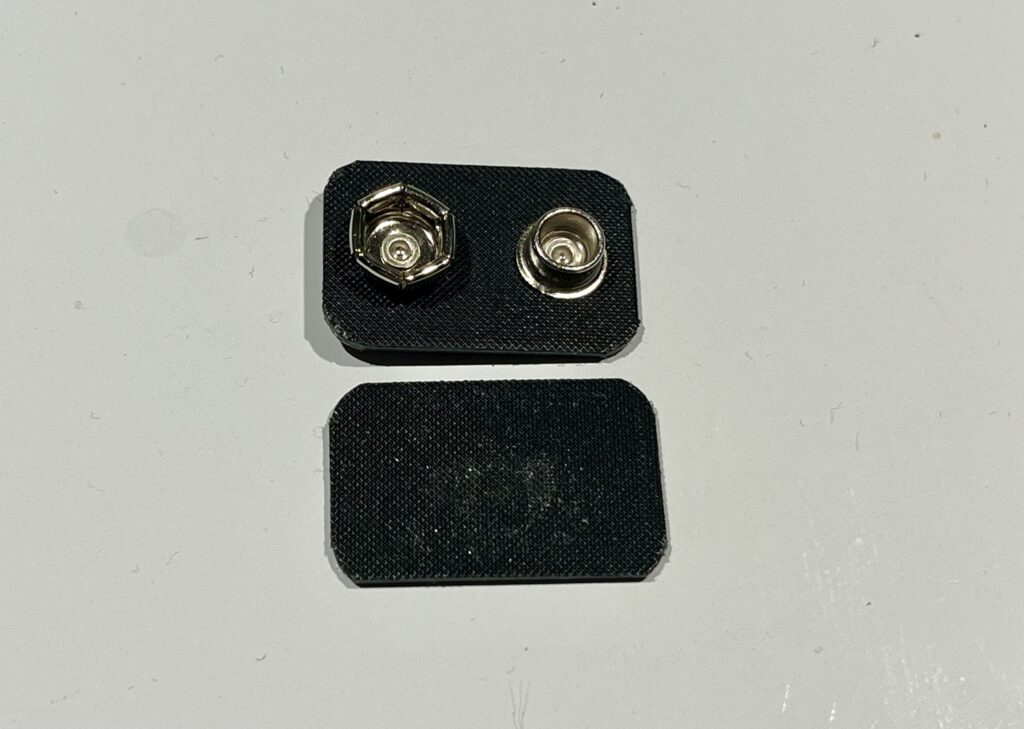
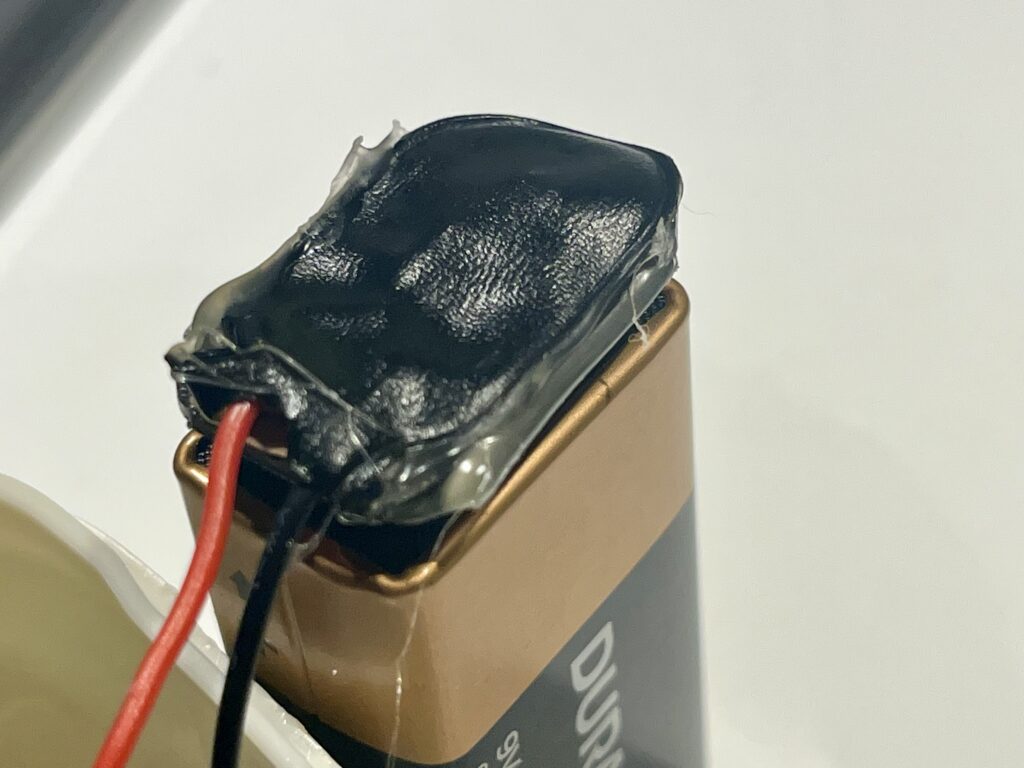
Didn’t take much internet sleuthing to discover what most of the world already knows: take the top of a dead 9V battery and use that. Hiding in plain sight.

The top and bottom of a 9V battery
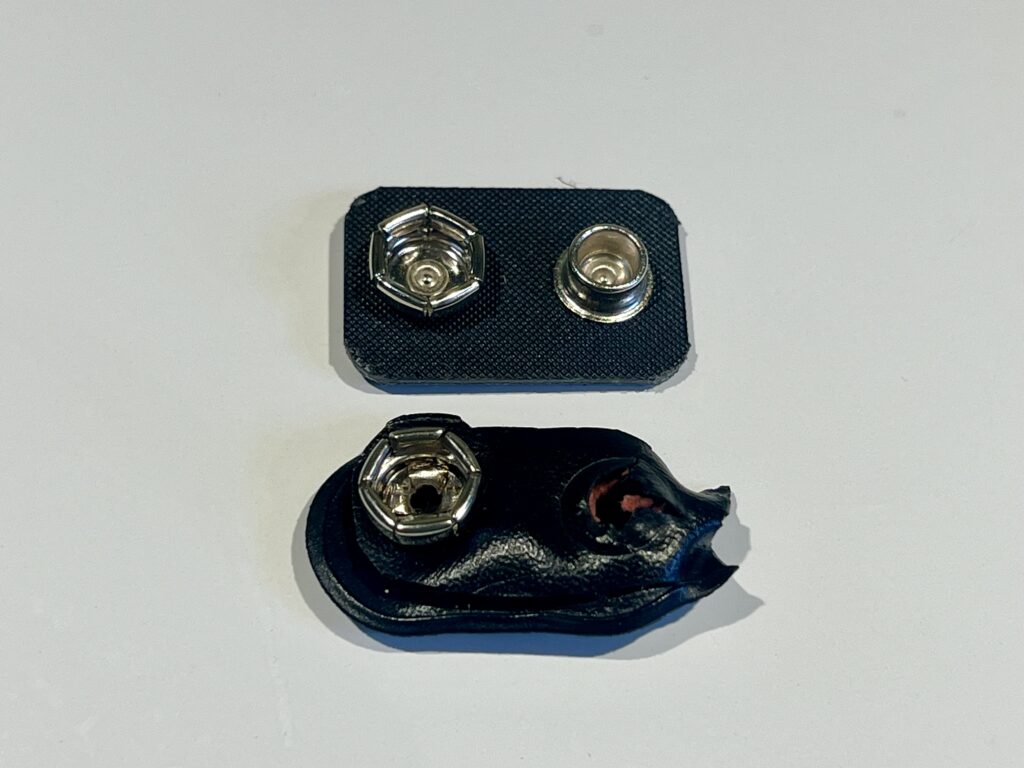
New and old
The positive wire goes to the terminal that looks like a little crown.
Reused the original connector top from the detector rather than the battery bottom as I liked that it was more flexible. Hot glued to the working bits of the connector.

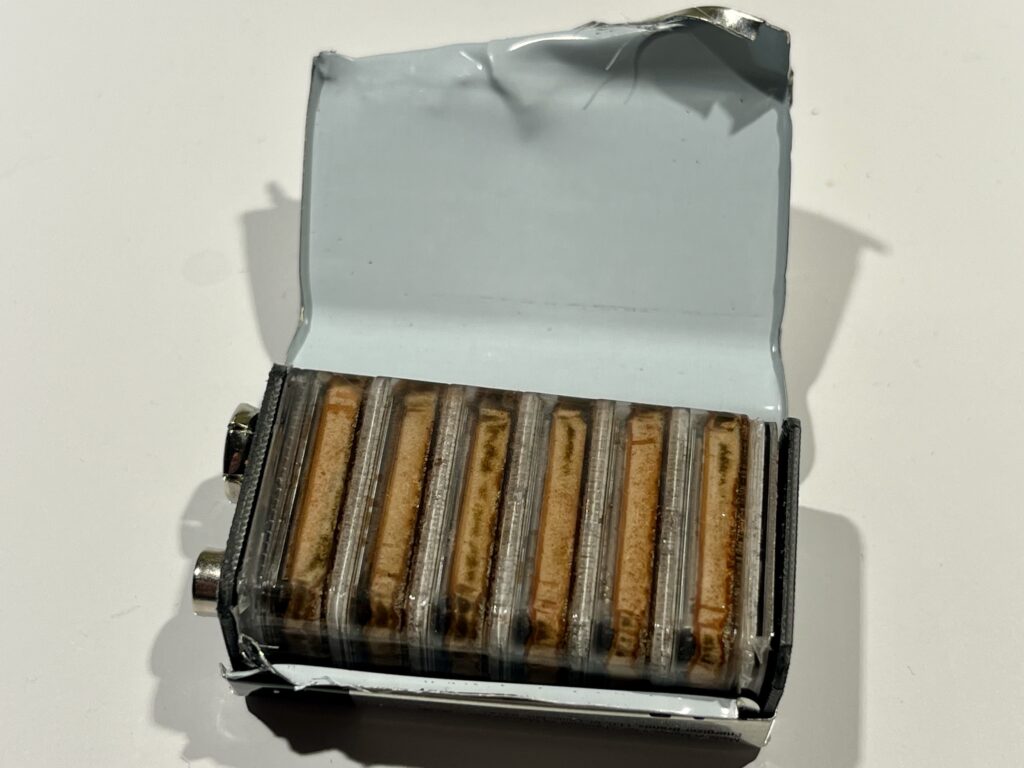
I’ve taken many things apart in my tinkering and puttering career – oh, the fizz of danger when slicing a golf ball in half and the rubber threads viciously unwound, or pulling the back off our ancient Panasonic television to see the tubes inside when I was a kid! – but it never dawned on me to carefully cut open a battery. That seemed a step too far, unnecessarily dangerous, the possibility of an explosion and/or toxic yuck oozing out and poisoning me. And possibly that can happen, so be careful.

The inside was interesting.

A couple of Instructables later and I had a fresh battery attached to the new connector on the little detector and put it back on duty. I’m a terrible solderer and it still worked, proving yet again that good enough is good enough. A very satisfying fix.

It’s easy enough to push the detector behind the washing machine, but getting it out was a hassle involving some fancy yoga moves and banging my head on the laundry tub, so the weird reused twist tie loop is my hack to give me something to hook a broom handle onto to haul it out.

Creel Flies to Paree

Creelman MacArthur built a vacation home in 1933, on the land where our house is located, when he was a member of the Canadian Senate. Before his time in Ottawa, he was a prominent Summerside businessman and a member of the provincial government.

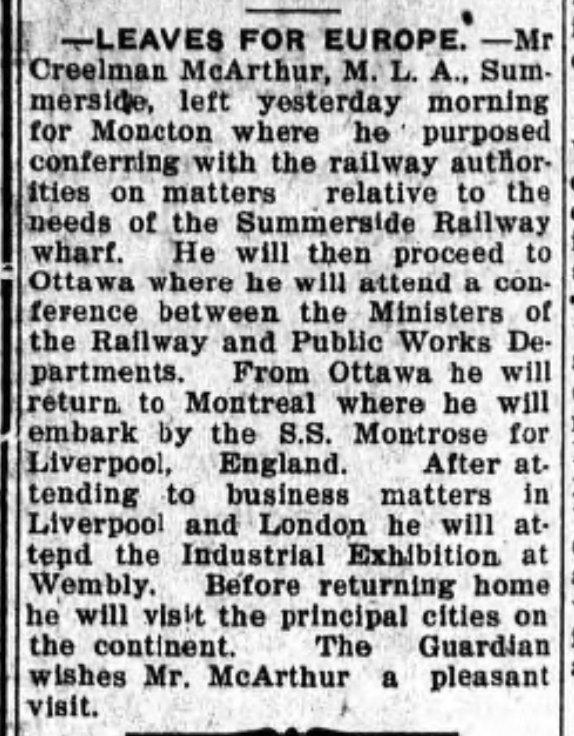
In May of 1924, MLA MacArthur left on what seems to have been a business trip to Ottawa and then on to Europe.

Charlottetown Guardian, May 10, 1924

Of note is the flight he took from London to Paris. Commercial passenger air service between London and Paris started in 1919, according to a couple of sources I found. I’m fairly certain that there was no commercial passenger aviation in our part of the world at that time, so could old Creel have been the first Prince Edward Islander to take a commercial passenger flight? I’ll claim that for him and look forward to being proven wrong.

The image of him puffing away in a pokey plane cabin listening to a tinny BBC radio broadcast while looking down as the Dover cliffs give way to the English Channel is clear in my imagination. What a trip!

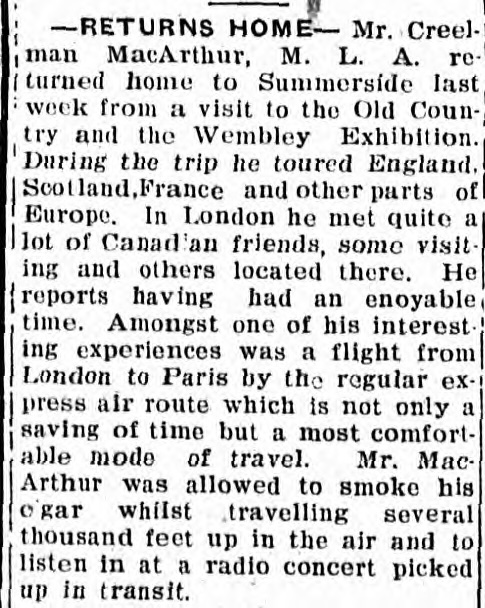
Charlottetown Guardian, July 15, 1924

—RETURNS HOME— Mr. Creelman MacArthur, M. L. A. returned home to Summerside last week from a visit to the Old Country and the Wembley Exhibition. During the trip he toured England. Scotland, France and other parts of Europe. In London he met quite a lot of Canadian friends, some visiting and others located there. He reports having had an enoyable time. Amongst one of his interesting experiences was a flight from London to Paris by the regular express air route which is not only a saving of time but a most comfortable mode of travel. Mr. MacArthur was allowed to smoke his cigar whilst travelling several thousand feet up in the air and to listen in at a radio concert picked up in transit.

Tourism Insert August 1949

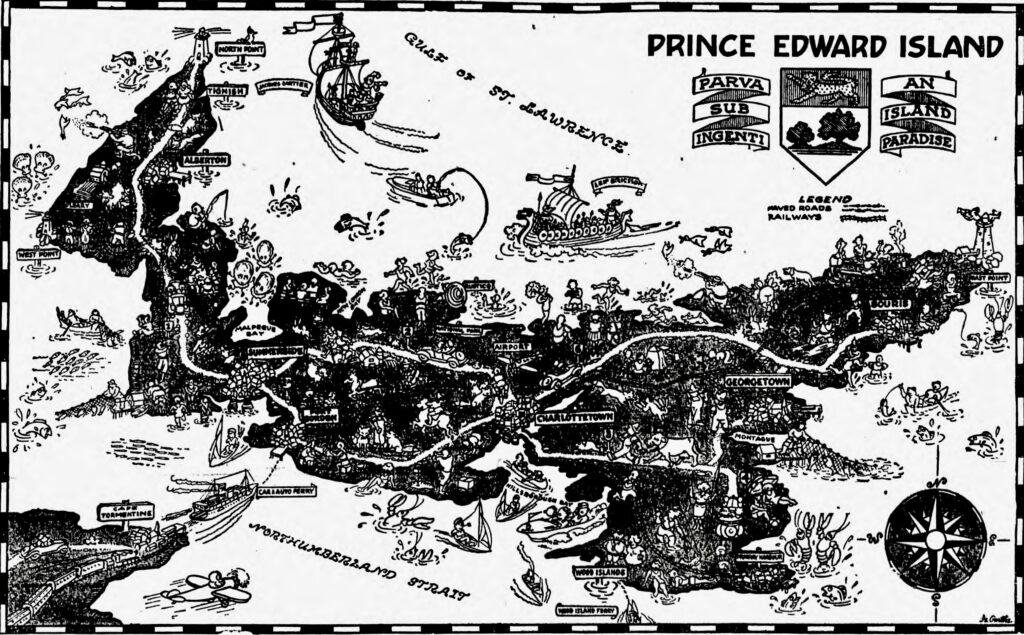
I am in love with this busy map from a special tourism section in the August 13, 1949 edition of the Charlottetown Guardian. It reminds me of picture books I had as a child, lots of busy vignettes, new details emerging with every viewing. And Vikings speeding towards PEI!

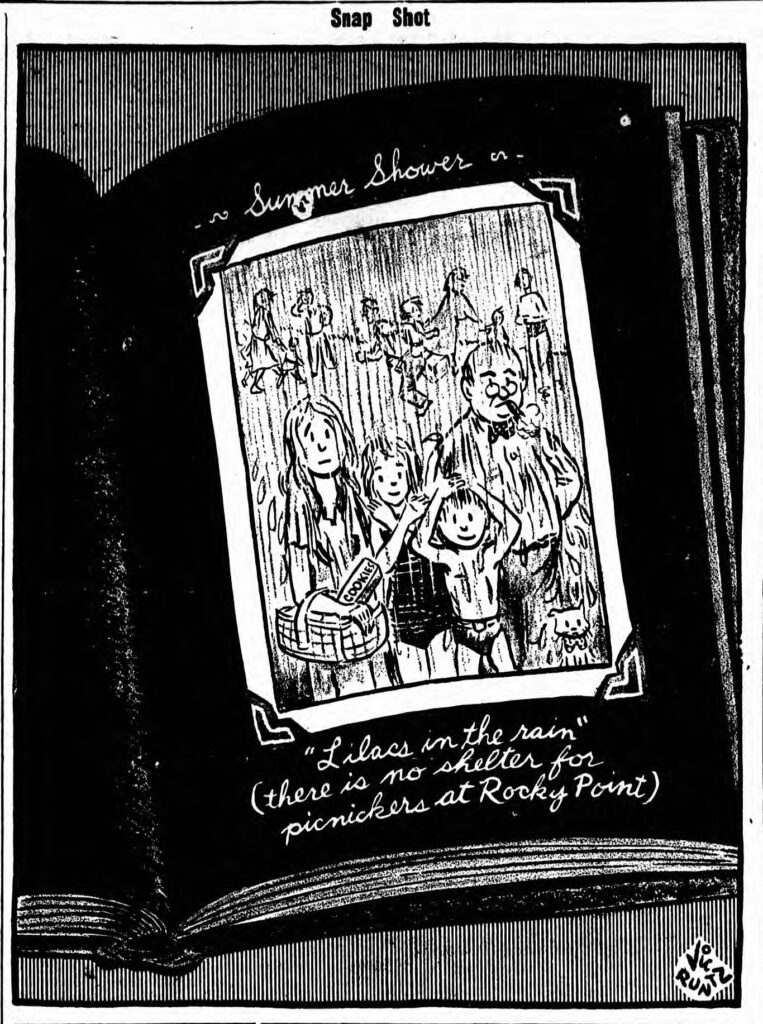
I can’t read the signature at the lower right, but it could be the work of the Guardian’s cartoonist at that time, Vic Runtz, who did sign some of the lovely drawings included in the rest of the special section. Catherine Hennessey wrote a beautiful tribute to him upon his death in 2001. He was a very fine editorial cartoonist and I hope his work has been or will be exhibited on PEI.

Vic Runtz editorial cartoon August 13, 1949 Charlottetown Guardian, including his signature cat wearing a bowtie, possibly to give some balance to the rah-rah tourism insert.
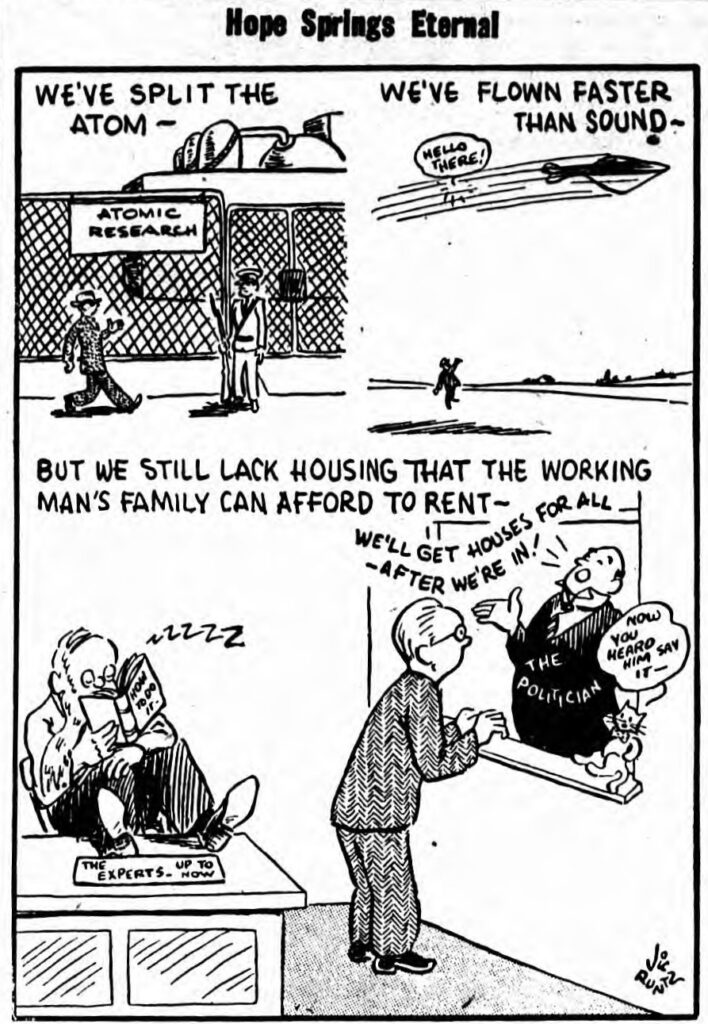
Vic Runtz editorial cartoon in the June 21,1949 Charlottetown Guardian reacting to promises being made in that year’s Canadian federal election, promises still being made (and broken) today.