Category Archives: Nature

Holman’s Island

A friend and I joined a walk around Holman’s Island in Bedeque Bay that was sponsored by the Bedeque Area Historical Museum and led by the always-interesting and gracious Doug Sobey, who is president of the historical society that runs the museum.

About a dozen of us met at the museum last Tuesday and drove a few kilometres to a private driveway where the museum had permission of kind cottage owners for us to cross their yard to the shore. The walks are timed to coincide with the lowest tides, so we easily waded through ankle-deep water on a sandbar to the island. Doug gave a fantastic overview of the Mi’kmaq and settler history of Bedeque Bay and the city of Summerside, and then we started our circumnavigation.
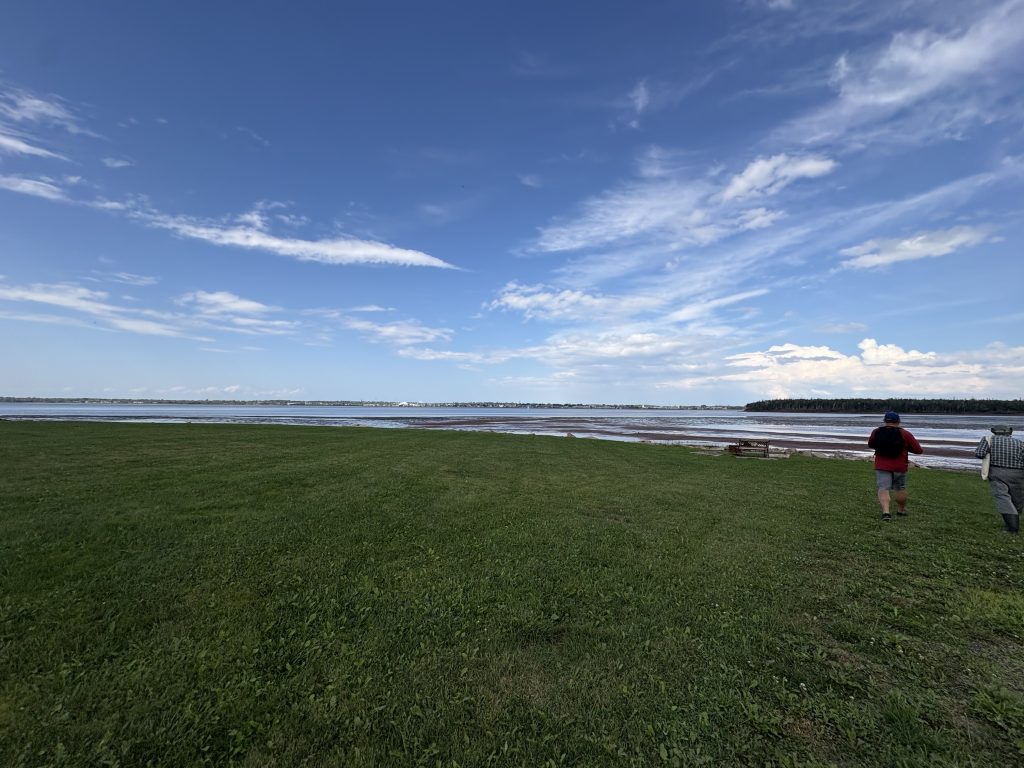
White clouds in a blue sky, with two people on the right hand side walking on green grass towards water.
Starting the walk to Holman’s Island.

Now owned by the Nature Conservancy of Canada, Holman’s Island is most notable as the site of a 125-bed hotel that operated for five years in the 1870s and closed due to financial difficulties, the building burning in 1904. Doug said there are depressions in the ground where the hotel foundations were, but nothing else is left of the hotel and the island has reverted to forest.

We didn’t venture into the forest, but the beach walk was beautiful, though not really much different than any other PEI beach; the real delight was in finally being on this little island that had been pointed out to me since childhood but that I had never had the chance to visit.

The western and northern sides of the island have steep cliffs, while the east and south are much lower and it would be easy to walk from the beach into the forest. There were lots of empty oyster on the shore, possibly due to the die-off of oysters from two diseases, MSX and Dermo, that have crippled our oyster industry.

It has become more difficult over the years to find sea glass on PEI beaches, which, it is hoped, is mostly because we are better at recycling and properly disposing of waste, so it was fun to look for glass on this more inaccessible location. I found a few lovely bits and pieces on the east side of the island, all of it still pretty pointy as the wave action in sheltered Bedeque Bay isn’t as scouring as ocean waves.
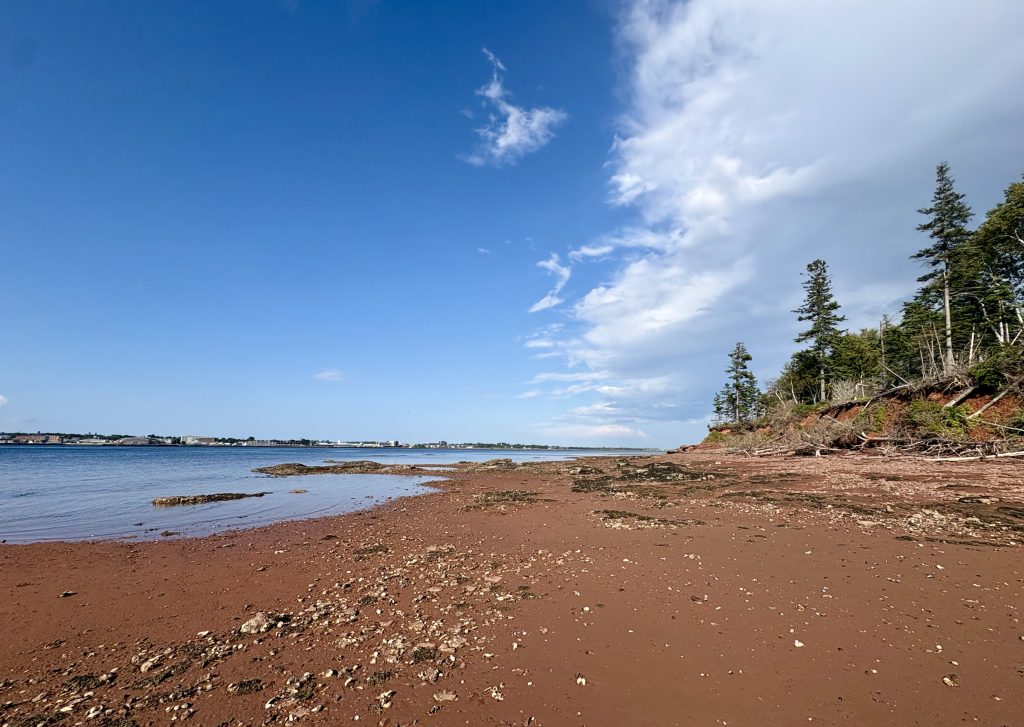
A blue sky with white and grey clouds at the top, trees on a cliff on the right, distant buildings on the left, water in the middle, and a red sand beach covered with shells at the bottom.
The beach on the west side of the island, with Summerside in the background.

And then, sitting on a pile of rocks high up on the beach, I spotted what is likely to be the best piece of sea glass I will ever find: a light-green bottle stopper. At first I thought it had to be plastic as it was so perfect, but it gave a satisfying little tink when I tapped it against some other glass and my beach combing heart soared.

Maybe it’s the stopper from a cruet tossed from the long-gone hotel, a medicine bottle top or, heaven forfend, the stopper of a little bottle of alcohol. Hard to say, but now it sits on the windowsill next to my desk, catching the sun as it did for decades in Bedeque Bay, same sun, different view. I finally made it to Holman’s Island, and it gave me a treasure.
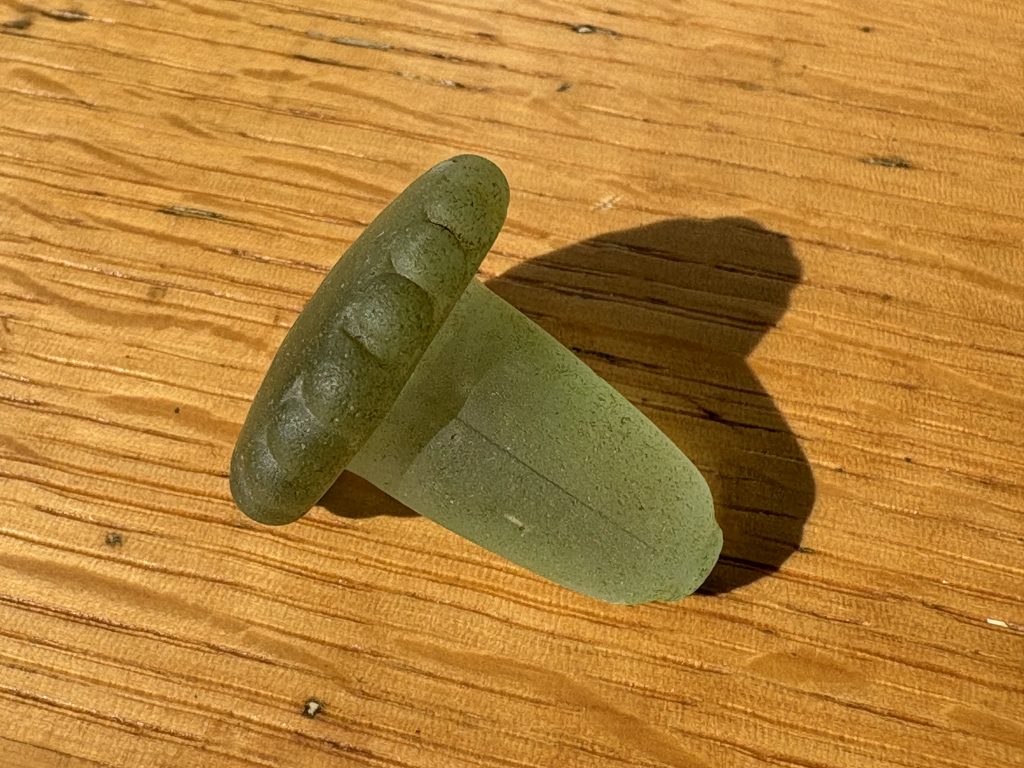
A light-green glass bottle stopper on a wooden table.
The green glass stopper.
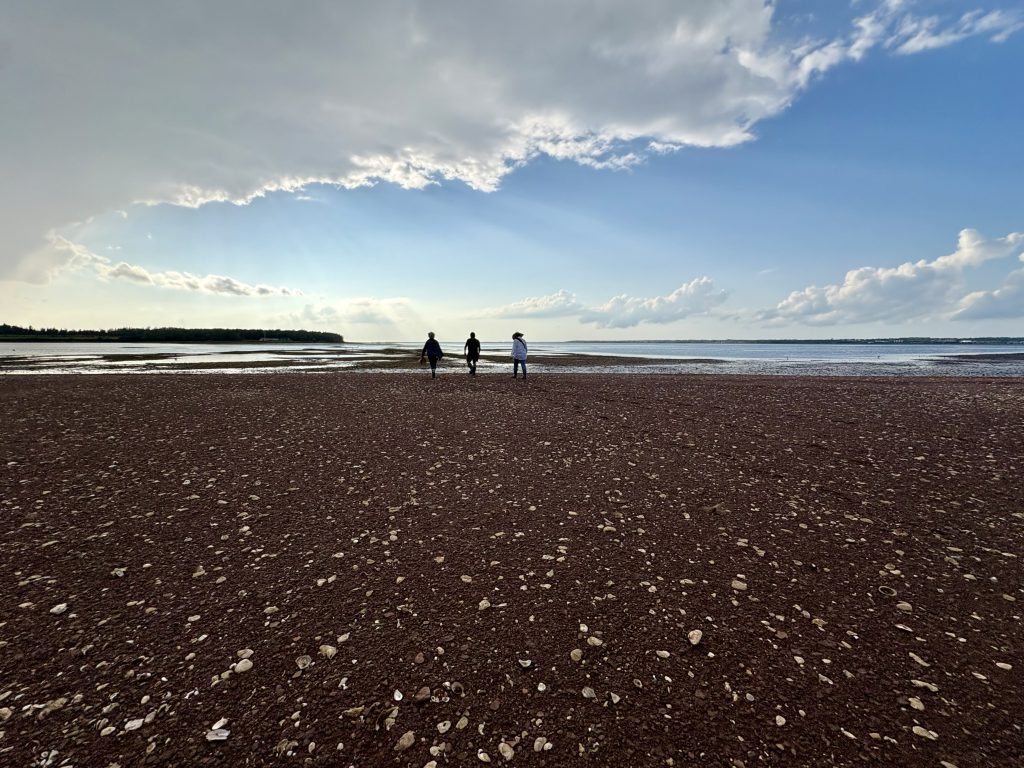
Three people walking on a red sand beach that has many white shells on it. At the top are white-and-grey clouds and blue sky.
The end of the walk. We narrowly missed a big thunderstorm earlier in the day, and the lingering clouds were spectacular.

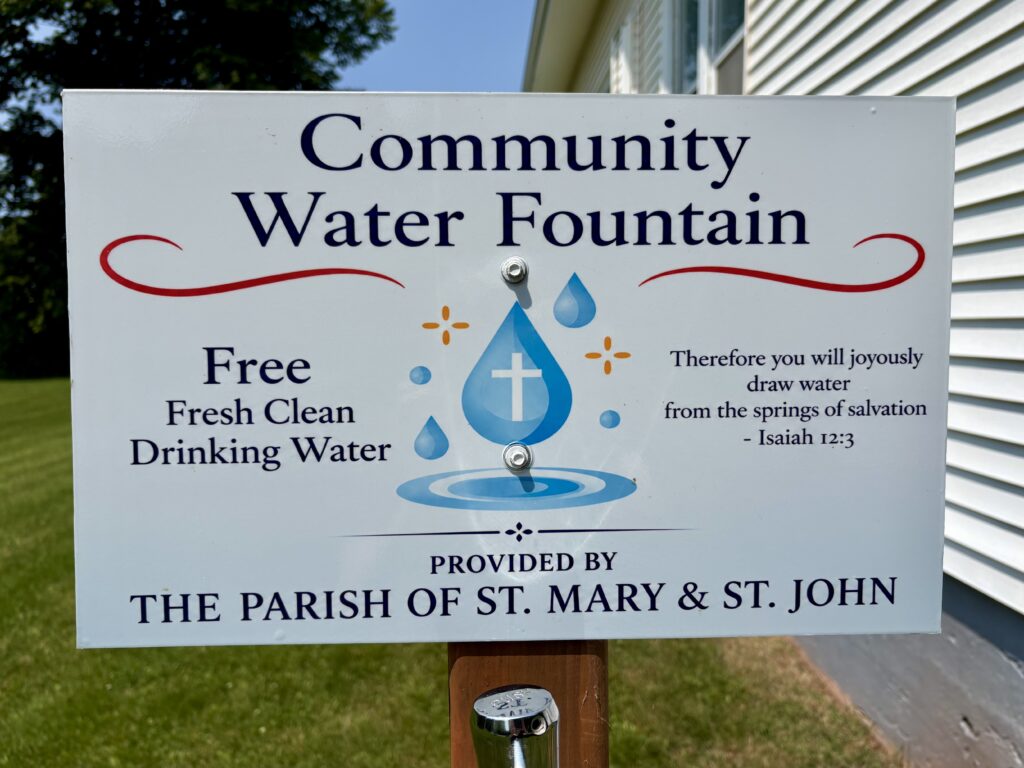
Therefore you will joyously draw water

Lunch today was a Famous Pepper’s Spud Islander pizza (yes, it has slices of potato on it). We got one to go from FP’s new Summerside location and decided to find a shady spot in Memorial Park to snarf it down.

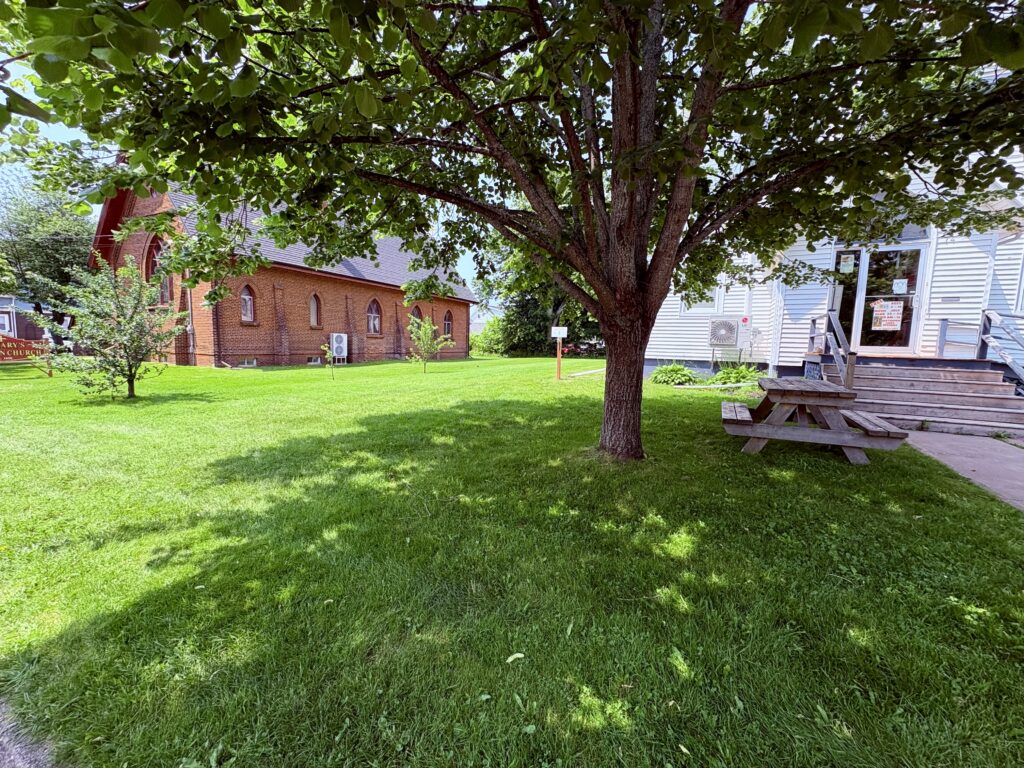
St. Mary’s Anglican Church on the left and the church hall on the right, with a brown picnic table under a tree in front of the hall and green grass.
St. Mary’s Church and Hall

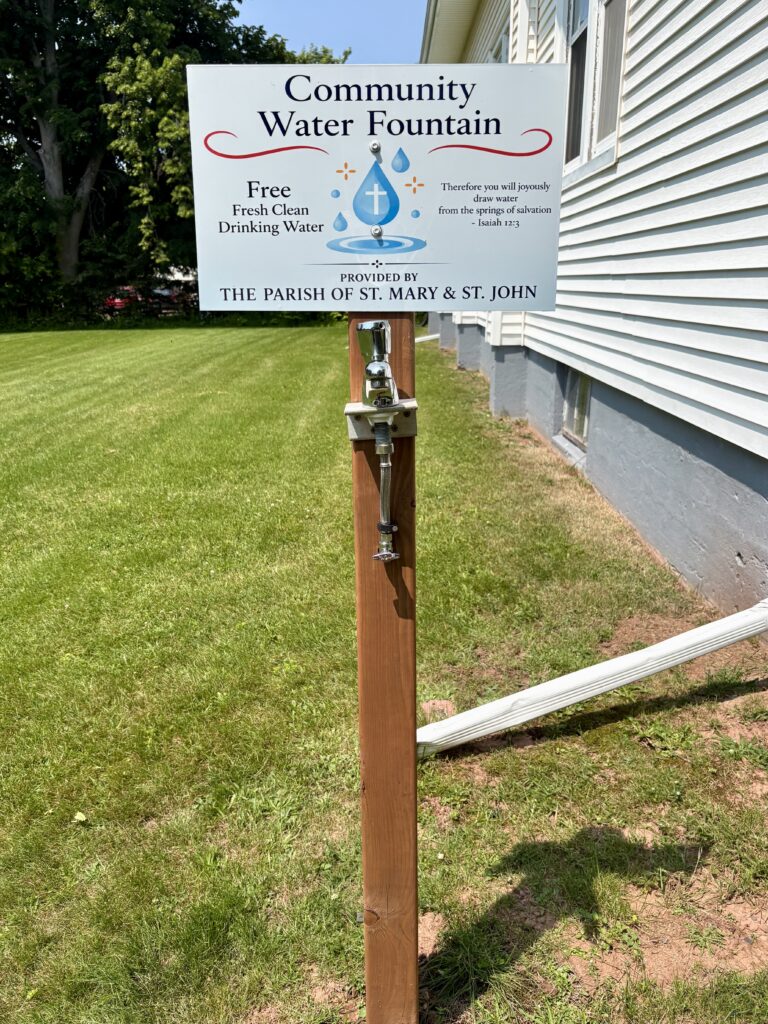
We parked in front of St. Mary’s Church Hall across from the park and spied a nice little picnic table under a tree in front of the hall. Next to it was what looks like a newly installed water tap, free for all to use, and I would guess specifically targeted at unhoused people who often use the park as a gathering place. Pizza consumed, I topped up my water bottle, and we were on our way.

Seeing this thoughtful act of love and care for others filled me up way more than the pizza did. I think if church had included this type of social action when I was a young person, I could very well have still been a believer.

A wooden post that has a water tap attached and a sign that reads: Community Water Fountain. Free Fresh Clean Drinking Water. Therefore you will joyously draw water from the spring of salvation. Isaiah 12:3 Provided by the Parish of St. Mary and St. John.
A sign that reads: Community Water Fountain. Free Fresh Clean Drinking Water. Therefore you will joyously draw water from the spring of salvation. Isaiah 12:3 Provided by the Parish of St. Mary and St. John.

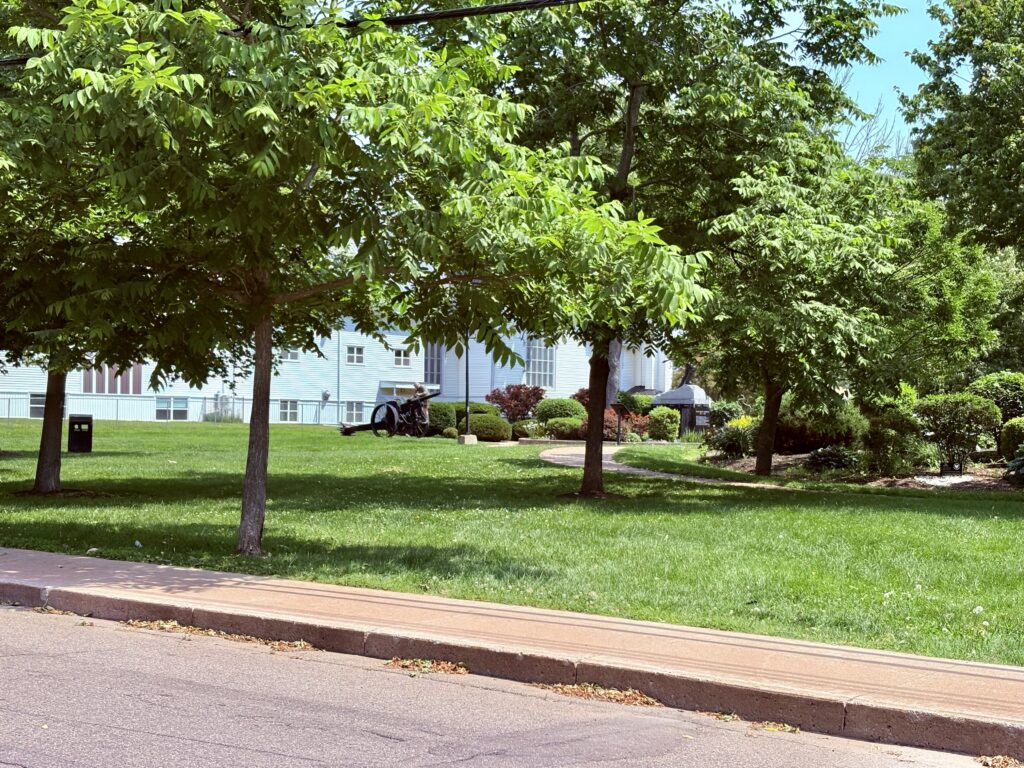
If you are looking for a quiet, green, welcoming space in Summerside, I can’t think of a better spot.

A park with green grass, trees and shrubs, a sidewalk in the foreground, a white church in the background and a person painting a canon in the middle of the photo.
Memorial Park. Someone came along and started to paint a canon, as you do.

Birch Sap

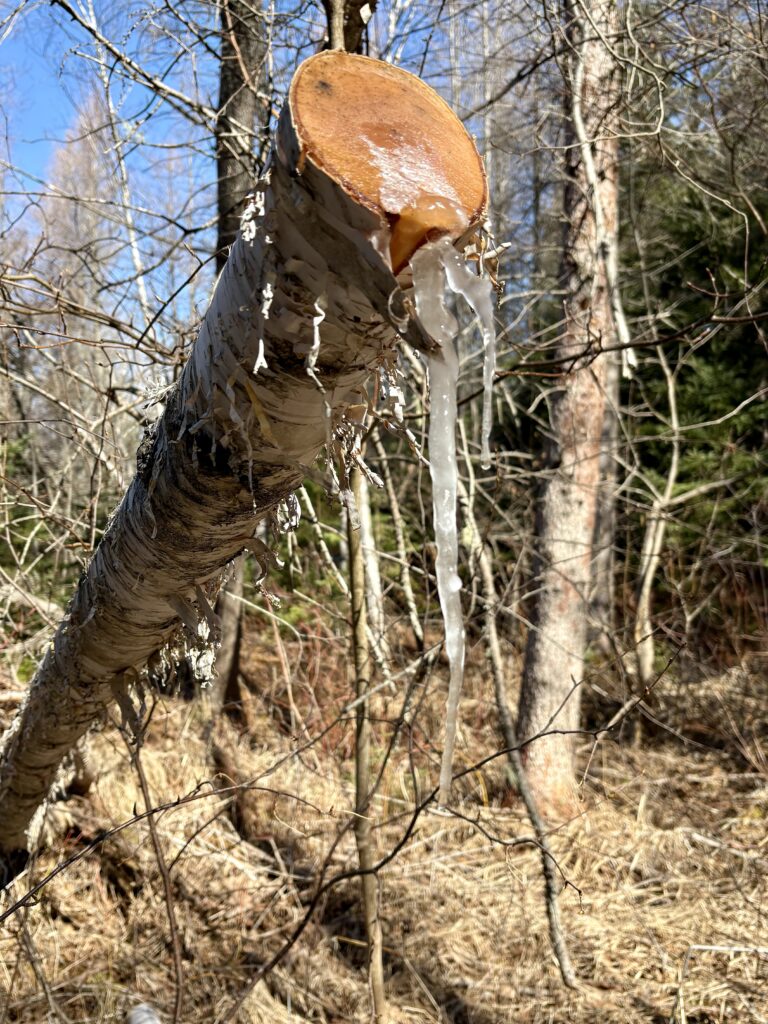
On an early-morning amble through the decommissioned shale pit near our house today, I noticed a cloudly icicle hanging from the cut end of a tree. The maskwi (white birch) had toppled over sometime last year and I cut it in the winter so I could use the path. I didn’t bother severing the trunk from the ground, so it was still alive. The temperatures had fallen to -5C overnight, so the sap that was rising froze as it dripped.

I broke off a piece and popped it in my mouth, and there was the faintest sweetness there. Collect enough and boil it down and a sweet syrup can be created.

I have never seen this before, a sapicle. I’ve seen lots of maskwi stumps, but it must have been the angle that the trunk was leaning that allowed this sweet phenomenon to occur.

Every time I go for a walk in the forest next to our house, I see something new. Every time. You might think that’s an exaggeration, that I can still find something new here after 60 years, but I do, and it still surprises me. Something as simple as some dripping sap can connect me to the gifts of the earth and the power of the sun and the magic of walking slowly and looking with newly-opened morning eyes.

An icicle made of sap hanging from the cut end of a maskwi/white birch tree, with other trees standing behind it.

To The Woods

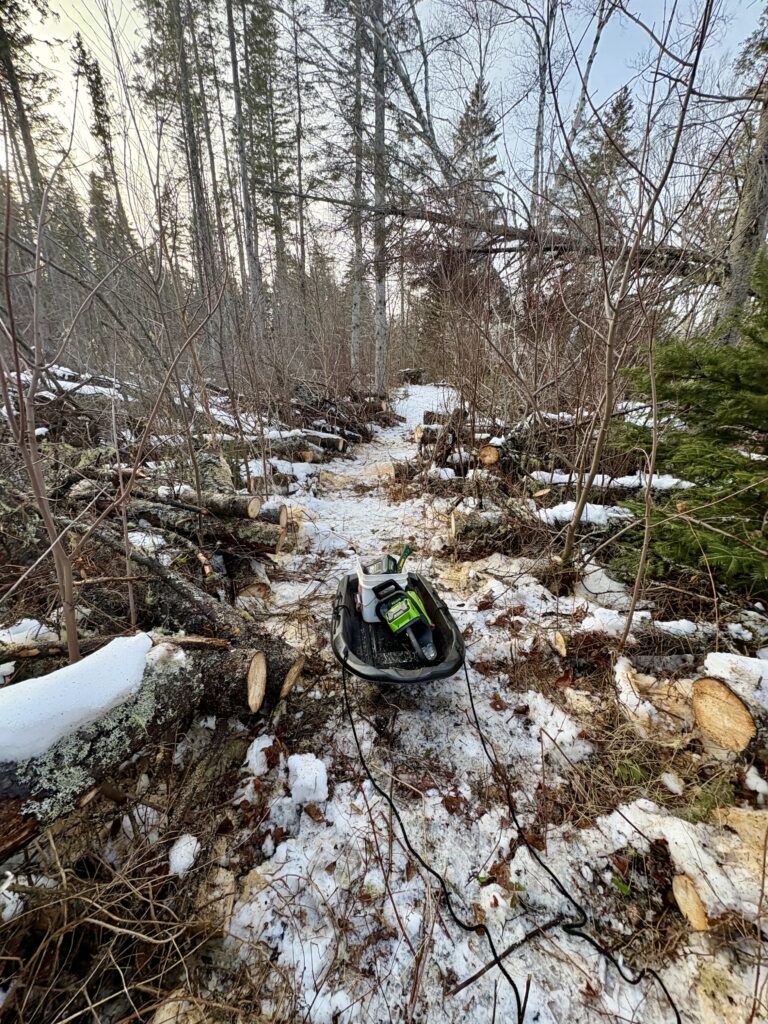
Today our weather station recorded a high of +10C, which is unusually high for January. I spent the afternoon in the forest clearing trails that were first partly blocked by trees that fell during a storm called Dorian in 2019 followed by an even more severe loss of trees from storm Fiona in 2022. Looking after my mother took priority over the past few years and I just never had much time to get out with a chainsaw.

Mild weather and little snow on the ground means I have quickly pushed through some big tangles of trees the past few days and am now making good progress.

Black sleigh holding a green chainsaw and white bucket sitting on a snow-covered forest trail with cut logs on either side and standing trees in the background.
My little sleigh with chainsaw and supplies sitting in a newly-cleared section of trail.

The fresh air was wonderful, one of the many joys of a battery-operated chainsaw, though I did fire up my ancient Stihl for a bit to tackle some bigger trees. I haven’t used it much in the past couple of years and was surprised that it sparked up pretty quickly, even using some old gas. I should be nicer to it.

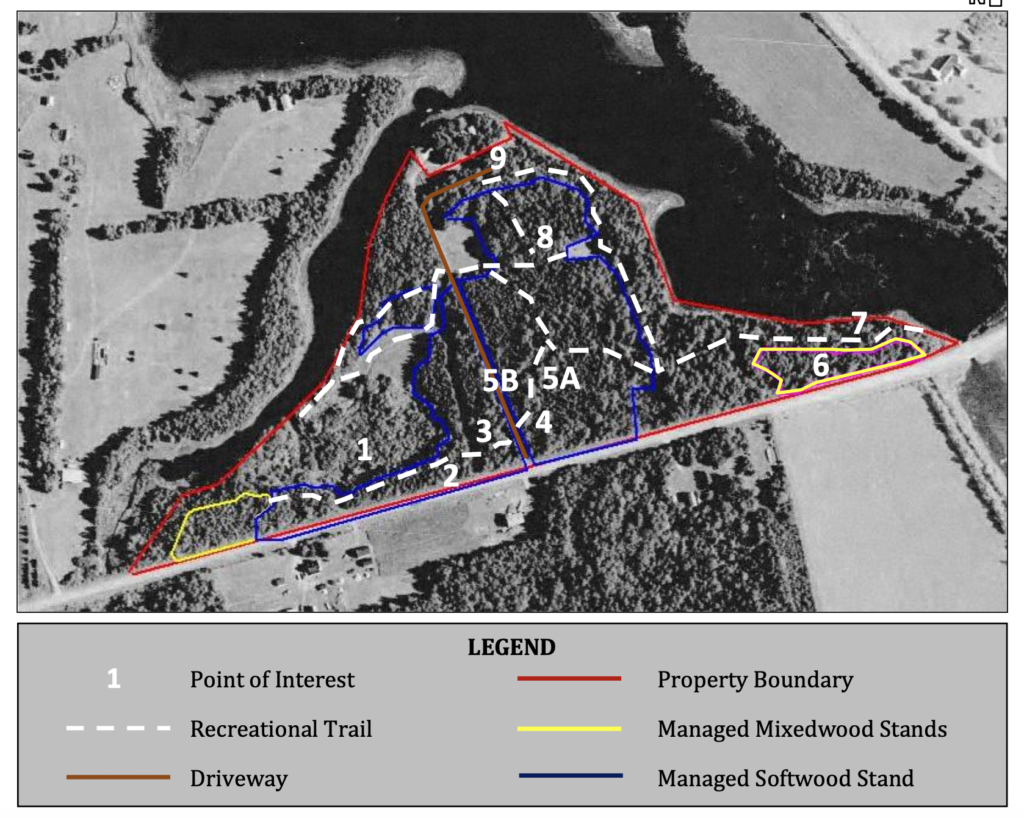
Black and white map of the land we occupy showing trails in white.
Map from a field day held here in 2009. Today I was working near #8 and then started the section halfway between 5A and 6.

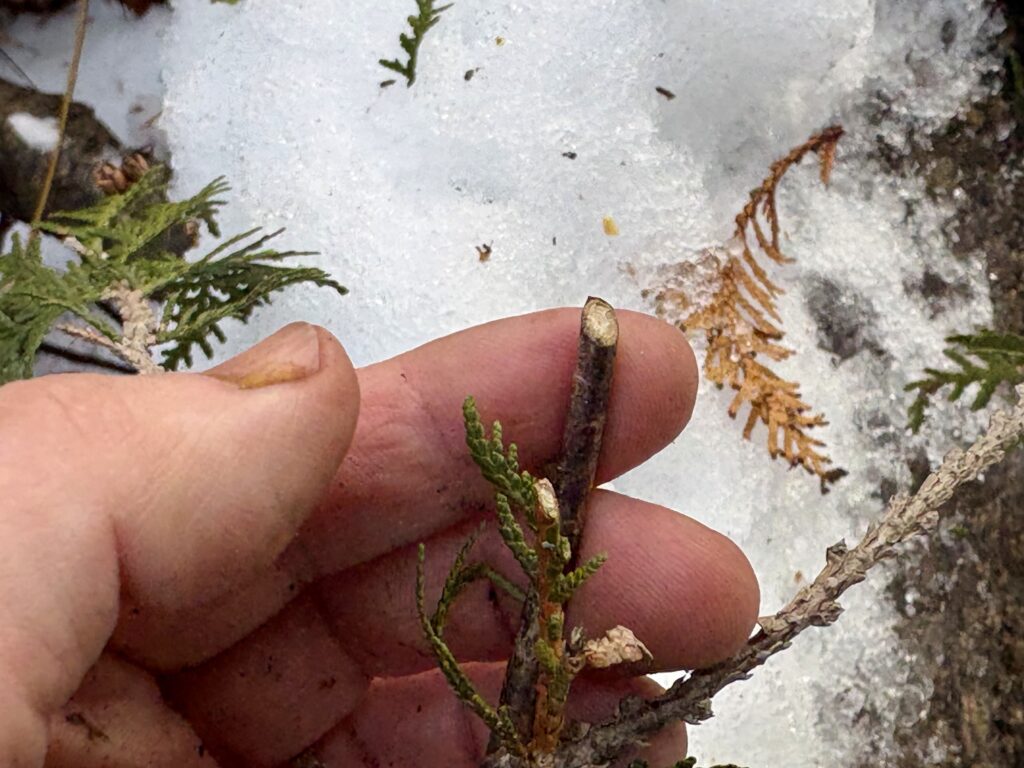
Today I found evidence that snowshoe hares somehow get onto fallen logs to get close to the tender ends of cedar trees. After many years of seeing very few hares, there has been a spike in the past couple of years and the forest is filled with tracks. I’m guessing there are more places for them to hide in all the fallen trees and brush, but I also remember old timers talking about a cycle “rabbits”, an ebb and flow of them over a decade or more. We are certainly at a peak.

The end of a cedar branch that has been eaten off by a snowshoe hair being held in the hands of a fair-skinned person with snow in the background.
Snowshoe hare food.
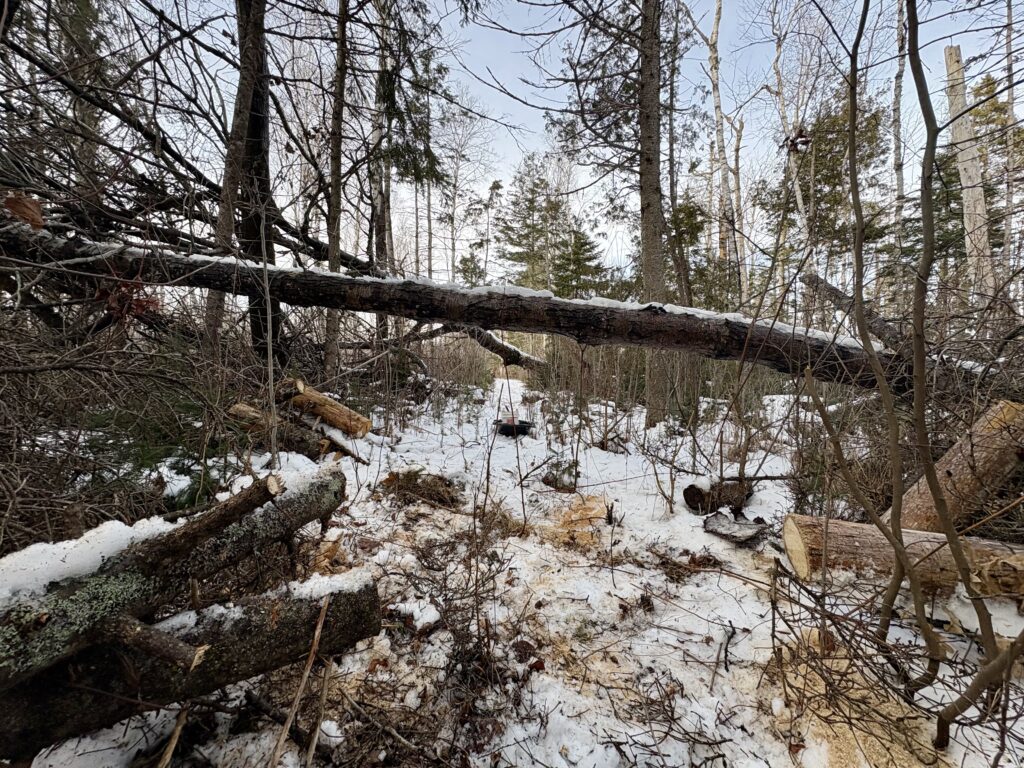
A large tree leaning across a forest path, with cut logs on either side of a snow-covered forest trail and standing trees behind.
A couple of large trembling aspen that I can easily climb under and may have to wait for someone with more nerve and a bigger chainsaw to tackle.
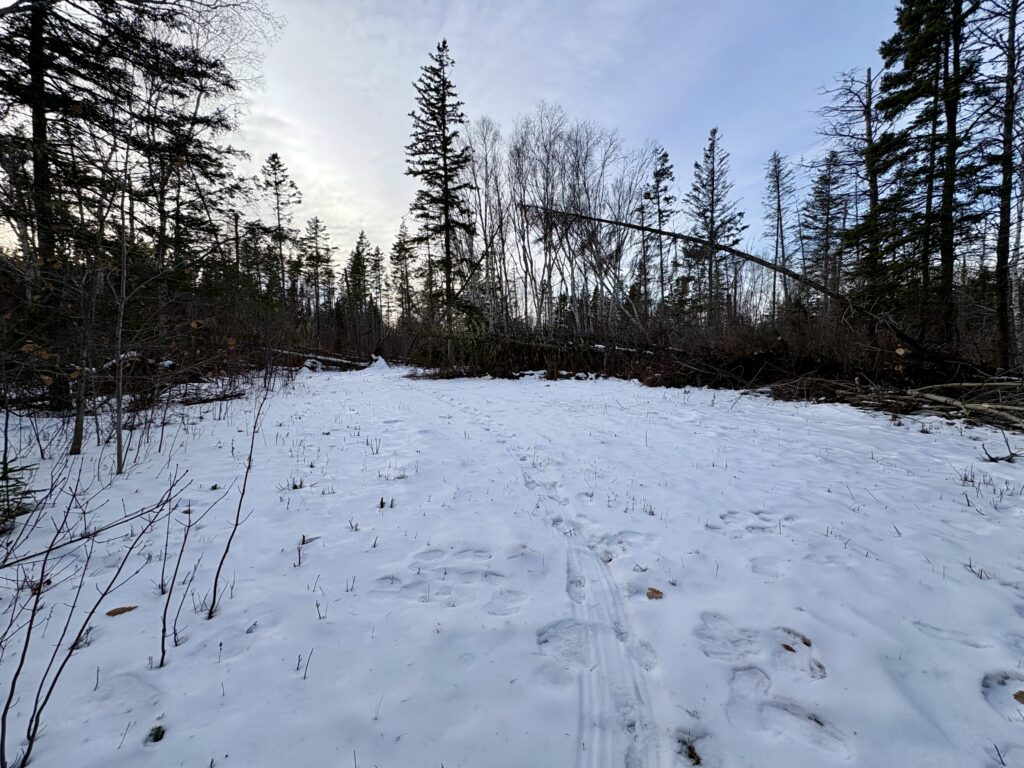
Snow in the foreground, sky in the background, and both standing and fallen trees in the middle.
Heading home. Still lots to be done.

Pleasant View Cedars

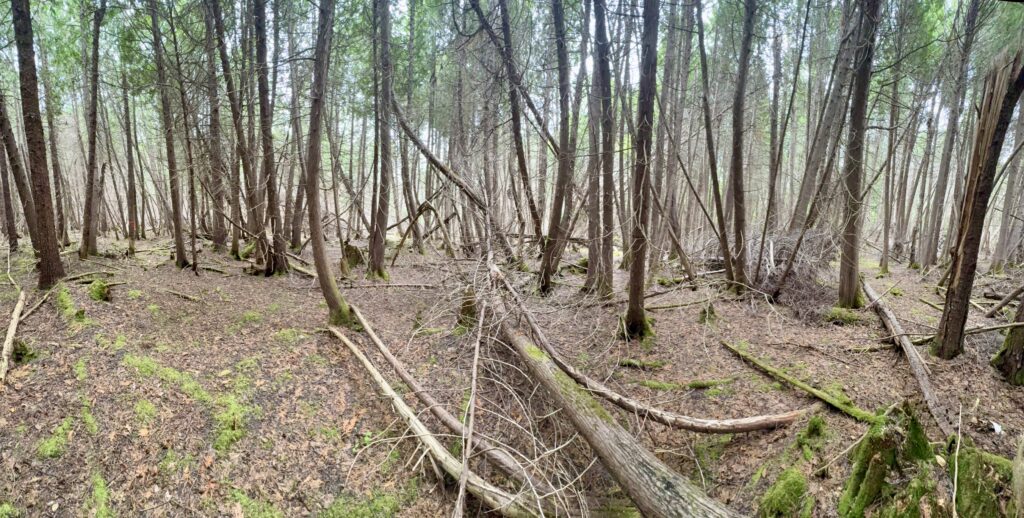
Today I joined a Nature PEI walk through Pleasant View Cedars Natural Area near Miminegash. I understood we would see some large, old eastern white cedars, but wasn’t prepared for how breathtakingly enormous the stand was! At one point in the middle, all I could see around me was cedar, something I’ve never experienced before. It is a rare landscape on our tiny Island.

I always find it difficult to photograph forests, but trust me, that’s a lot of cedar!

There is a cedar stand on the property we occupy, an area that was too wet to be farmed, and some of the trees there are very old. The walls of our log cabin are unpeeled cedar logs, a few of which probably came from that cedar stand. Some of my earliest memories are waking early from sleep and staring at the patterns on the bark. I could see faces in the knots, would pull at the stray threads of bark that were peeling off. I was partly raised in the comfort and solidity of cedar trees.

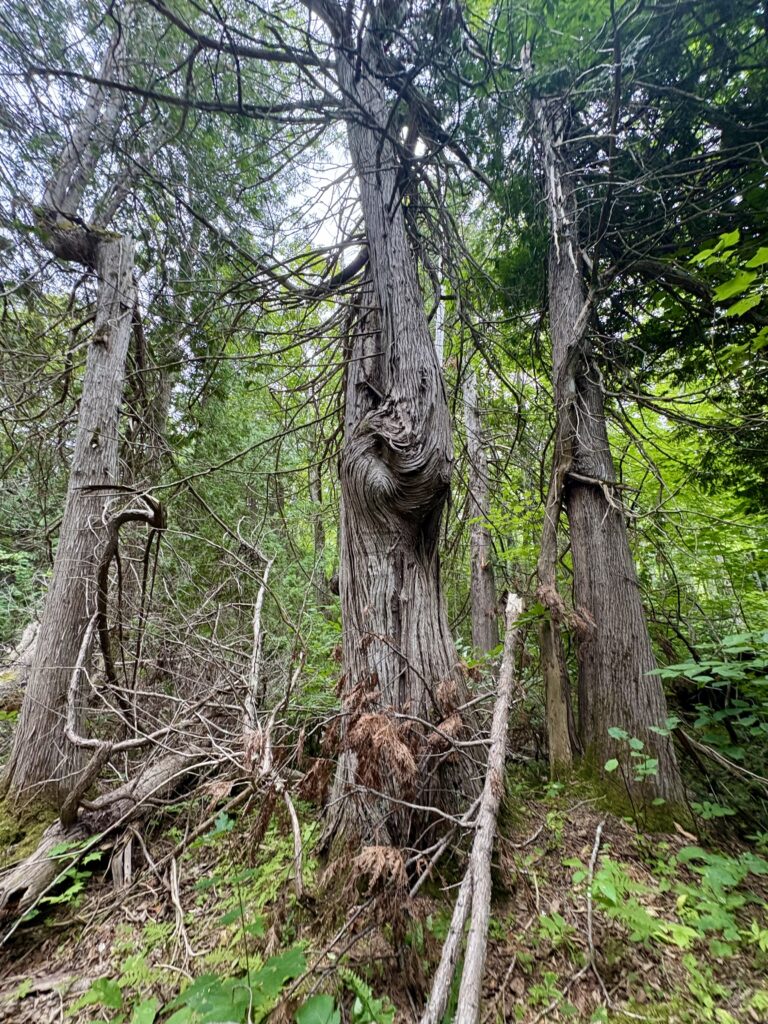
The drought we’ve been experiencing meant we were walking over dry land that should really have been quite boggy, which was good for us but possibly uncomfortable for the trees. There was very little undergrowth due to the tall canopy. It was a cloudy morning, so it was very dark and quiet as we walked through. I sort of felt like I was in a fairytale woods – Hansel and Gretel came to mind, as it was a little spooky, with odd-shaped trees all around.

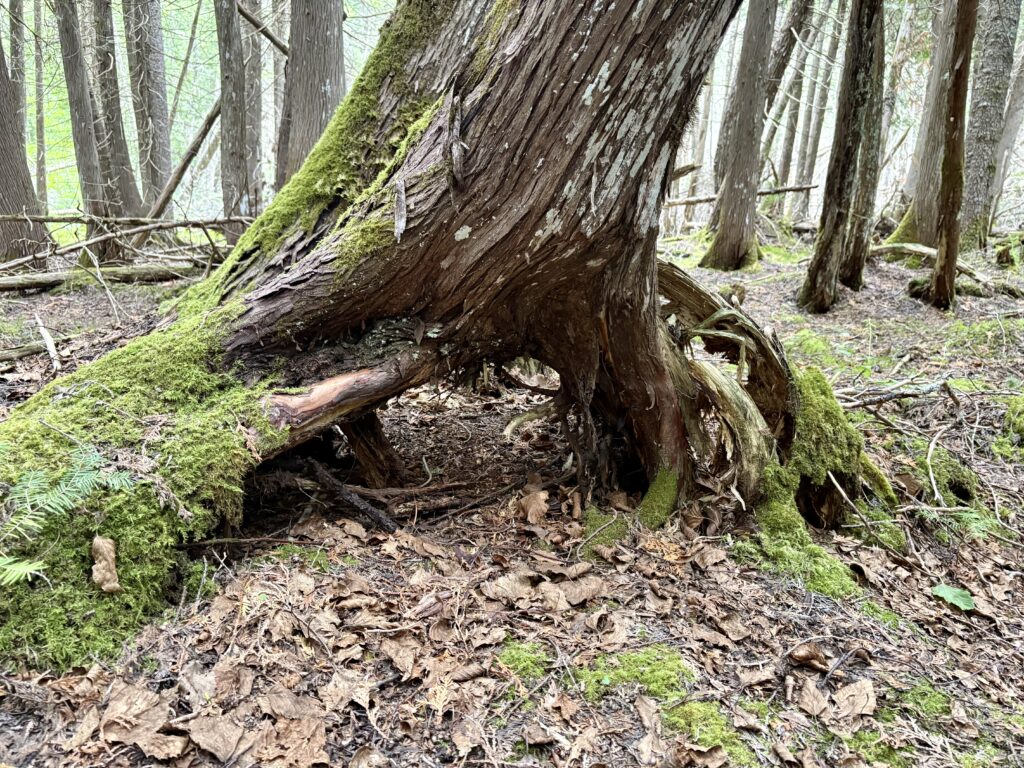
There were many trees that looked like they had legs and could walk! This perfectly-healthy cedar would have started life growing on top of a dead fallen tree, which eventually rotted away leaving this space at the bottom.

Our guides, Mark Arsenault from the provincial government forestry division, and Rosemary Curley, former provincial biologist and Nature PEI president, were genial hosts and excellent teachers. I’ve been on many walks with Rosemary, mostly scouting for mushrooms, and am constantly impressed and inspired by her vast knowledge of our province’s natural areas and her life-long passion for sharing her love of the natural world with others. I highly recommend spending time with her whenever you get a chance.

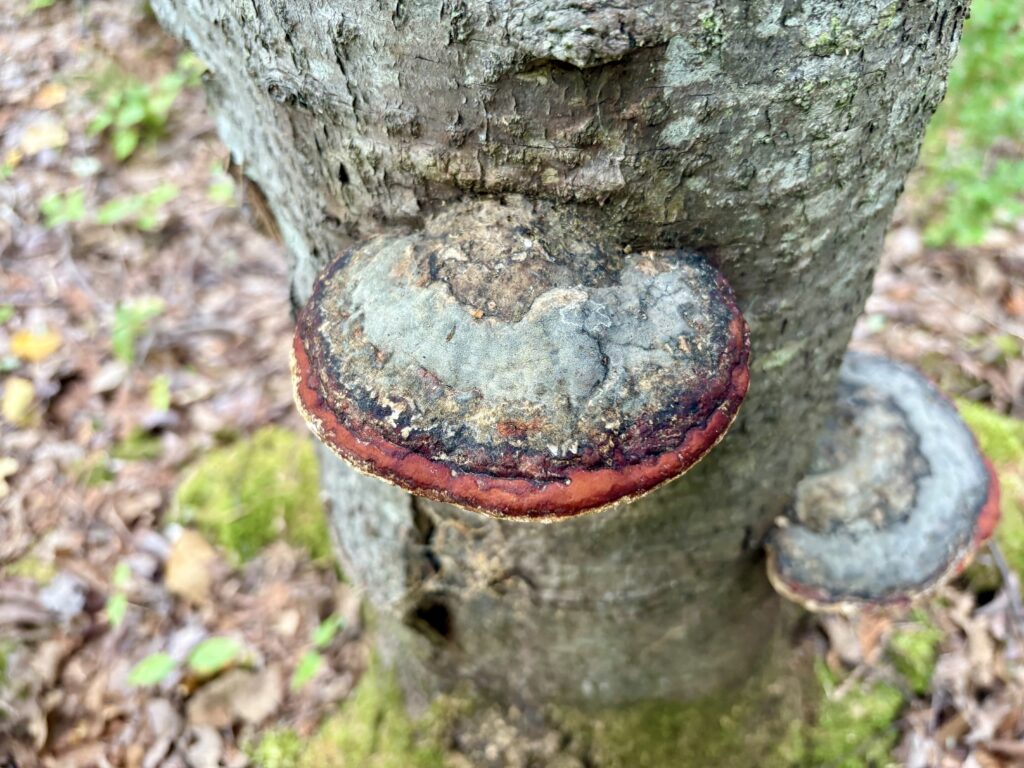
Northern red belt fungus

Nature PEI hold many field events each year, and they all seem to be free, but a membership to support their important work is only $20 a year, which includes a quarterly newsletter. This morning’s hike was easily worth 10 times this year’s fee. I’ll never forget being surrounded by those trees.

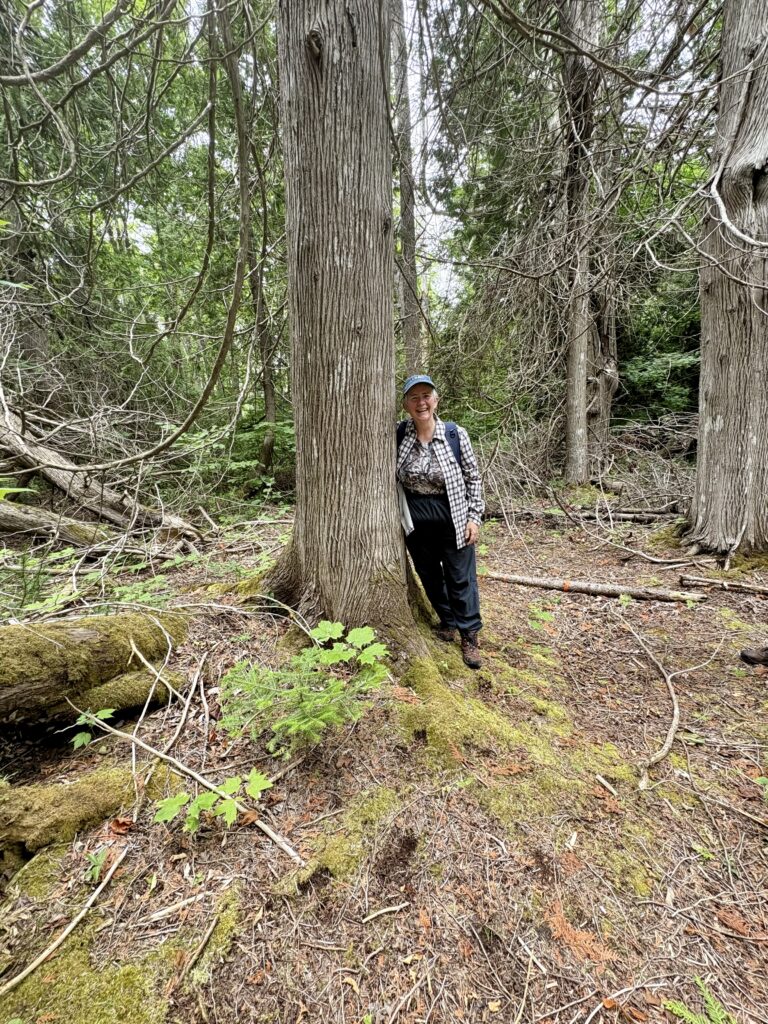
Me next to the biggest cedar I’ve ever seen on PEI. This is a rare photo of me, so enjoy.

Hummingbird Hanger Hack

Ruby-throated hummingbirds are back on PEI, and the first one arrived in our yard on May 8. They are beloved summer residents, adding zip and zing to our summers and then heading south again the first or second week of September.

I have two feeders for them (three, really, as I have an extra one to replace one that is being cleaned). The sugar water they drink also attracts ants, who motor up and down the ropes the feeders hang from, many of the little souls drowning in the feeder wells. Hanging hummingbird feeder moats that hold water can be purchased to block ants from reaching the feeder.

Or you can make your own for free from some wire and an old spray can lid or something similar. There are a million tutorials online. Poke a hole in the lid, bend a wire hanger into a hook and push it through the hole, and seal and glue the hanger in place. I made some over 10 years ago and they are still saving ants from a sugar-high death.

Backyard

I am still slowly dealing with debris from long-ago storms Fiona and Dorian. Most of the downed trees, hundreds of them on the 23 acres we occupy, will never be “cleaned up”. It’s too big of a job for me, the tangle of toppled 60-year-old spruce trees impenetrable in many places. I did a walk a couple of hundred feet from our house the other day and had to haul myself over trees piled four or five feet high, a brief panic of wondering if I was suddenly too old for such exertions followed by the relief that I am still quite physically strong.

Visitors comment on the destruction, on the fire hazard I’m allowing to remain. Yes, it’s true, it is all a fire hazard, but living in a forest full of conifers is a fire hazard anyway, dead or alive, so I’m used to it, and as a full-time caregiver I can’t do much more about it than I have. There are endless opportunities to worry about risks real and imagined, as I was reminded of at an emergency measures training I took many years ago.

We were to list what possible disasters could befall our municipalities, and we ticked off all types of natural disasters and possible human-caused chaos. The instructor, knowing exactly where my house is, said, “What about you, Thelma, what’s overhead all the time where you live?” Fuel-filled jets heading from North America to Europe, that’s what, and they could crash in Portage, he said, causing the western end of PEI to be cut off and straining the resources of our local emergency crews to deal with a disaster of such magnitude. Wide-eyed, we nervously laughed at this, thinking it so unlikely, but internally my younger self, who listened to the planes flying overhead on summer nights in our uninsulated cottage, wondering if some of them might be Russian missiles headed to the US, didn’t think it so far-fetched.

So I pick away at the fire hazard in the forest, my only real goal to reestablish walking paths that were there before Dorian in 2019 or, more likely, make new paths where an easier way through is evident. There is a lot to be said for taking the easy way, especially in nature. Nature just wants us to leave it alone to do its thing, to recognize that constantly trying to bend and shape it to our needs is futile and counterproductive. When you get comfortable with the mess of nature, less anxious to constantly clean everything up, the mess of life becomes more bearable. My Mary Oliver poem this morning certainly agrees:

BACKYARD
I had not time to haul out all
the dead stuff so it hung, limp
or dry, wherever the wind swung it

over or down or across. All summer
it stayed that way, untrimmed, and
thickened. The paths grew
damp and uncomfortable and mossy until
nobody could get through but a mouse or a

shadow. Blackberries, ferns, leaves, litter
totally without direction management
supervision. The birds loved it.

Mary Oliver
from Owls and Other Fantasies, 2003

Spruce Cone

After an absence of over 40 years, I have been attending church regularly for nearly a year. The same church I had been raised in, with some of the same people who were there when I last attended regularly in my mid-teens.

My mother stopped driving in 2016, so her cousin and his wife kindly took her to and from church. When my mother’s mobility declined after three hospitalizations in the winter of 2023/24, I felt it unfair for these thoughtful older relatives to have the responsibility of looking after my mother, so I told her I would take her.

This past Sunday, the minister’s sermon was focused on the baptism of Jesus, which is part of Epiphany, the season that follows Advent. One of the scripture readings was from the third chapter of the Gospel of Luke:

When all the people were being baptized, Jesus was baptized too. And as he was praying, heaven was opened and the Holy Spirit descended on him in bodily form like a dove. And a voice came from heaven: “You are my Son, whom I love; with you I am well pleased.”

Luke 3: 21-22

The minister, a thoughtful and interesting speaker, asked the congregation if we had ever seen a dove descend from heaven, if we had ever heard God speak. There was silence, indicating that no one had, or nobody was prepared to talk about it if they had, and he went on to talk about what that might have been like to hear God (and he talked about Eric Clapton, too, which isn’t usual in the Presbyterian Church of Canada, but most welcome, at least by me).

I’ve never heard the booming bossy voice of the Christian God as described throughout the Bible. I’m pretty sure he’s not that well pleased with me, despite me taking my mother to church every week, so I’m just as happy to not hear what he has to say.

What I do hear is the voice of the eternal spirit, the beating heart of the cosmos, the kind and merciful universe. Where? In the rustle of the leaves in trees, easily one of my most favourite sounds in the entire world.

Today I was walking through a field near our house, a field surrounded by tall trees that have watched me move around this land for nearly 60 years. The sun had just come out briefly, a rare occurrence so far this year, and I heard a flock of finches in the forest, always calling to one another as they move through the trees.

Suddenly, I looked up and saw a solitary finch flying high over the field, and it had something big in its mouth. Just as I thought I’ve never seen a finch carrying something so big, it dropped its load, and as it fell I could see it was a spruce cone. The cone bounced on the snow and the bird continued on its way as if that had been the plan all along.

I hurried over to see it and it was indeed a spruce cone, complete with a couple of spruce needles stuck its base. I could smell the distinct odour of spruce sap, and realised the bird must have plucked this directly from a tree, a gift from high up in a tree, a place I could never visit.

I put the cone in my pocket and brought it home and put it in a little dish. The seeds are already dropping out of it. It still smells of sap.

With you I am well pleased.

Windy

Yesterday the air temperature and wind direction stayed nearly constant throughout the day, a rare occurrence. In fact, the wind shifted to the north around noon on November 12 and remains there as I write this at 8 a.m. on November 14. Wind speeds mostly stayed between 25 and 35 km/h, though my anemometer is not placed high enough to give an accurate reading. It’s chilly.

Bird Notes (tweets, I guess)

A Northern Flicker, a ground-foraging brown woodpecker with a lovely red cap, just landed in our yard and dug around for ants and worms. Earlier today I saw something new: an American Goldfinch drinking from a hummingbird feeder, with a friend sitting on a branch nearby until a feisty hummer ran them both off.

After a couple of years without any Great Blue Herons living and feeding on our river, which they have always have done in my lifetime, there are now two and sometimes three. All three flew together over our yard the other day and I felt like I was in Fred Flintstone’s backyard, their huge wingspan and loud rusty-hinge squawking casting ancient shadows as I looked up (mouth closed…always close your mouth when birds are flying over. You’re welcome.).

A juvenile American Robin, nearly as big as its parents and almost the same colour except for the speckled breast, bounced across the lawn at about 5:30 this morning, capably finding its own food, but still quietly calling for its parents to share what they were finding. Soon the youngster will be on its own, and the parents could easily set some more eggs this summer. It’s a dangerous world for baby birds, so this little family is a great success story.

My life list on the Merlin app sits at 36, all viewed from my yard. Such richness, the morning chorus this time of year filled with joyous conversations and hope.

I wonder what my chickens think of the sparrows who sometimes forage in their run, or the flocks of geese that honk overhead, or the noisy, feisty Blue Jays that rattle the mornings. My guess is that they don’t really pay any attention to other birds unless a danger call is broadcast, a warning that a hawk or eagle is in the area, and they take cover.

Otherwise, they are just busy being chickens, and that seems to be sound advice. Just be the bird you are meant to be.

Invasion of the worm snatchers