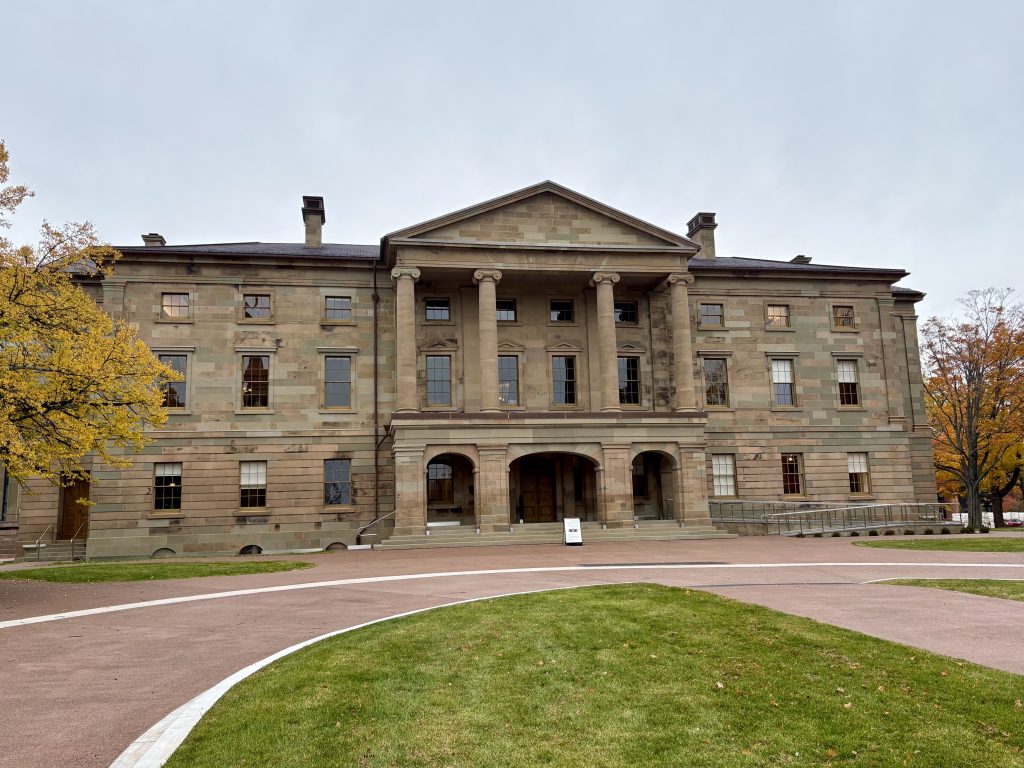
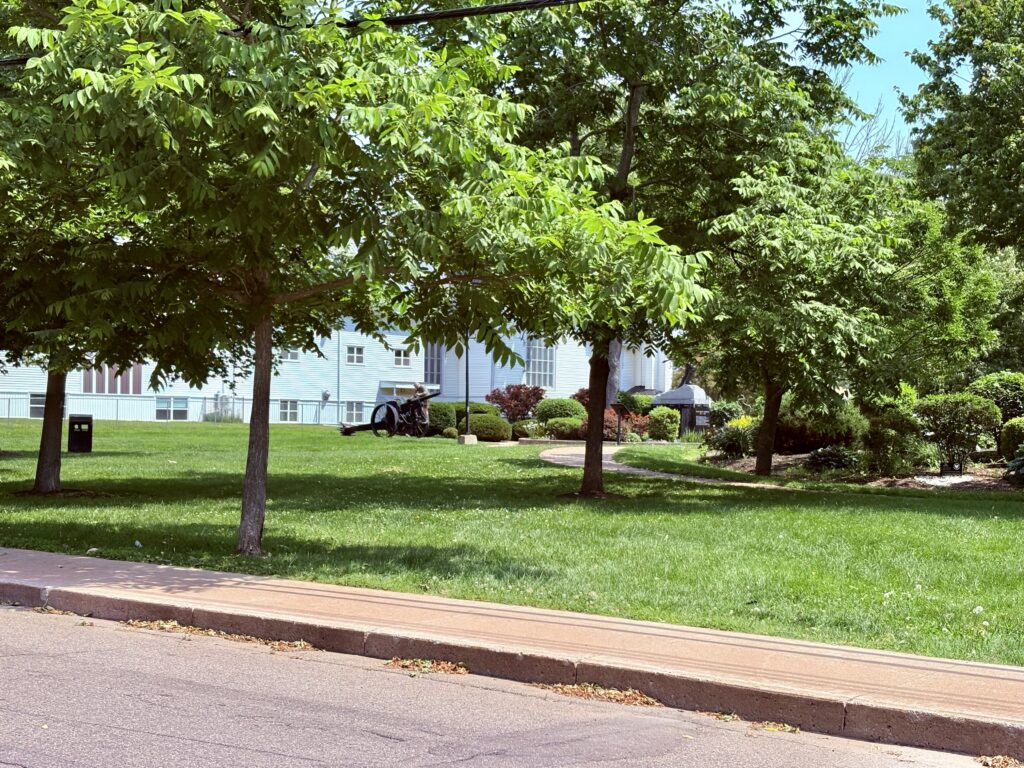
Province House, the home of our provincial legislative assembly, has been closed and under renovation since 2015. It officially reopens tomorrow. I hadn’t been by the building in over a year, so was surprised, as I dashed by yesterday, to see the Lego-blockiness of the new look, the different shades of stone used for repairs, which I expect will all eventually mellow into sameness. I like this current look, though, very Minecrafty.
Still wish we had built an energy-efficient legislative building and government complex in the middle of the province, built into a hillside (I’m looking at you, Springton!), covered in solar panels and with desks in the round. Province House would have made a great provincial museum, as it is part museum anyway.
While on the subject of institutional change, I think Canada needs to stop using the British monarch as our head of state and instead have our Governor General and Lieutenant Governor (or whatever we might choose to call them) positions chosen by and from the First Nations, Inuit and Métis people. The First People as the Top People, as it should have always been.
Yesterday’s PHP security incident has knocked out some of PEI’s funeral home websites, which, if you know anything about us Islanders at all, is darn tootin’ serious. My hunch that many of the homes in our area used the same provider has now been proven: Rooney, Fergusons and Davison are all RIP as of 9pm October 22, 2026. (Visiting hours for the sites are 2 to 4 and 7 to 9; #iykyk)
Local radio station used to read the obituaries daily after the noontime newscast, and everyone in the house had to hush up, and no phone calls were made. We all listened carefully to hear who had passed on and which families and friends might need our support/food/visits/cards. That ability to pass love and care from family to family is part of what makes the communities in my area so strong and connected.
I added pages from the August 21, 1951 Charlottetown Guardian about the opening of the second building to house Prince County Hospital to my Community History page. By the time the new PCH facility opened in 2004, the 1951 building was widely regarded as old and outdated, so it is lovely to read the hope and pride the community expressed for their new, state-of-the-art hospital.
I’ve been reading old newspapers online through UPEI’s Island Newspaper site since 2014 and one of the many reasons I continue is that I love the time traveling aspect, pretending to be someone picking up the morning paper and reading about new technologies and community news. The past, in printed form, is a safe place, and I visit it knowing how things turned out, or are still turning out, like the 1951 nationalization of Iran’s oil industry (see 2026 Iran war fuel crisis). Things change, things stay the same, and on we go into the future.
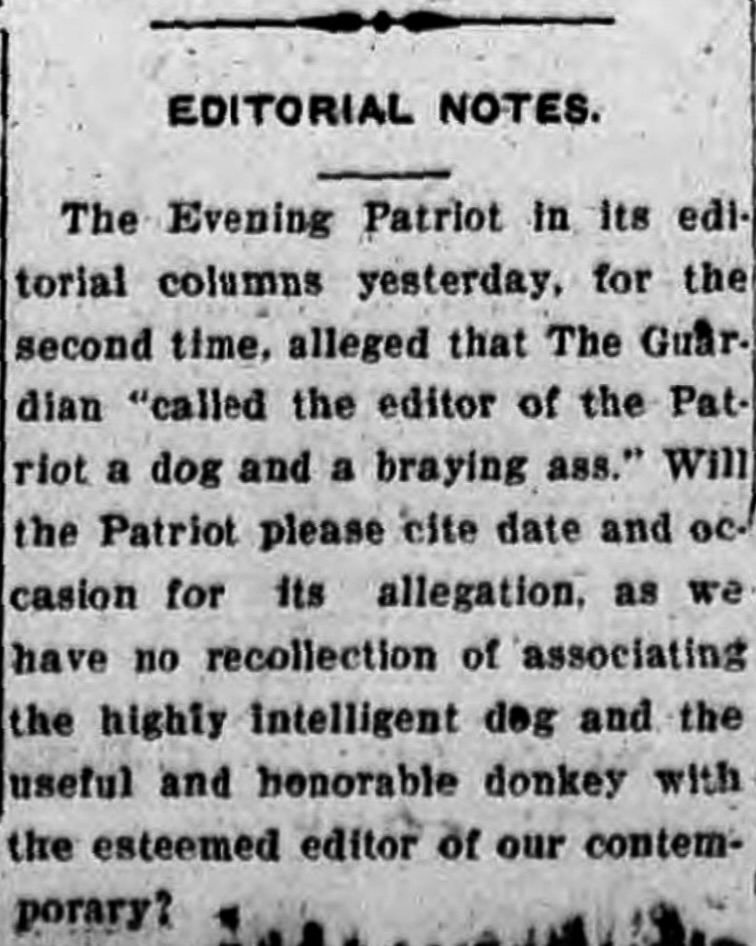
Some (hopefully) friendly tomfoolery between rival Charlottetown newspapers in 1926.
Charlottetown Guardian, September 4, 1926, p. 4
The Evening Patriot in its editorial columns yesterday, for the second time, alleged that The Guardian “called the editor of the Patriot a dog and a braying ass.” Will the Patriot please cite date and occasion for its allegation, as we have no recollection of associating the highly intelligent dog and the useful and honorable donkey with the esteemed editor of our contemporary?
I’ve mended many things in the past 16 months since my mother died. I’ve tried to keep busy, to catch up on tasks put aside for a few years as I focussed on her.
I enjoy figuring things out, rolling the dice on maybe being able to put something broken back together. Couldn’t be a clearer analogy for trying to come to terms with the massive hole that my mother’s absence has left in my life.
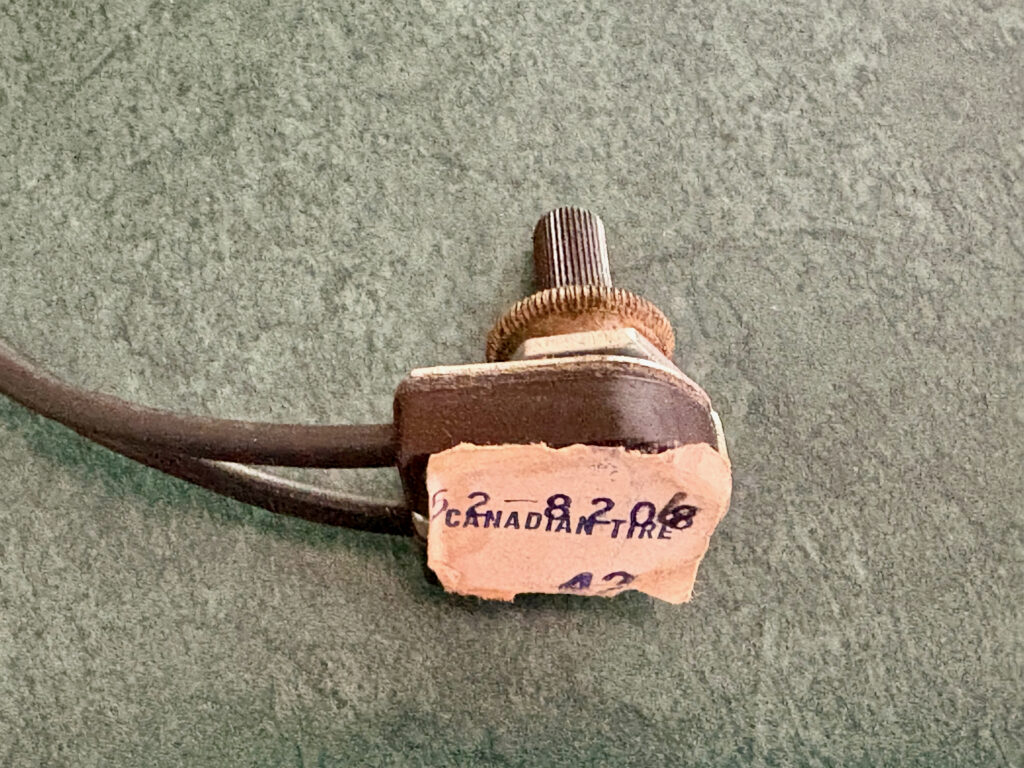
I replaced a rotary switch on a 1960s lamp using an unused switch I found in a box in the basement. My father must have purchased it for some project, perhaps even for the lamp I fixed, the lamp that sat between his chair and my mother’s chair in the den of our old house.
42 cent switch from Canadian Tire.
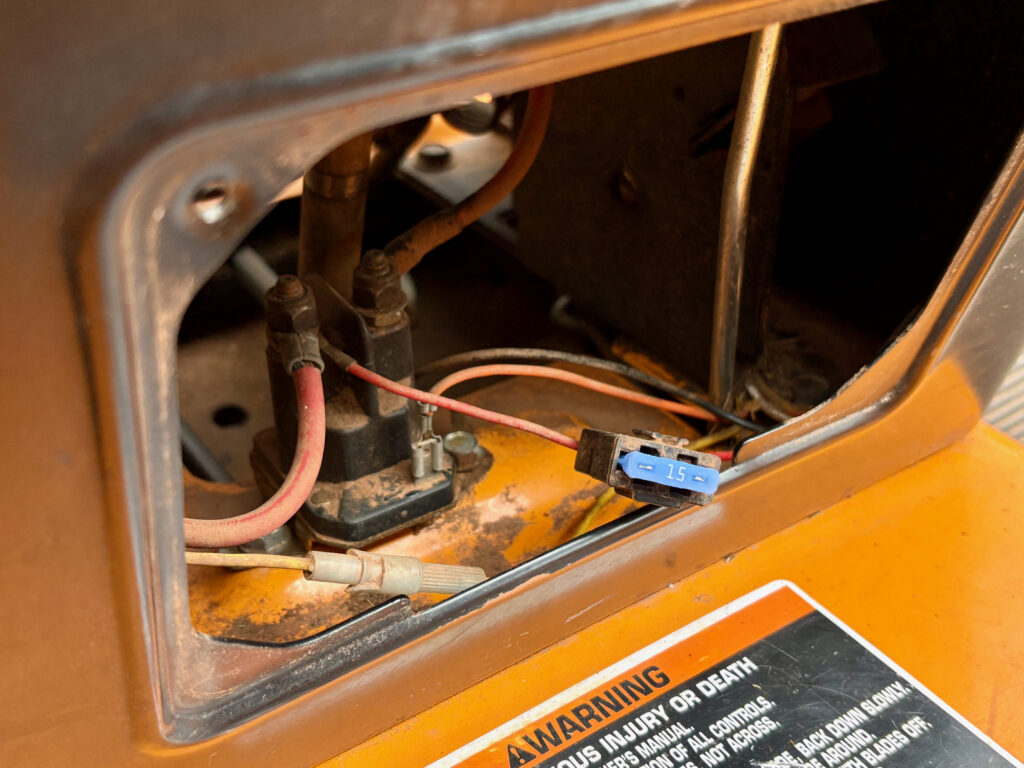
I replaced the fuel filter on my 26-year-old lawn tractor and added a fuel shutoff valve while I was at it so I can burn off the gas in the carburetor when storing it for the winter. I also found out the hard way that hooking up a lawn tractor battery backwards will (hopefully) cause a fuse to blow when you try to start it, and the replacement fuse costs exactly a dollar plus tax. I also found that when you are grieving, you hook up lawn tractor batteries backwards and you’ll not understand why you can’t do something you’ve easily done for decades.
$1 fuse.
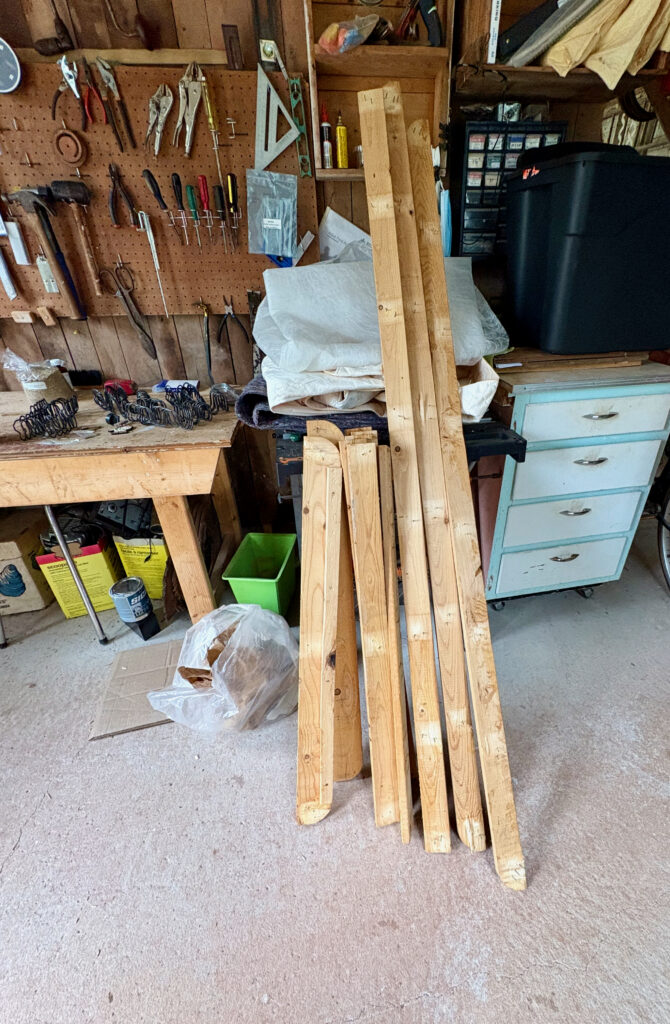
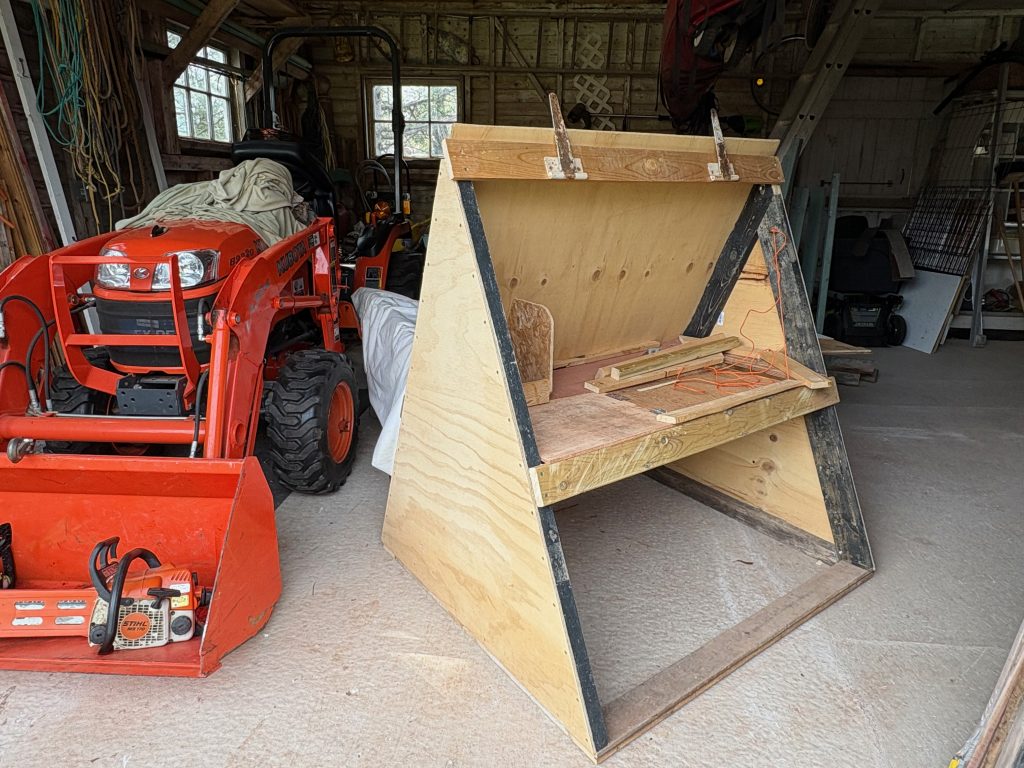
I took my mother’s single bed mattress to the waste facility for recycling in my small car by kind of folding it up, but boxsprings don’t fold, so I took it apart, recycled the metal springs and staples, disposed of the fabric and used some of the wood on a portable chicken coop and the metal frame as a garden trellis.
Boxspring wood ready for repurposing.Building a coop from scraps, reclaimed wood and ancient barn door hinges.
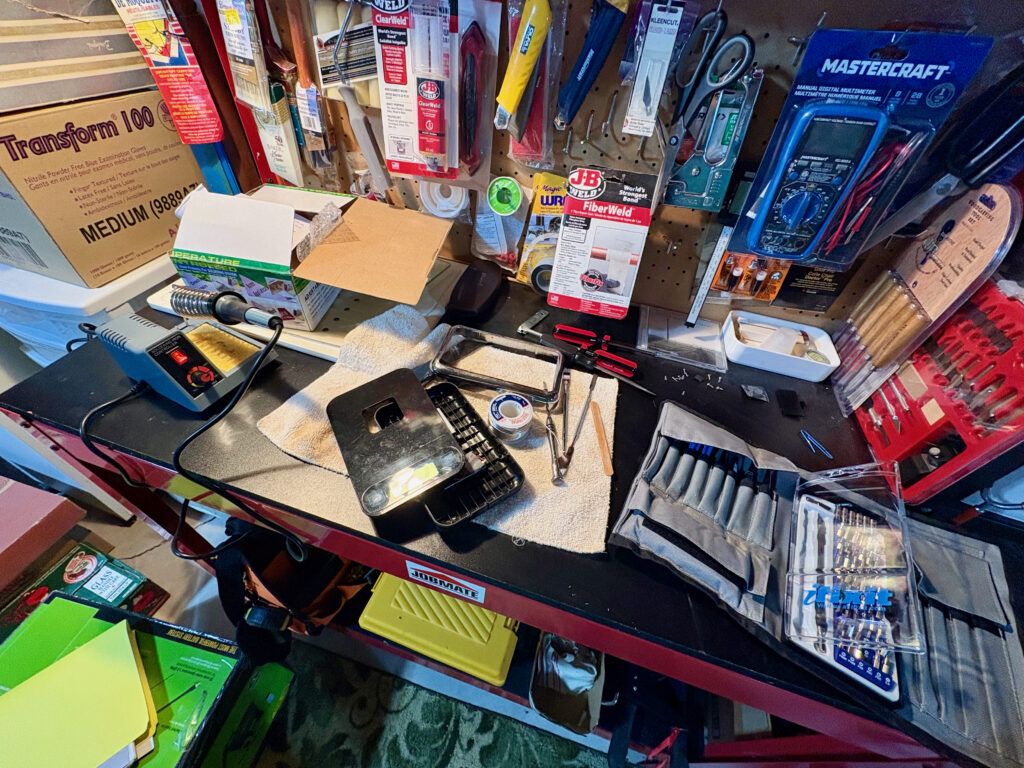
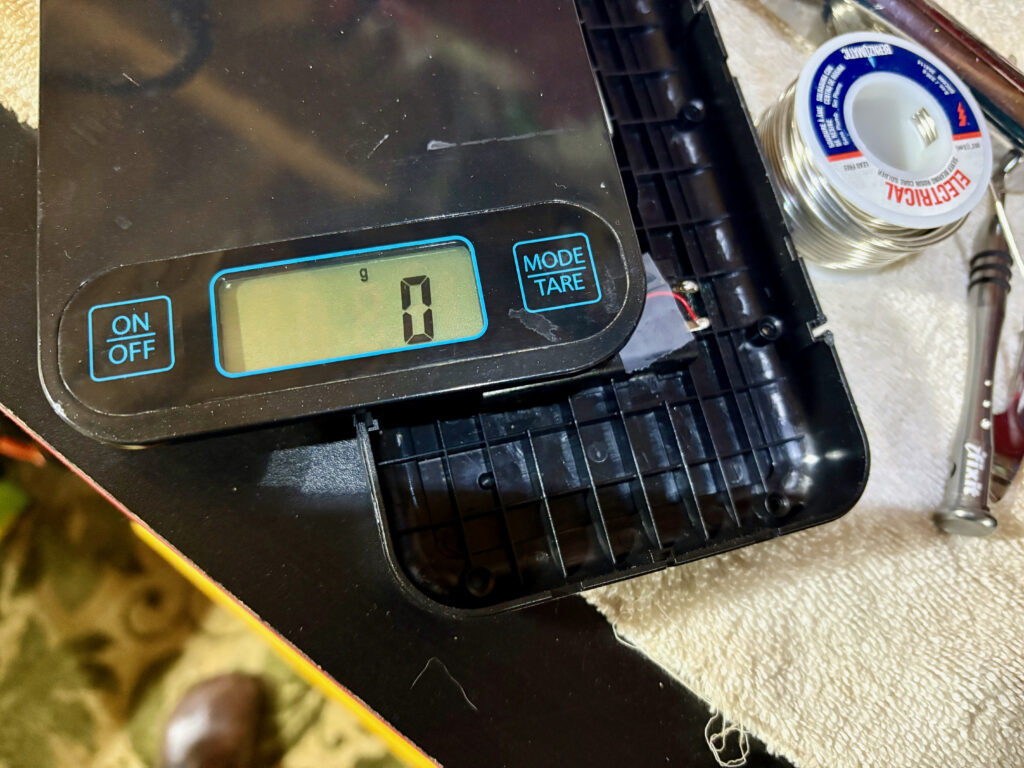
A digital scale I had for over thirty years stopped working. Before throwing it into the e-waste pile, I pried it open to see if maybe I could identify the problem. A thin wire had broken off and even my terrible soldering skills were enough to reattach it and the display popped back to life. It worked for almost a year, but wasn’t repairable by me a second time and will be off to e-heaven.
Success!
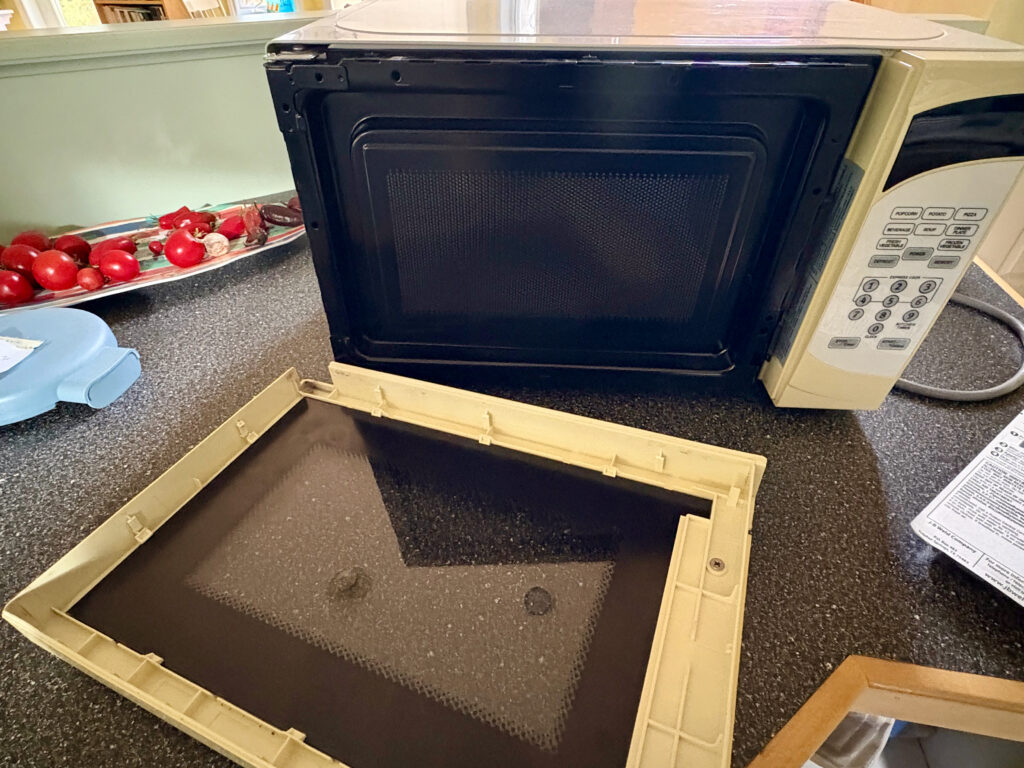
Our microwave door fell off, or at least the covering part with the handle did. It was attached with comically-tiny little plastic tabs that weakened and broke, so it is now reattached with massive amounts of epoxy and will never, ever fall off again.
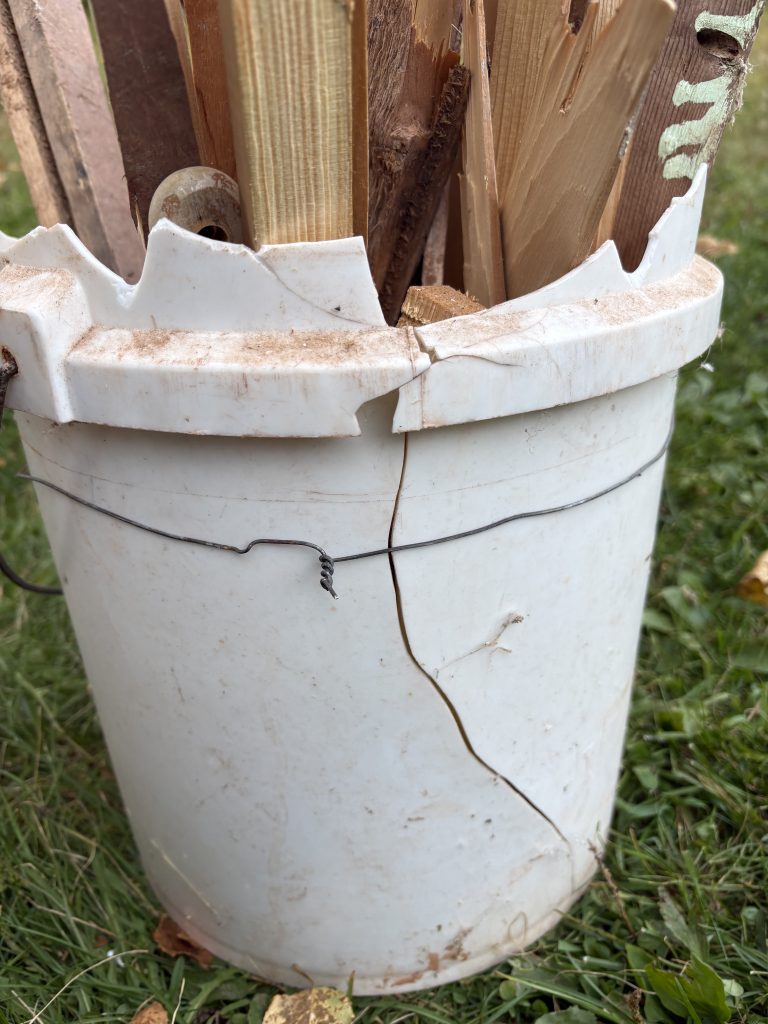
Tonight, I was having a little fire in a Biolite stove and the plastic bucket in which I store wood scraps cracked. A piece of wire saved from something or other will likely hold the bucket together for a few more years.
Occasionally I attend a volunteer meeting where I can claim travel expenses. Such was the case when I drove to Cardigan yesterday to attend the Meals on Wheels PEI AGM. It was a 318 km roundtrip from Foxley River, with a couple of stops to pick up other attendees. It took 49 kw of electricity to get there and back, leaving me lots of charge to attend a meeting in Tyne Valley last night.
Using their rate of 60 cents per kilometre, I could have claimed $190 for travel, but the electricity cost to me if purchased from Maritime Electric is less than $10. I’m now also enrolled in a program where I get a rebate on the electricity I use to charge my car at home, so my cost was closer to $5.
There is no way that driving 318 km causes any measurable depreciation or maintenance issues for my car; I barely used the brakes the entire trip, using regenerative breaking most of the time, so there wasn’t even wear to brake pads.
I couldn’t in good conscience claim $190 as I knew I’d be making a huge profit from a non-profit group, and it was silly to claim $5, so I didn’t claim anything at all. I wonder how these travel expense forms will change in the future to reflect different vehicle power sources?
A friend and I joined a walk around Holman’s Island in Bedeque Bay that was sponsored by the Bedeque Area Historical Museum and led by the always-interesting and gracious Doug Sobey, who is president of the historical society that runs the museum.
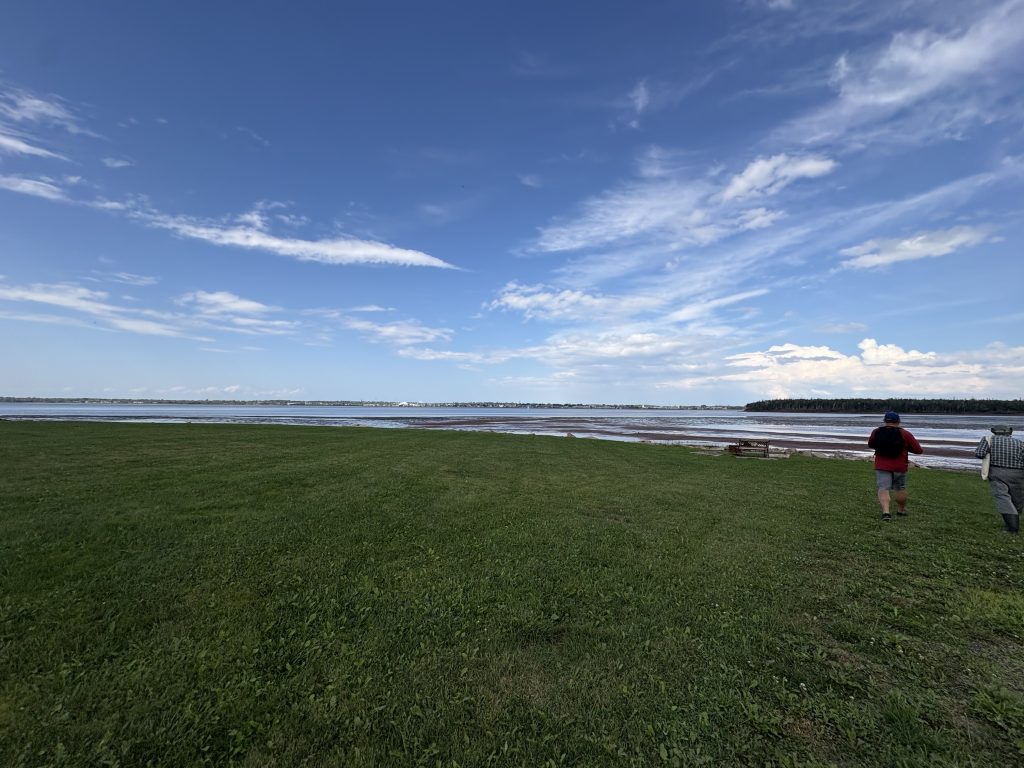
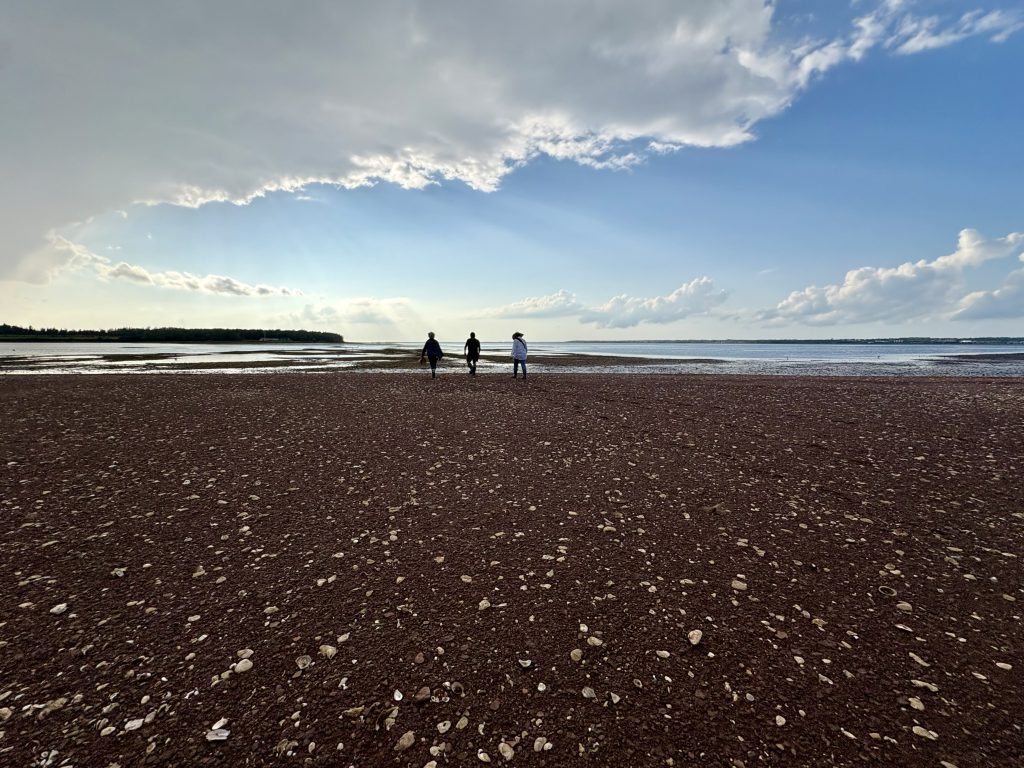
About a dozen of us met at the museum last Tuesday and drove a few kilometres to a private driveway where the museum had permission of kind cottage owners for us to cross their yard to the shore. The walks are timed to coincide with the lowest tides, so we easily waded through ankle-deep water on a sandbar to the island. Doug gave a fantastic overview of the Mi’kmaq and settler history of Bedeque Bay and the city of Summerside, and then we started our circumnavigation.
Starting the walk to Holman’s Island.
Now owned by the Nature Conservancy of Canada, Holman’s Island is most notable as the site of a 125-bed hotel that operated for five years in the 1870s and closed due to financial difficulties, the building burning in 1904. Doug said there are depressions in the ground where the hotel foundations were, but nothing else is left of the hotel and the island has reverted to forest.
We didn’t venture into the forest, but the beach walk was beautiful, though not really much different than any other PEI beach; the real delight was in finally being on this little island that had been pointed out to me since childhood but that I had never had the chance to visit.
The western and northern sides of the island have steep cliffs, while the east and south are much lower and it would be easy to walk from the beach into the forest. There were lots of empty oyster on the shore, possibly due to the die-off of oysters from two diseases, MSX and Dermo, that have crippled our oyster industry.
It has become more difficult over the years to find sea glass on PEI beaches, which, it is hoped, is mostly because we are better at recycling and properly disposing of waste, so it was fun to look for glass on this more inaccessible location. I found a few lovely bits and pieces on the east side of the island, all of it still pretty pointy as the wave action in sheltered Bedeque Bay isn’t as scouring as ocean waves.
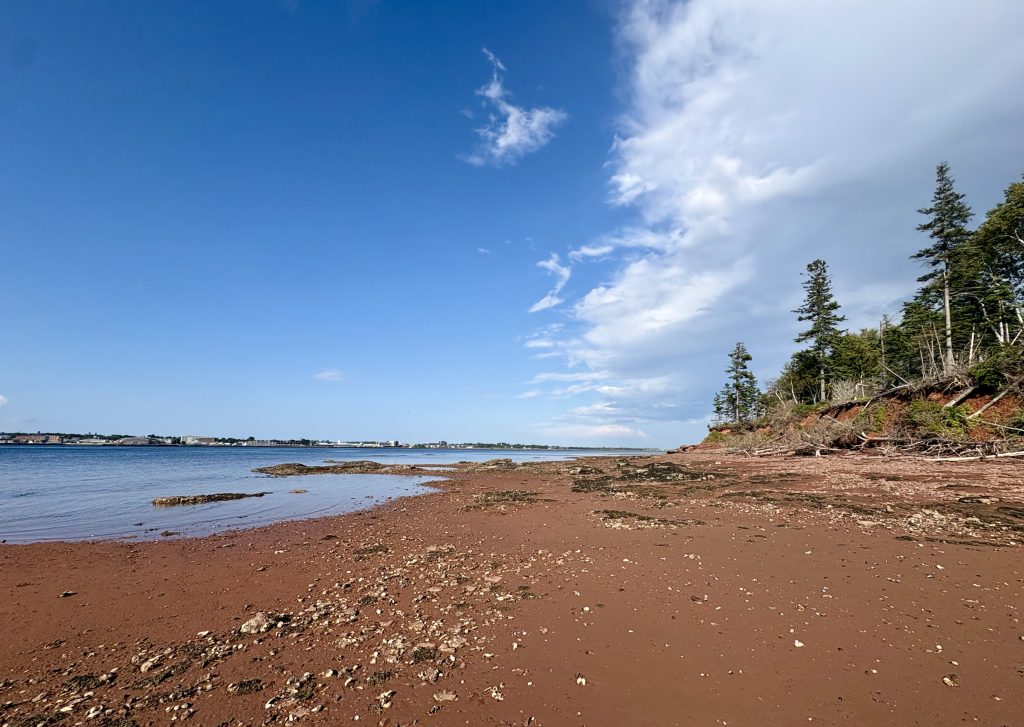
The beach on the west side of the island, with Summerside in the background.
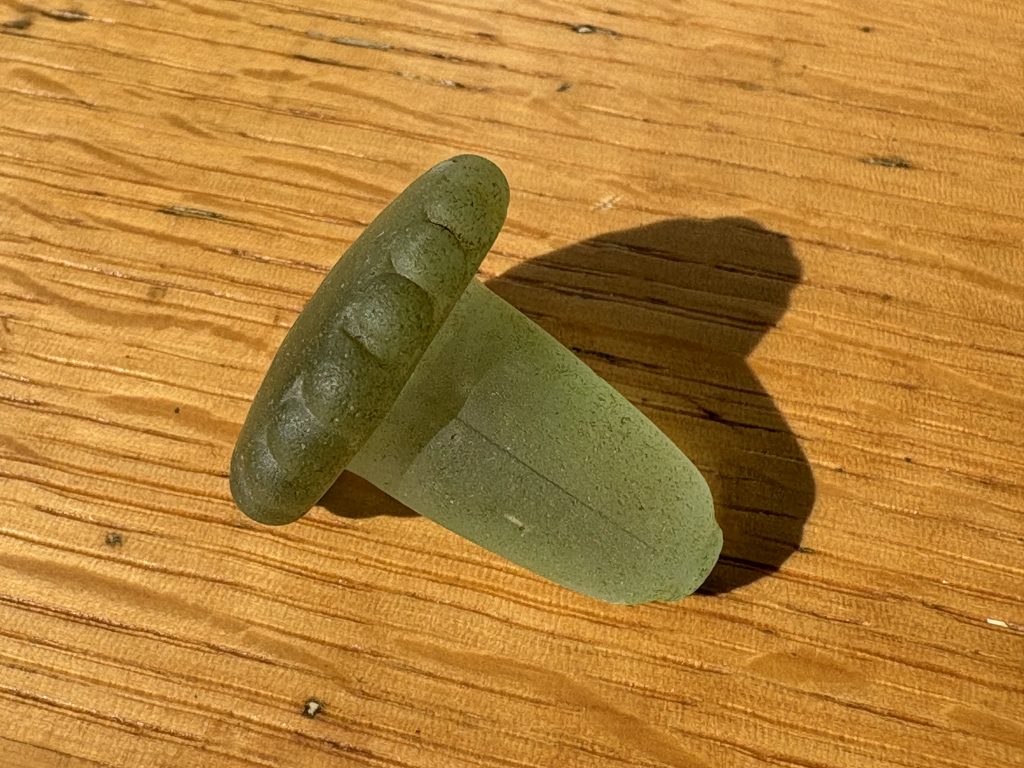
And then, sitting on a pile of rocks high up on the beach, I spotted what is likely to be the best piece of sea glass I will ever find: a light-green bottle stopper. At first I thought it had to be plastic as it was so perfect, but it gave a satisfying little tink when I tapped it against some other glass and my beach combing heart soared.
Maybe it’s the stopper from a cruet tossed from the long-gone hotel, a medicine bottle top or, heaven forfend, the stopper of a little bottle of alcohol. Hard to say, but now it sits on the windowsill next to my desk, catching the sun as it did for decades in Bedeque Bay, same sun, different view. I finally made it to Holman’s Island, and it gave me a treasure.
The green glass stopper.The end of the walk. We narrowly missed a big thunderstorm earlier in the day, and the lingering clouds were spectacular.
I was invited to a hymn sing yesterday morning at Old St. James church in Port Hill, a twenty minute drive from my home. A sunrise event, 7:00 am, created by someone I only met when she contacted me last week after reading something here on my blog.
Our only connection was that our ancestors embarked from the same town in England to take up work in the PEI shipyards in the mid-1800s. Our families would have worshiped together in St. James after it was built around 1841, but neither of us have a recent connection to that church or community.
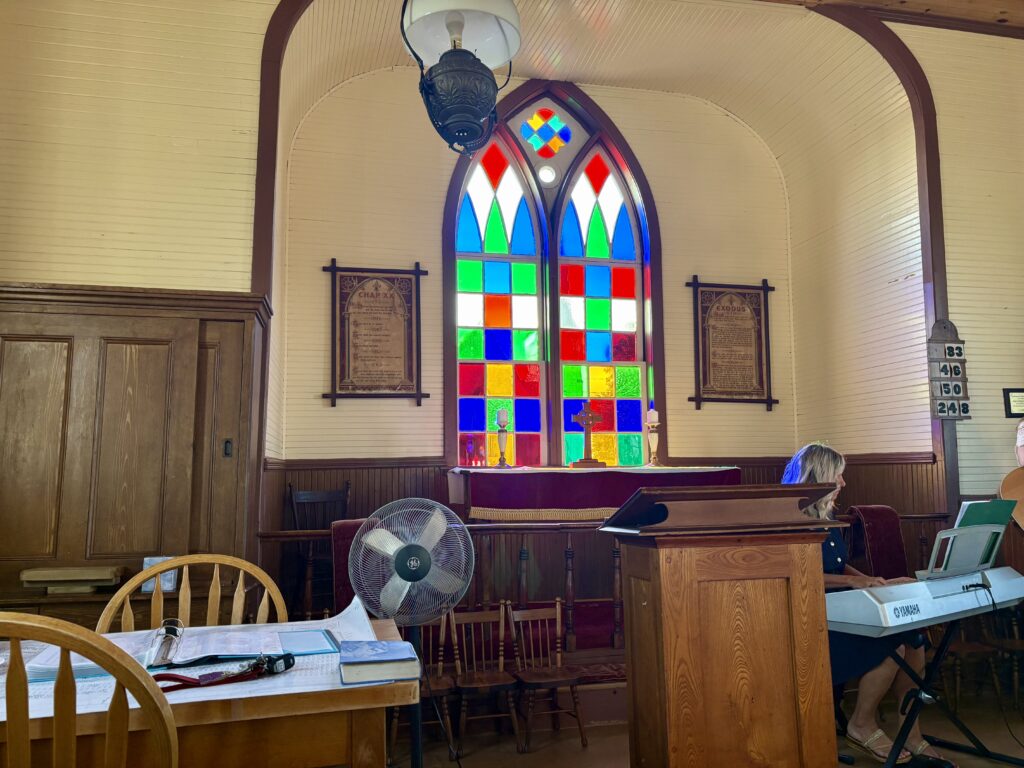
Old St. James Anglican Church, Port Hill, PEI
The music was outstanding, Laura Beth and two of her friends playing electric piano, guitar and the church’s ancient pump organ, harmonizing together on an hour’s worth of classic hymns. A dozen locals, mostly parishioners, came to join them, none of us knowing these musicians but, I would guess, drawn as I was to the novelty of being invited to this sweet historic church on a soft, gentle July morning.
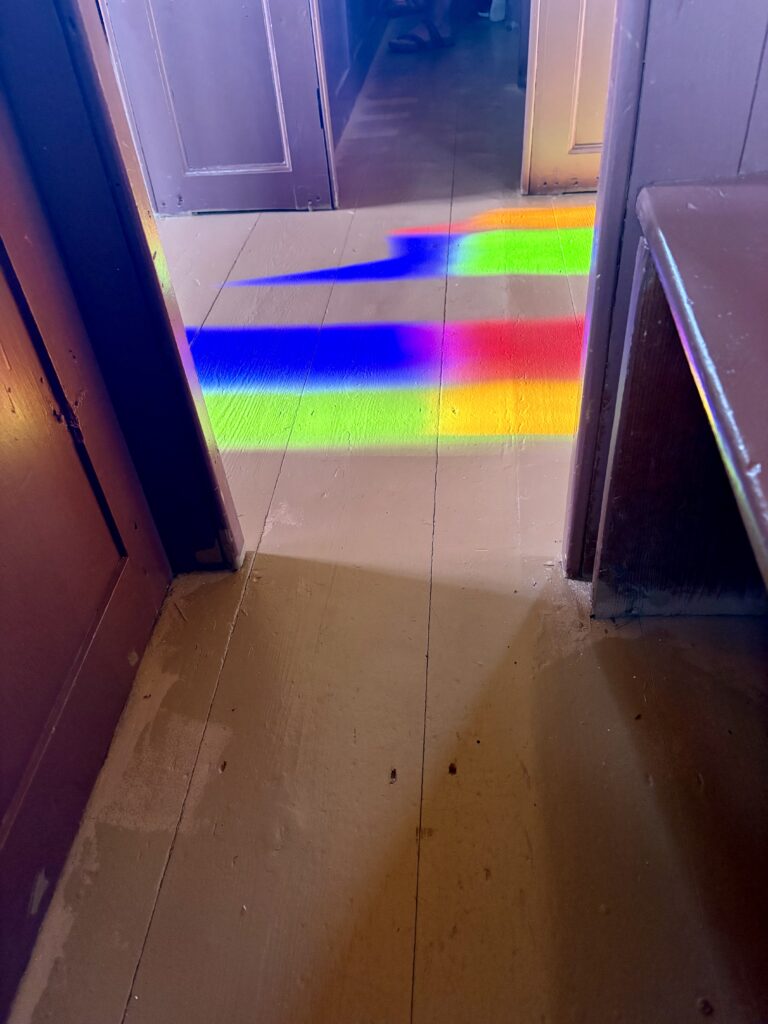
The morning sun moved through the simple coloured glass window, casting a nearly-neon glow first on the singers, then the pews, and across the floor. It was mesmerizing and poignant, moving many to tears. Brought together by strangers, parting as friends, with hugs and farewells all around. Brief but deep conversations about family history and spirit and life. I’m not a churchgoer, but this was a special, meaningful morning.
The view of the light from the windows on the church floor as seen from the front pew.
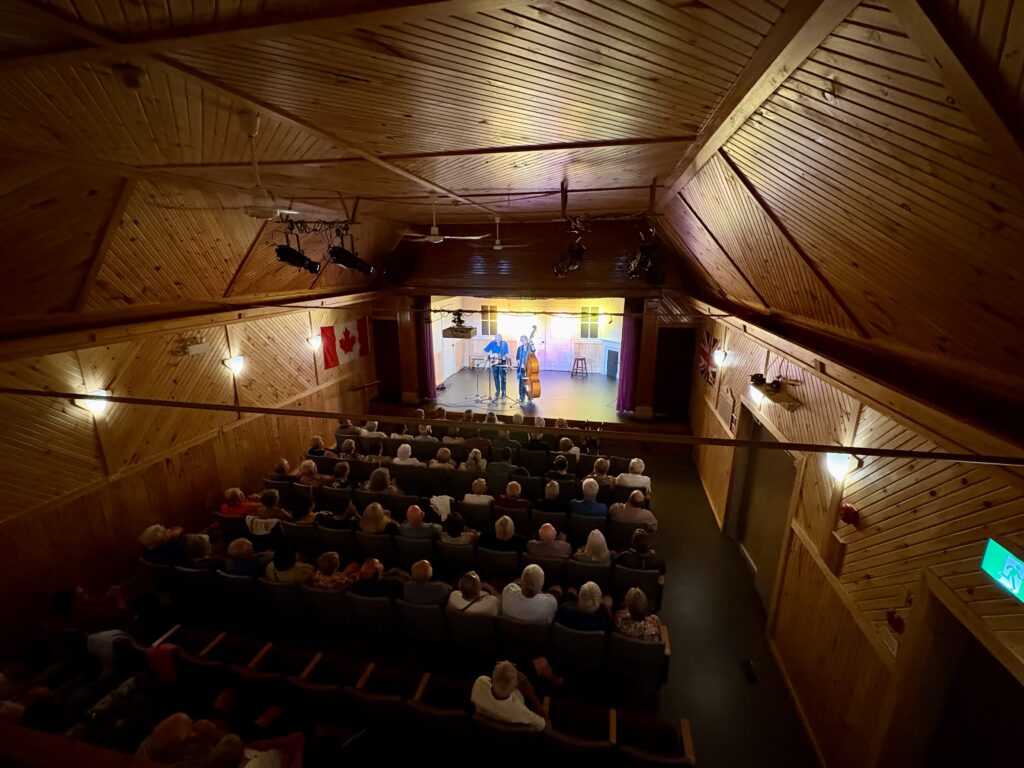
I had spent the previous evening in Britannia Hall in Tyne Valley at an evening of story telling and music. The only thing I have any real training in is technical theatre: lights, sound, stage management, stage carpentry, that sort of thing. It has been decades since I used any of those skills in a theatre, but I recently joined the hall’s volunteer committee and jumped at the chance to relearn how to run the sound and lights by assisting the technician, moving microphones around and helping with sound checks.
The view from the booth of Britannia Hall.
It was fun to see what I had remembered, to stretch that part of my brain again, and the magic of making a performance happen still makes my heart jump. I will turn 60 soon, but I felt as I did when I was 20, hurrying around the theatre, nimble and quick, dressed in theatre-technician black, to troubleshoot the various things that always go a bit sideways in live performances.
It was a weekend where centuries and decades folded in on each other, time meaning nothing. This has happened a lot since my mother died last year. Time expands and contracts so that my childhood seems like yesterday and then seems 1,000 years ago, often switching in the blink of an eye. I worried about this for a while, wondering what my grief brain was up to, but now I just let myself be pulled and pushed, giving into the swirl, the music, the ageless hymns of time.
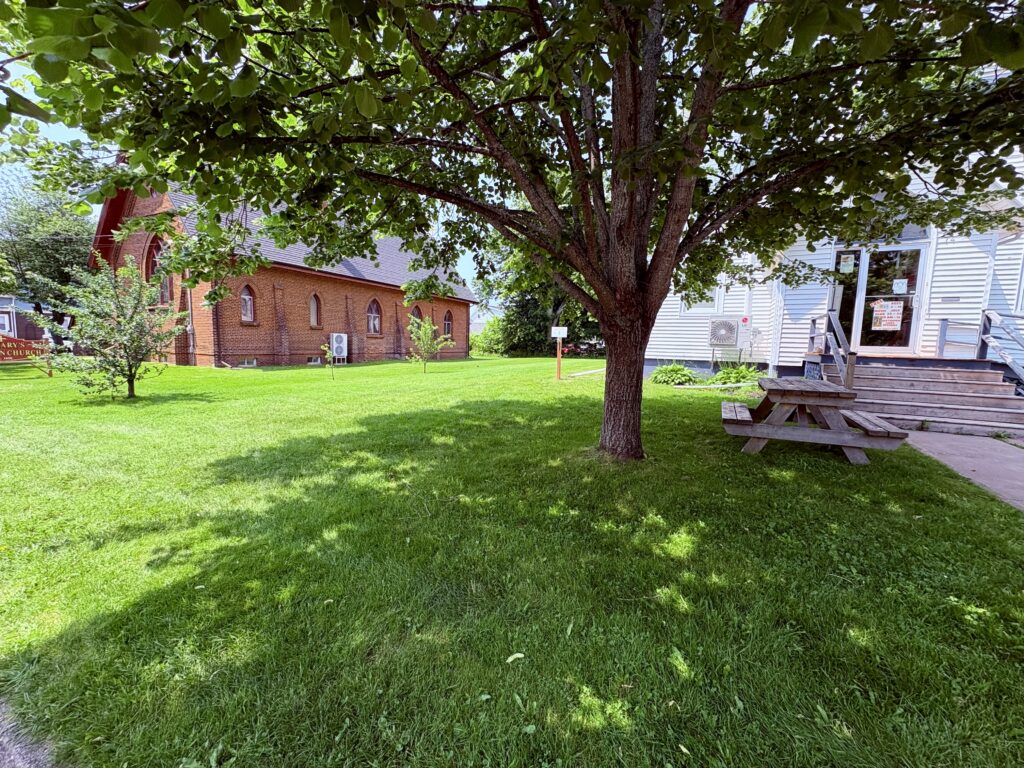
Lunch today was a Famous Pepper’s Spud Islander pizza (yes, it has slices of potato on it). We got one to go from FP’s new Summerside location and decided to find a shady spot in Memorial Park to snarf it down.
St. Mary’s Church and Hall
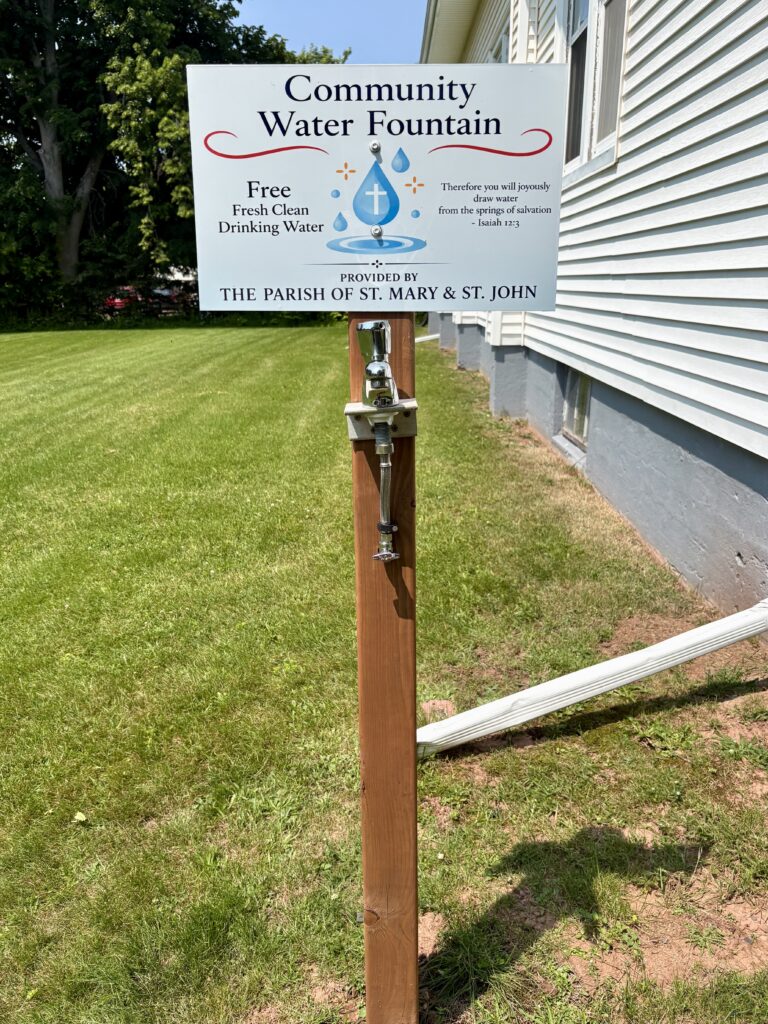
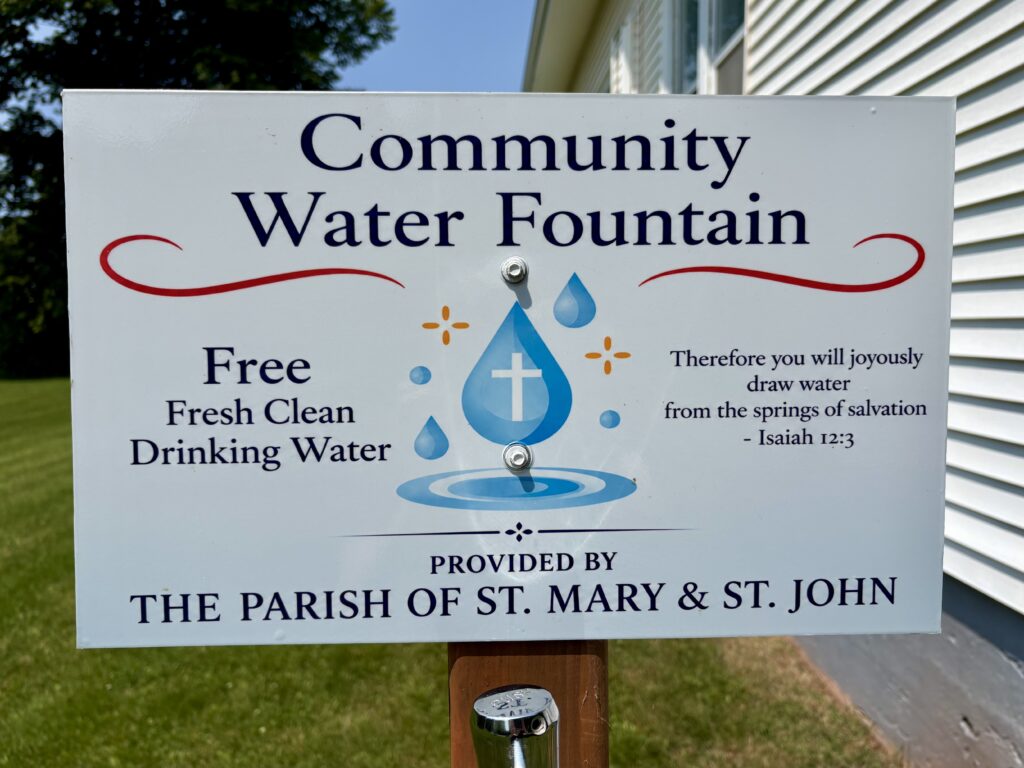
We parked in front of St. Mary’s Church Hall across from the park and spied a nice little picnic table under a tree in front of the hall. Next to it was what looks like a newly installed water tap, free for all to use, and I would guess specifically targeted at unhoused people who often use the park as a gathering place. Pizza consumed, I topped up my water bottle, and we were on our way.
Seeing this thoughtful act of love and care for others filled me up way more than the pizza did. I think if church had included this type of social action when I was a young person, I could very well have still been a believer.
If you are looking for a quiet, green, welcoming space in Summerside, I can’t think of a better spot.
Memorial Park. Someone came along and started to paint a canon, as you do.
A friend who sends me a photo every year of the Foxley River oysters she has on her birthday at an Ottawa oyster house is instead in Paris for this year’s celebration. She’ll be sipping champagne and enjoying lovely French oysters, which is just as well as there are no Foxley River oysters for her to slurp in Bytown this year, or probably for a few years to come, due to two diseases that have killed virtually all the oysters in our area.
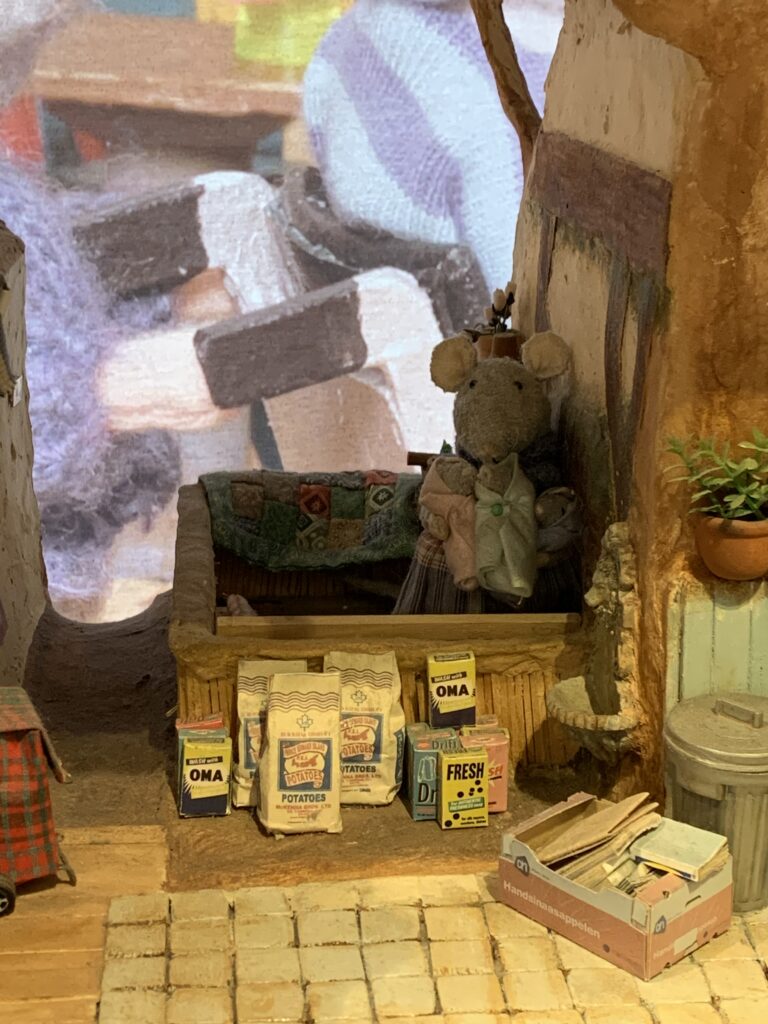
Before she left Amsterdam for Paris, she went to see The Mouse Mansion (Muizenhuis), and true to her boosterism of all things PEI, spotted some miniature PEI potato bags in amongst the extensive and charming collection of tiny things and sent me photographic evidence. I think the bags say McKenna Bros Inc., which is a farm in Kings County. How and why they made it into this teeny wonderland remains a mini Dutch mystery.