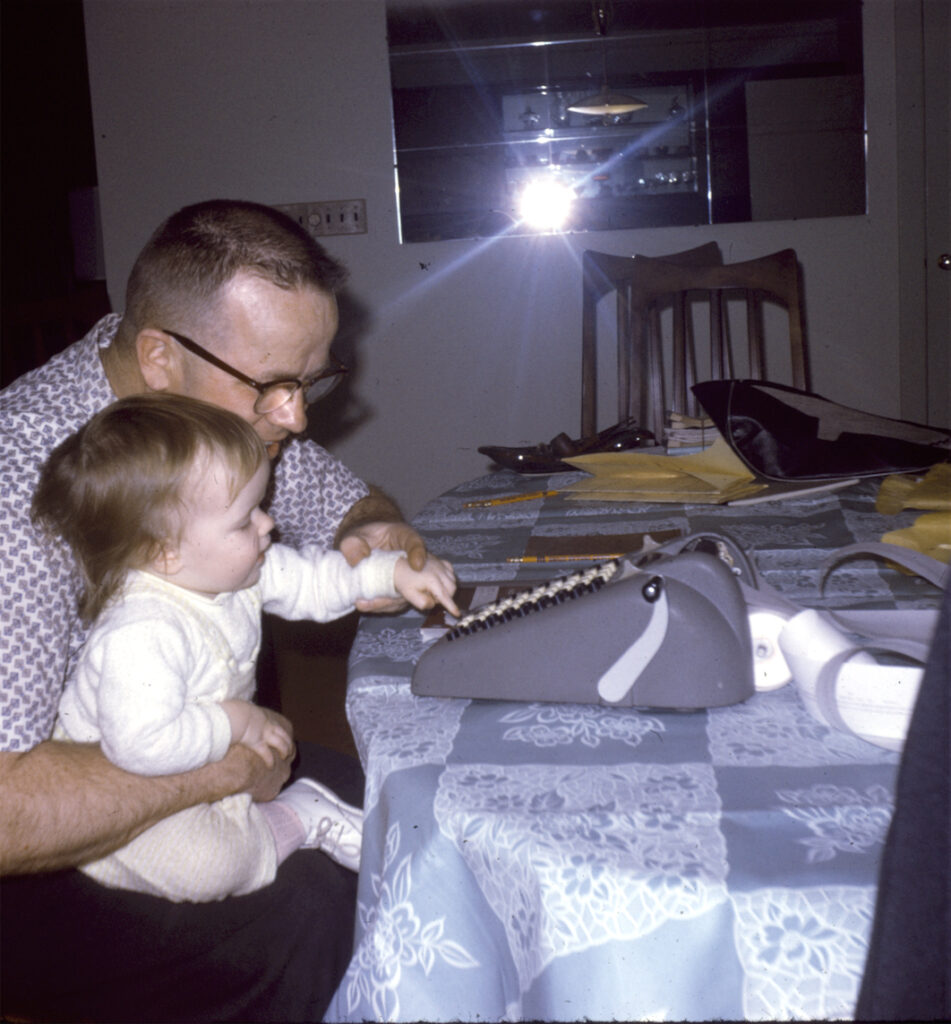
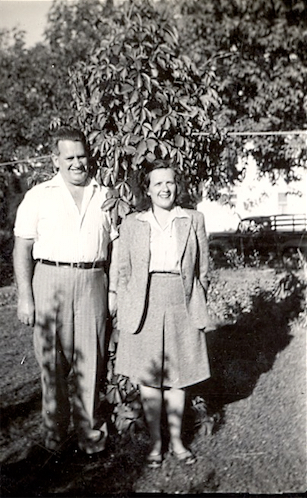
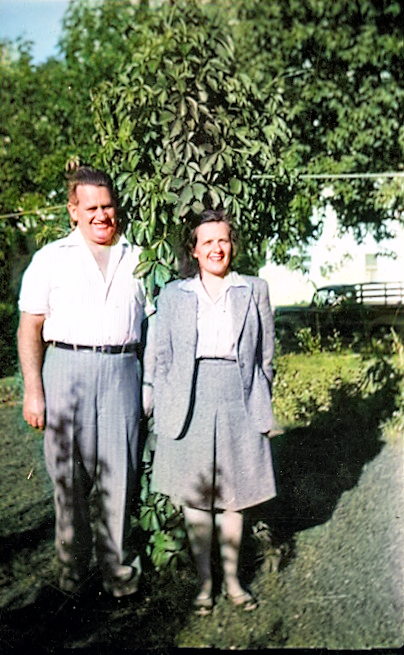
My father, Harold, would have turned 100 years old today. He was born at home in Ellerslie, PEI, the fourth of five sons of Alvin and Gladys (MacNevin) Phillips. He was a hardworking, honest, reliable, clever man. He spent four years in the RCAF during the Second World War, then became a successful businessman and community volunteer.
The one-room Ellerslie school only offered classes up to grade eight, but some children moved to larger communities to continue their education. This wasn’t possible for my father as Alvin died when my father was only 13, so the boys all had to find work as soon as they could. My father moved to Summerside and worked at a large store owned by his uncle, but his real dream was to go to business college. His uncle promised that if he worked hard at the store, he would help my father with the tuition for business school. Knowing my father, he would have worked very hard, and was keen to attend school.
The Second World War interrupted those plans, and my father enlisted when he was 19. When he returned to civilian life, his uncle had kept his job open (as was the law, of course), but the offer to send him to business school was no longer there, for reasons I never learned. My father worked for his uncle for a few months until the opportunity to purchase his own business came up, and he and my mother, Vivian, moved back to the community where she was raised and started their general store.
Although my father was successful in many ways, he always regretted not having a more formal education. He spent 13 years on our regional school board, and probably because of his own experience, he was driven to improve school retention rates, which were pretty dismal when he joined the board in the early 1970s. Many students, especially young men, were leaving before high school graduation because they knew they were destined for lives of farming or fishing and thought there was no need for any more education. My father was proud of having been a part of establishing a new high school that offered both academic and trade courses under one roof, and retention rates quickly improved. He wanted young people to have all the opportunities that had not been available to him, and saw education as the key that opened all doors.
My father was able to move beyond any resentment he may have had towards his uncle and made a good and purposeful life for himself, and was also able to help others. To his great surprise and delight, my father was asked by Holland College to teach a business course on Lennox Island First Nation in the early 1980s. He taught a dozen students all he knew about running a small business, knowledge he had to gain on his own, and he was so proud to have something to offer. I was in high school when he was teaching, and remember him organising the graduation dinner for the course, taking care to ensure that the students knew how special they were.
My mother and I decided to honour my father’s legacy in education by establishing an endowed bursary in his name at Holland College for students from our area who will be studying business. The first award was given out last year, and it is thrilling to know that his hard work will ensure that others will be encouraged to follow their dreams. He died in 2008, and suffered with dementia for many years before his death. It has taken a long time for us to get past the heartbreak and struggle of his final years and see again how truly remarkable he was. Time heals.
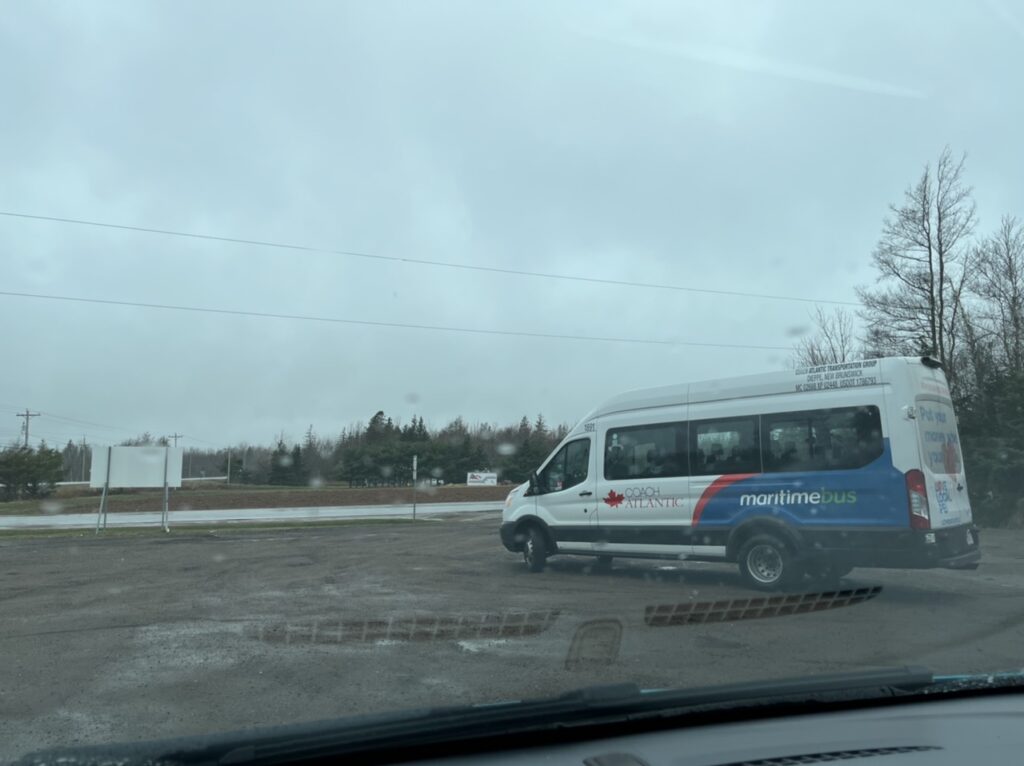
Today I decided to try out the new bus service for western PEI. There are both intercommunity routes connecting towns in West Prince, and long distance runs to Summerside and Charlottetown. I chose to go to Summerside and took a late morning bus (which ended up being a large passenger van) from the West Devon carpool parking lot to uptown Summerside. The trip took just under an hour, cost $2, was quite comfortable, and there was only one other passenger.
The main drawback to the service at this point is a distinctly user-unfriendly online schedule, which I managed to figure out with a bit of persistence. As a non-driver who has lived in rural PEI for over 20 years, and only gets to town when my wife, Thelma, is driving there, it was a novelty to be able to make the trip on my own. “On my own” for most of the way, at any rate, because the other challenge of the service is that Thelma had to drive me to the pick-up point because it is too far to walk to from where we live. But baby steps, so to speak, since PEI has no real culture of public transit.
The trip back to West Prince was a different story, with a roomier bus and more passengers being picked up at the Summerside Tax Centre and Slemon Park, workers who were on their way home at the end of their day. The driver informed me that for a relatively new service (the transit service on the eastern end of the Island has been in operation for two years and is well used), the “Up West” run was quickly being adopted, mostly by long-distance commuters.
I plan to use the transit system as much as I can and keep my fingers crossed that the powers that be get the message that rural public transit is something our Island is in dire need of, and deserves as much support as they can give
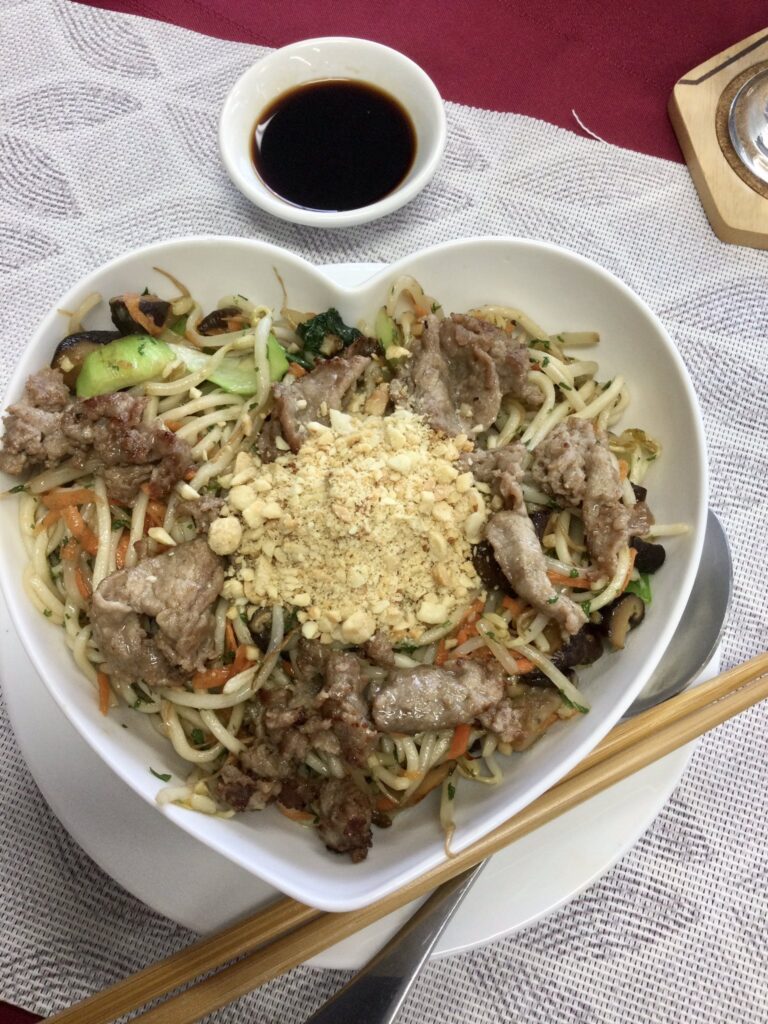
Steven’s lunch at G&T Book Cafe, 30 Spring St., Summerside.
Last week saw the start of public transit bus routes for the western end of PEI but, like so many things that seem new, this is actually something we once had that we just forgot about. There was passenger train service from the 1870s until 1969, bus service from Tignish to Summerside in the 1930s and 40s, and a short-lived bus service in the 1980s. I took the 80s-era bus with some friends exactly once to do back-to-school shopping around 1980, when I was in that sweet spot between being old enough to travel on my own and getting my driver’s licence and, soon after, a car.
I just returned from taking Steven to meet the bus at a carpool parking lot in West Devon. Steven lived in cities with public transit his entire life until we moved to PEI in 2001. He’s never learned to drive, so he relies on me or someone else to take him places. Before this, the closest thing to public transit would be calling a taxi from Summerside, which is $75 one way and so not really viable for anything but an absolute emergency.
The little bus arrived almost exactly on time, he hopped on as the lone passenger, paid his $2 (heavily subsidised by government) fare, and off they went in the direction of Summerside. He’ll do some errands, have lunch, and hop back on the bus to be back in West Devon at 5. He’s promised to pen a guest post to share his experience.
On Tuesday April 25, 1922, five people made their way to Thomas Cahill’s store in Freeland, PEI. A two-story structure that included living quarters, it was the typical general store of its day: a central aisle with two long counters on either side, the goods for sale stacked high on floor-to-ceiling shelves behind. A customer would hand their order to a clerk, who would gather the items from boxes and tins and barrels, write out a receipt, and accept payment or make note of credit. The customer would place the items in a wooden box they brought in from their wagon, or a basket they carried on their arm if they were walking.
Thomas Cahill’s Store circa 1915
While poking around in our basement earlier this month, I found two receipt books from Cahill’s store mixed in with 50-year-old receipt books from the general store operated by my parents, Harold and Vivian Phillips. They bought Cahill’s store in 1946, but from Laughlin “Lin” Murphy, who I believe bought the store from Cahill in late 1922. My parents operated and lived in the old store until 1952, when they built what they believed was the first self-serve general store in rural PEI. That new store had little shopping trollies that customers could put their items in as they made their way along the three aisles of the store. Though my parents were proud of this modern facility, some old timers refused to pick out their own groceries, so the old fashioned service always existed in some form in our store up until they sold it in 1971.
Thomas Cahill had telephone number R5-15 on the Conway line out of the Tyne Valley Exchange, but didn’t include that information on his receipts – not many of his customers had a telephone anyway.
I was familiar with the receipt books my parents used, but Cahill’s books are slightly different in that the receipt lists both the person who was buying the goods and the person who was picking them up at the store. This is double joy for a history buff, more names to make more connections!
It’s a miracle these books made it through three owners and the dismantling of the original store. Little else survives from that store except a couple of photographs, a few drawers from the counters repurposed as wonky workshop shelves by my father, and a gripper device used to quickly reach items on high shelves.
The old Cahill store before it was dismantled in 1952.The house section of the store being moved to Conway, 1952.Inside the old Cahill store when it was being dismantled in 1952. If you look closely, you can just make out the floor-to-ceiling shelves on the far wall. I think this part of the store became part of my grandfathers box mill, and burned in the 1960 West Prince forest fire.
Being spring on PEI, April 25 could have been cold and snowing or hot and sunny, or both over the course of the day! A horse and wagon might have kicked up a bit of dust on sunnier parts of the red dirt roads as they travelled, but could have also bogged down a bit in the swales. If the roads were too muddy, people would have walked or rode a horse to the store.
First to arrive was Joe Kelly, picking up an enormous amount of salt and what was probably a five pound can of baking powder for Clara Gavin. Not sure who she was, but a woman named Sis Gavin was often mentioned by one of my mother’s uncles, and she kept house for William Bryan after his wife died in 1914. Joe Kelly lived not far away from Bryan’s farm, so Clara could possibly be Sis. If I look to the north from our house, I can see the dark outline of the spruce trees that surround Joe Kelly’s house, perhaps the oldest building in Foxley River.
Next was John McArthur, though I’d bet it was really MacArthur, picking up a $4.50 bag of flour, which would have been a 100-pound bag! There was a Malcolm “Mac” MacNeill operating a lobster cannery on the Sandhills at that time, so John could have worked for Mac and the flour was destined to feed the cannery staff.
Next were neighbours and cousins Nicholas and Raymond Bulger, both born in 1902. Perhaps they travelled to the store together. In later years, both of these men followed the well-worn path to the New England states, only returning to PEI for vacations.
Looks like Nick picked up 5 pounds of sugar, some sort of pills, soap, 10 cents worth of candy and some tobacco. The soap was probably something like Sunlight soap, which was used to clean everything. Most country women usually made their own lye soap, but perhaps Mrs. Bulger had run out. Nick had 12 dozen eggs to sell, and got 26 cents a dozen. That sounds like a ridiculously low price to us, but would have been good money then, and possibly the only money the family received that week. Cahill probably took most of the eggs he bought from his customers into Conway Station and sent them on the train to be sold in Summerside.
I think Raymond bought 10 pounds of wire nails at 6-and-a-half cents a pound, 1 pound of twist chewing tobacco, and three large boxes of wooden matches. With matches, tobacco, twist and candy, the boys would have a jolly ride back to Foxley River!
The last customer recorded on that Tuesday was Ferdinand “Ferdie” Kilbride, a neighbour of the Bulger boys and one year their junior. Try as I might, I can’t for the life of me make out the two items that Ferdie bought. The first was a bottle of something or other, and the second is a big mystery. Let me know if you can read this scrawl. [Update: an eagle-eyed reader suggests that the first item is “1 bottle witch hazel”, and I agree!]
If these folks, most of them close neighbours related by birth or marriage, had bumped into each other on their trip, there would have taken plenty of time for a chat to catch up. The weather would be finely dissected, preparations for crop planting compared, updates given on family here on PEI and in far-flung Boston or Toronto. In the distance they might have heard the surf breaking on the Sandhills like I could this morning, heard the robins and chickadees calling. The young men might have been planning what fun they would be getting up to on the weekend!
Peter Bulger’s descendants still farm his land, and Bulgers and Kellys are well represented in our community. I worked for Thomas Bulger’s grandson on the same farm Thomas owned. Sadly, the last Kilbride to live in Foxley River died a few years back. The Bulger, Kelly and Kilbride families came here from Ireland in the 1830s, so the disappearance of an original settler family name is especially poignant.
I had no idea these books existed, so was pleased and excited to find them. All these people came back to life in an instant, their movements through the landscape I know so well, the challenging lives they lived in the backwoods of PEI. An enviable time, in some ways, simple and straightforward, but still before the miracles of antibiotics and electricity, and with one terrible war behind them and one lurking in the future. There is certainly no ideal time to have lived, and I’m content with the here and now, but oh how I would love to have spent five minutes in Thomas Cahill’s store catching up with my long-gone neighbours.
Canton Becker has released a 1,000,000 hour long song today for Earth Day, on cassette tape, of course! You can randomly skip to a section that no one else has heard before and name a 15 minute section. Here’s Squeaky Ducks on a Summer Evening at around hour 695,203 for your listening pleasure.
I spent part of Earth Day cleaning out a pond in the decommissioned gravel pit on the land we inhabit, gently replacing frogs I stirred up and waving at the one butterfly I saw, seagulls, crows and blue jays wheeling and calling above it all. It was warmish in the late afternoon sun, and I was content in a way I never am in any other place. Water, trees, sky…that’s really all I need.
My father always carried a notebook and pen in his shirt pocket, even after he retired. At the same time my parents were running their general store, he was also a partner (with his brother) in a garage and car dealership, and he delivered propane gas. There was a lot to keep track of.
I came across a tiny notebook of his the other day that I had never seen before. He had used it to record the sale and delivery of electrical appliances he made in 1958-59, when electricity first came to our area. Inside, in my father’s case-ignoring scrawl, are notes that seem to be for warranty purposes. My mother says he was busy for weeks as house by house was connected to the grid. He would hook up the televisions, install the aerial (I have a box of vintage cable hooks, if you need some!), and help everyone find the probably only one station available! He would explain how to set the dial on the washing machine and how to use the ice-less ice box.
My parents built both a new store and a house next to it in the early 1950s, both optimistically wired for the electricity that they expected to arrive some day. As the volts and watts inched closer through the neighbouring communities, my father was dreaming of the benefits for their store. They could get a new gas pump, so no more pumping by hand.They would be able to install better lighting, coolers and freezers. They had a gas generator to charge a bank of batteries in the store basement for a bit of lighting and to run a tiny freezer, but the generator was noisy and temperamental, so would not be missed.
They could also sell all the things a modern home owner would need: refrigerators, washing machines, televisions, radios, lamps, clocks, toasters, coffee makers, irons and kettles. Knowing my father, he was adding up the sales in his head all the time.
Unfortunately one of the local worthies wasn’t in favour of electricity. “It’s too expensive for people, they can’t afford it. We’ve always gotten along without it, we don’t need it,” he would say, and as this fellow was a Big Deal, Freeland was not going to get electricity. Ever. Or as long as he was alive.
Not one to be kept back from either progress or commerce, my father got up a petition and collected enough signatures to convince the electric company to put the lines through. My mother told me today that Mr. Big Deal was one of the first to sign up, of course! Pretty much everyone eventually hooked up to the electricity, though my parents continued to sell oil lamps, lamp wicks, and kerosene alongside the electrical items even into the 1970s, when they sold the store.
While the whole family would enjoy the televisions and radios and electric lights, and certainly there would also be improvements for both farmers and fishers, women probably derived the most benefit from rural electrification. No more cleaning and filling kerosene lamps or beating rugs. Refrigerators and freezers meant replacing the blood-pressure raising staples of salt meat and fish with healthier fresh and frozen options year round. The back-breaking labour of washing clothes would be eased with an automatic machine, and ironing became a breeze.
It was fun to look at all the familiar names in the notebook, see what they bought, and imagine the excitement when those televisions and washing machines first sprang to life. All of the people in the notebook have passed on, so I hope they’ll forgive me for publishing the serial numbers of their also long-gone Philco TVs and Firestone refrigerators for all to see.
I had a very intense and traditional Christian education as a child, and spent a lot of time reading the Bible (my party trick is reciting the books of the Bible in less than 30 seconds!). When I left Christianity behind, the Bible happily went with it, though that knowledge came in mighty handy in university english literature classes and trivia quizes.
I never got much lasting inspiration from the Bible, finding the formal language of the King James Version I was raised with impenetrable, only reinforcing the stark realization that finding a personal relationship with the Creator wasn’t possible for me through Christianity.
I did always slightly envy those who found great comfort and strength from the Bible, not least my mother, who hosted a weekly study group in our house many years and has recently been watching online Bible studies on YouTube. It seemed a handy source for instant comfort and help, Bible verses at the ready for all situations and challenges.
A few years ago I gathered the scraps of quotes, poems and inspirational bits and bobs I had floating about in various notebooks and cubby holes and decided to plonk them all in one place for easy reference, create my own Bible, something I could go to for inspiration and guidance and succour. There are poems, quotes from spiritual leaders like Thich Nhat Hann, things I heard on podcasts or movies, excerpts from novels, and even a few Tweets.
Whenever I read or hear something that makes me sit up, open my eyes a little wider, slow down and think, “this is important, I need to remember this”, I pop it in my green-covered notebook, knowing future me would want to feel that same tingle and joy again and again.
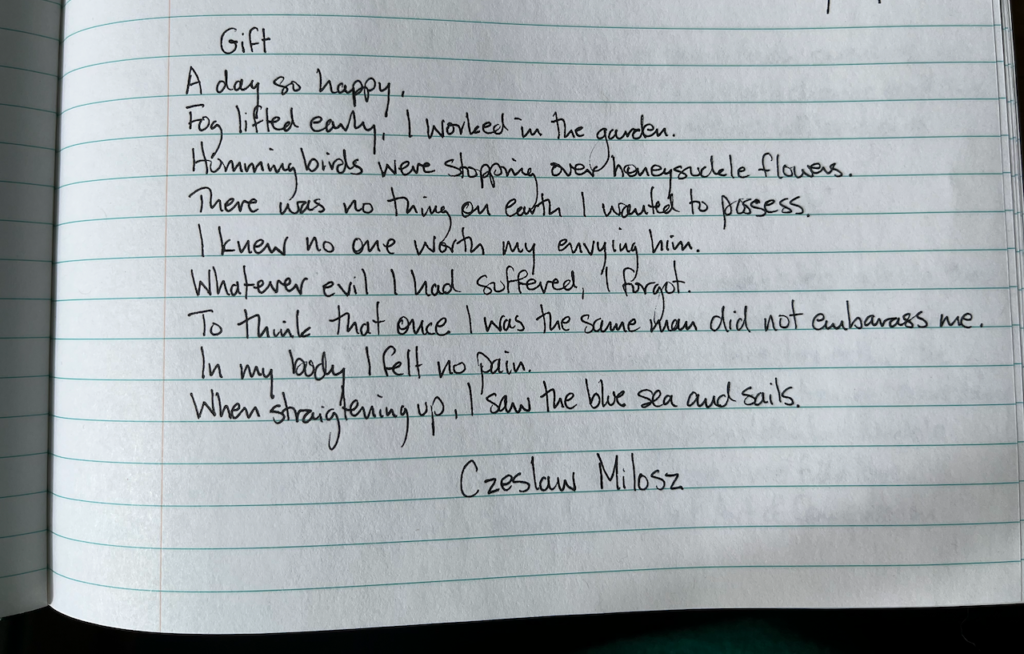
I try to pick up my little book every morning and read whatever comes next, my own form of non-secular Bible study. Today was a poem from Nobel laureate Czeslaw Milosz.
I remember first reading this poem and sinking into the simple peace and harmony he so beautifully described. Milosz reminds me of why I love to garden, getting lost in the moment of standing in the solid, red dirt under the limitless sky next to a river, everything in its place, thinking of nothing but the life all around me. Perfect happiness.
Consider writing your own holy book, or unholy book, your choice. For as it says in the book of Thelma, Chapter 3, Verses 7-9:
Do it, all ye who have strayed from the narrow path to stumble about in the wide world. Write the Book thou wouldst wished to have been given when first ye asked the good questions and received only poor answers. Making thine way in the world today takes everything thou’s got, taking a break from all thine worries sure would help a lot. Cheers/Amen.
I’ve been a Setapp subscriber for a few months now. MacPaw, the company behind the Setapp service, are a Ukrainian company, something I only learned since the Russian invasion on February 24. MacPaw took many steps to protect their services, and are now using their apps in innovative ways to communicate to their clients and make their voices heard, like this release note for an update that basically was, really, just this note:
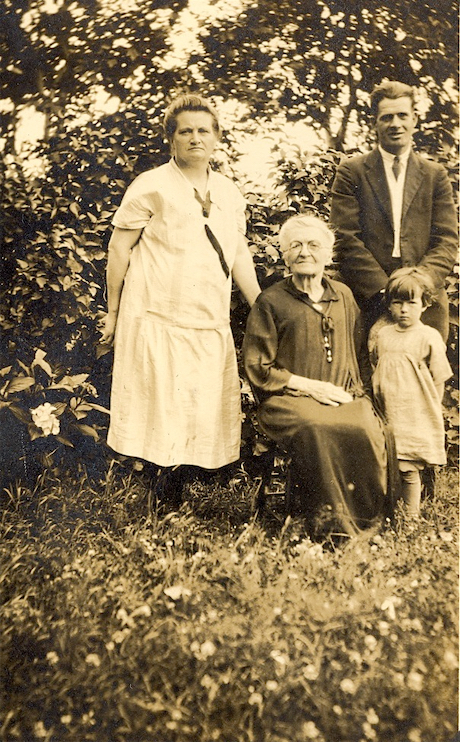
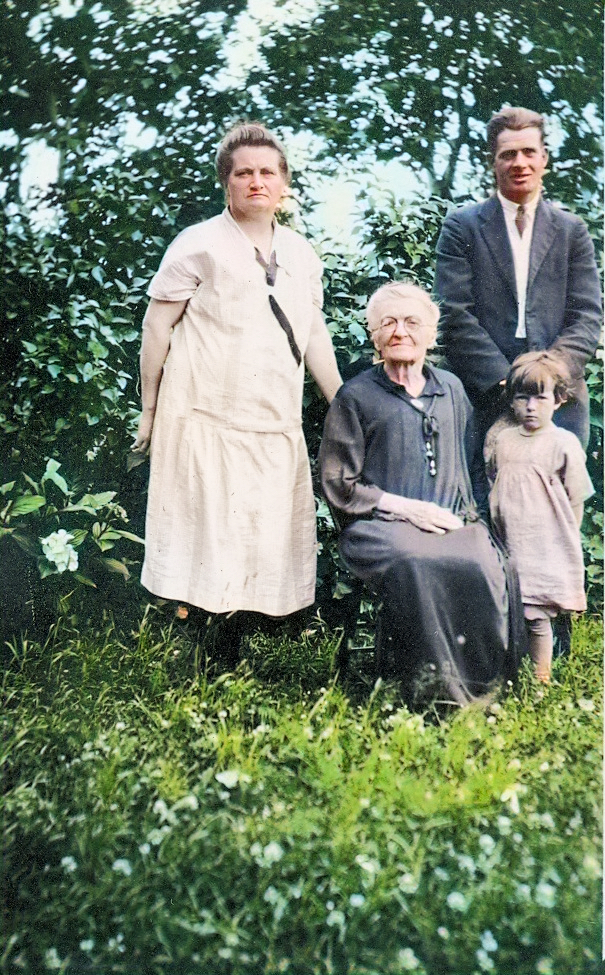
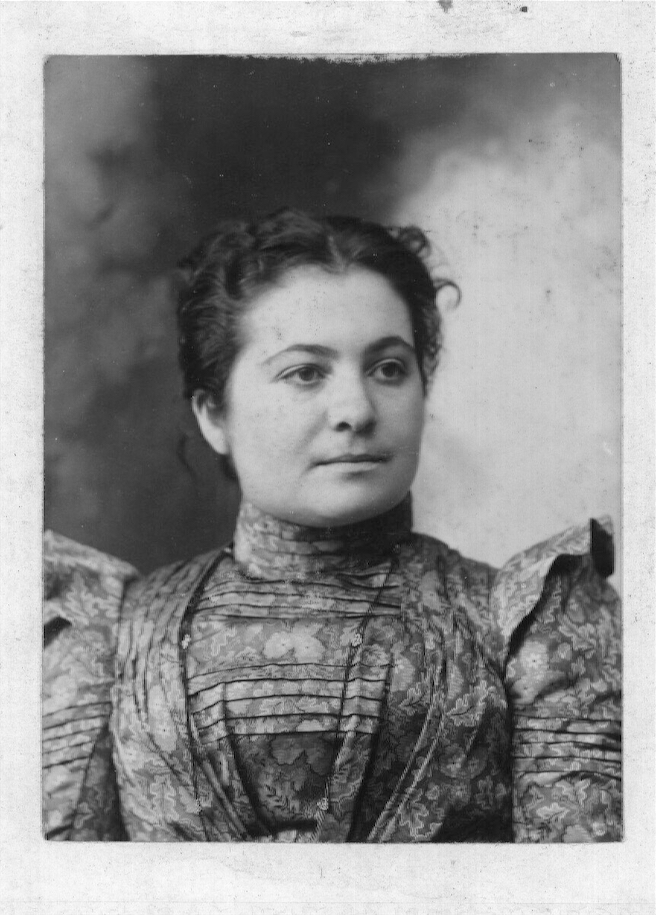
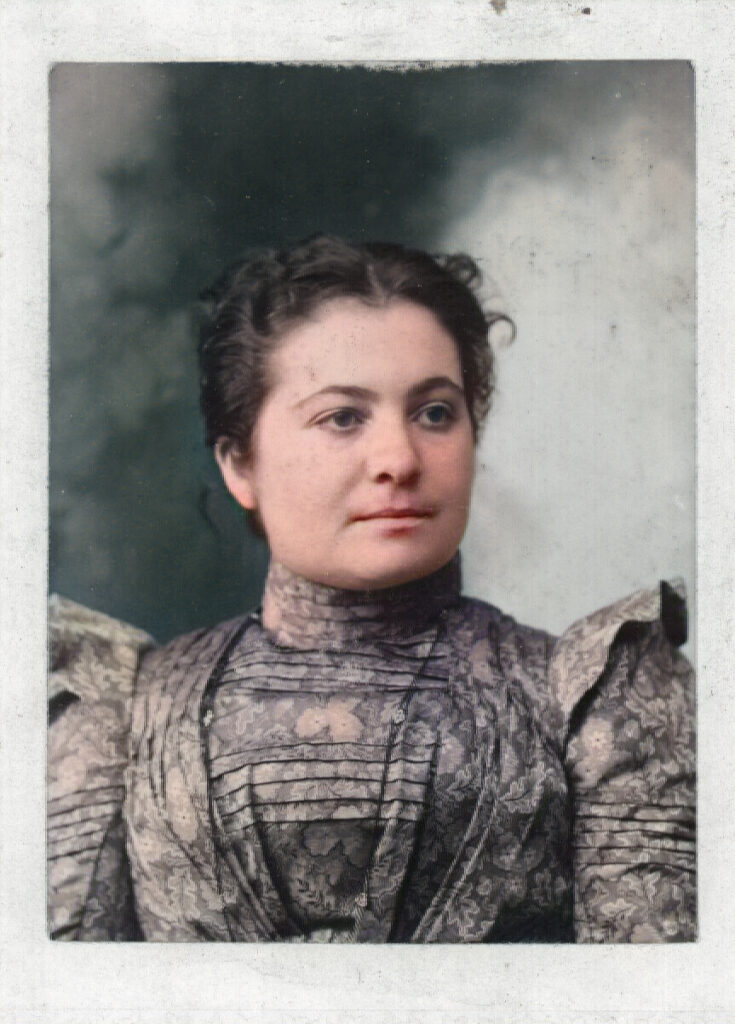
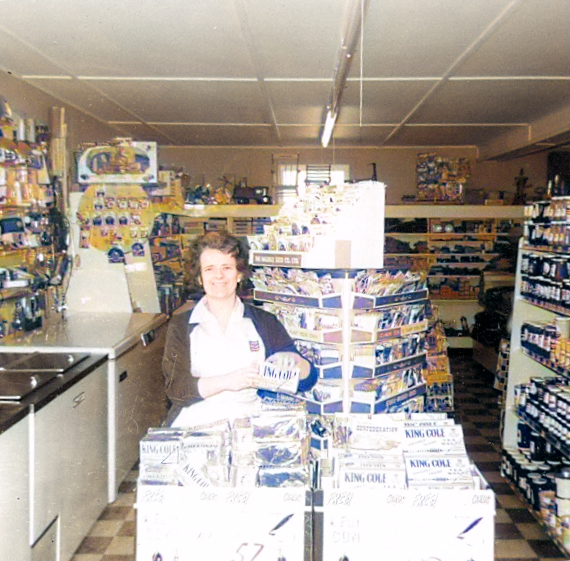
A new app showed up on the Setapp service this week, PhotosRevive. It promises to colourise black and white photos using some AI hocus pocus. I popped some photos in to see what it could do, and the results were mixed, but interesting.
From left to right: my great-grandmother Eva Hardy, great-great grandmother Martha Sharp, grandfather Wilbur Hardy and my mother Vivian Phillips, probably taken in 1927. The older folks look pretty good, my little mother looks a bit ghostly.
My great-great aunt Florence Arbuckle, twin sister of Eva Hardy. She was married to a doctor and quite well off, so could afford beautiful beautiful clothing like the dress she wears in this photo.
My mother Vivian and her Uncle Elmer Hardy. The app handles foliage really well.
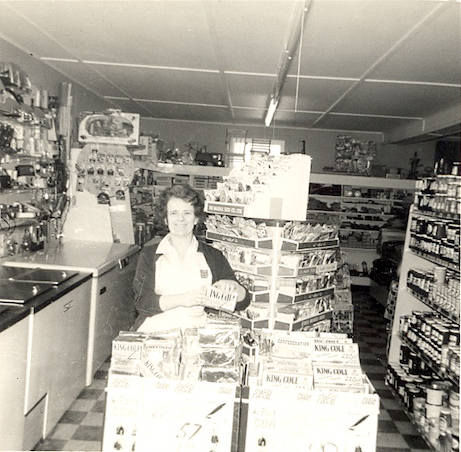
My mother in my parents’ general store in 1966. Pretty sure they didn’t just sell blue and yellow products! She’s holding a box of King Cole Tea, which has always had an orange and green theme. I think they won an award from the tea company, so this was a publicity photo.
You can tweak the PhotosRevive settings to make things look a bit better, but I’ve not had time to play with it yet. I like black and white photos, or am at least used to them, so probably wouldn’t have gone looking for this, but it’s a fun addition to the Setapp universe.
I’ve added a page to my site to track the regeneration of birch bark trees that were first harvested in July 2021. I’m told it will take about five years for the white bark to remerge, so I intend to photograph the trees every six months to document that process.
It’s been interesting to watch the bark change from a light soft leathery feel to dark and hard. The trees did not bleed and I didn’t notice any difference in the leaf drop in autumn. While the trees probably wonder where the bark went, they seem to be just getting to work and growing more bark!
I believe some of the harvested bark is included in quillwork pieces that are part of the exhibit called Matues Revisitedthat is on until March 13, 2022 at the Mary E. Black Gallery in Kjipuktuk/Halifax, Nova Scotia. I told the trees this news, and they nodded and swayed in appreciation.
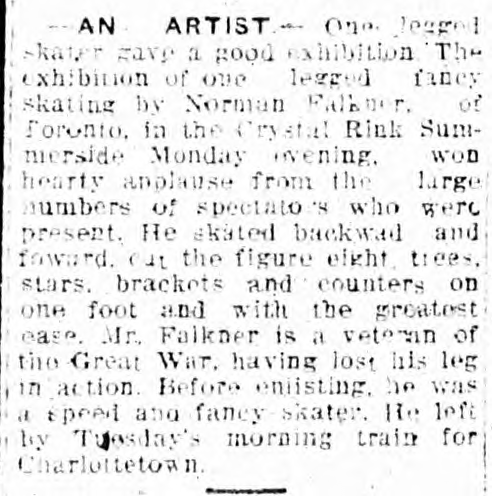
Thanks to the Skate Guard blog for filling in the blanks about Norman Falker, who entertained the good people of Summerside 100 years ago this week. He lost his leg fighting at Vimy in the First World War, survived a harrowing trip back to Canada, and went on to have a career as a professional skater and skating judge, living into his nineties.