Arrows, Xs and masks will certainly be the most memorable symbols of the COVID-19 pandemic for me, but so will these little official-looking squares found in many disposable mask packages. 65%, 35%, 85%…better wear two.


Arrows, Xs and masks will certainly be the most memorable symbols of the COVID-19 pandemic for me, but so will these little official-looking squares found in many disposable mask packages. 65%, 35%, 85%…better wear two.
I have been recording my comings and goings for COVID-19 tracing purposes for two years, but continuing to do so seems pretty pointless now that mask and physical distancing restrictions have been mostly eliminated. With so many cases and wide community spread, it would be difficult for most people to figure out where they got COVID-19.
Unlike the beginning of the pandemic, where everything stopped so public health office press conferences could be watched, no one but the most vigilant are still keeping track of case numbers and infection rates. It feels like the pandemic is over, as the media revert to covering other disasters. People are still getting sick from COVID-19, though, and the health care system is still groaning under the pressure.
When I visited the Summerside public library last week, the librarians were pulling large yellow physical distancing stickers from the floor, not with jubilant whoops and hollers, but by rather solemn, determined effort, pulling and scraping. I remarked that it was an historical moment, and they agreed. We were all still wearing masks.
When will I stop wearing a mask? I suppose when case numbers are closer to zero than they are now, but I have no idea. Everyone in my household has been vaccinated and boosted, but we still wear masks when we go out, and keep our contacts small, all because of my mother’s advanced age.
Masks took on a symbolic role beyond their practical use during the pandemic, and their meaning seemed to morph. Before they became mandatory, they were viewed as a way to not only protect yourself but also showed that you cared enough to protect others and keep the health care system from collapsing. When they became mandatory, they became symbols of oppression and an erosion of freedoms by overreaching governments.
Now that wearing masks is a matter of choice in most public places, it will be interesting to see how people view them. I know a woman in her 50s who has lived with complex allergies and a compromised immune system for decades, and she says she has never felt safer out in public in her entire life now that wearing a mask has been normalized.
Perhaps the mask will become a symbol of acceptance, that we need to think of the needs of others, even (and perhaps especially) if they are hidden. Someone wearing a mask who looks hearty and hale might in fact be vulnerable, and they need to be treated with tenderness. I hope the tolerance and acceptance I see now of choosing to be masked or unmasked will spill over into other aspects of society, in accepting and embracing people of other racial, gender or religious identities.
Maybe the mask, most often used to hide and protect, will become a way in which we better see each other and our needs, a reminder to not rush to judgement.
So, my COVID-19 tracing logging, which admittedly got a little lax in the past couple of months, is over, and the notebook will be repurposed to remind me of the things I need to do rather than the places I’ve been and the people I’ve seen.
Yesterday I had two DIY victories. One was repairing a bathroom sink that wouldn’t hold water when the stopper was in place. Turns out it was easily fixed by undoing the nut underneath, lifting the drain piece up, removing the disgusting plumber’s putty that had started to disintegrate, putting a generous amount of fresh putty around the drain, and reattaching the whole thing.
The other repair success was a burner on our Maytag MGS5770 gas stove that was sometimes difficult to light. A repair person who fixed something else on the stove a few years ago said the whole burner would have to be replaced, at a cost of $50-$75 for the part plus a $75 service call, but it wasn’t bad enough to bother with that expense and faff.
My list of home repair projects has benefited from the latest pandemic advice to stay at home, which we have been doing since before Christmas anyway, so I decided to tackle this burner. When cleaning the burner holes didn’t improve anything, I examined one of the other burners and observed how the spark from the electrode lit the gas coming out of a hole directly under it. On the faulty burner, that electrode was ever so slightly twisted, perhaps a couple of millimetres off, so I took a pair of pliers and gently twisted the electrode so it pointed directly down over that hole. It worked perfectly, and now the burner lights immediately and much more safely.
As these little niggling projects had simmered away in the background for years, they weren’t obviously going to massively change our lives, but the small victories were satisfying and very much felt like putting things in order in a disordered world.


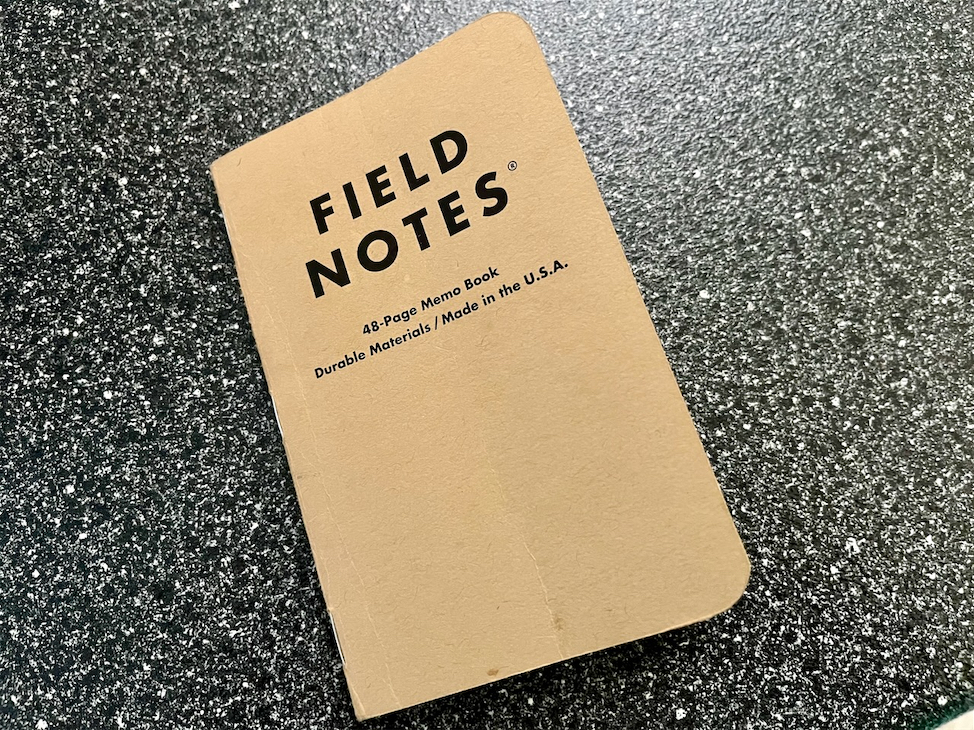
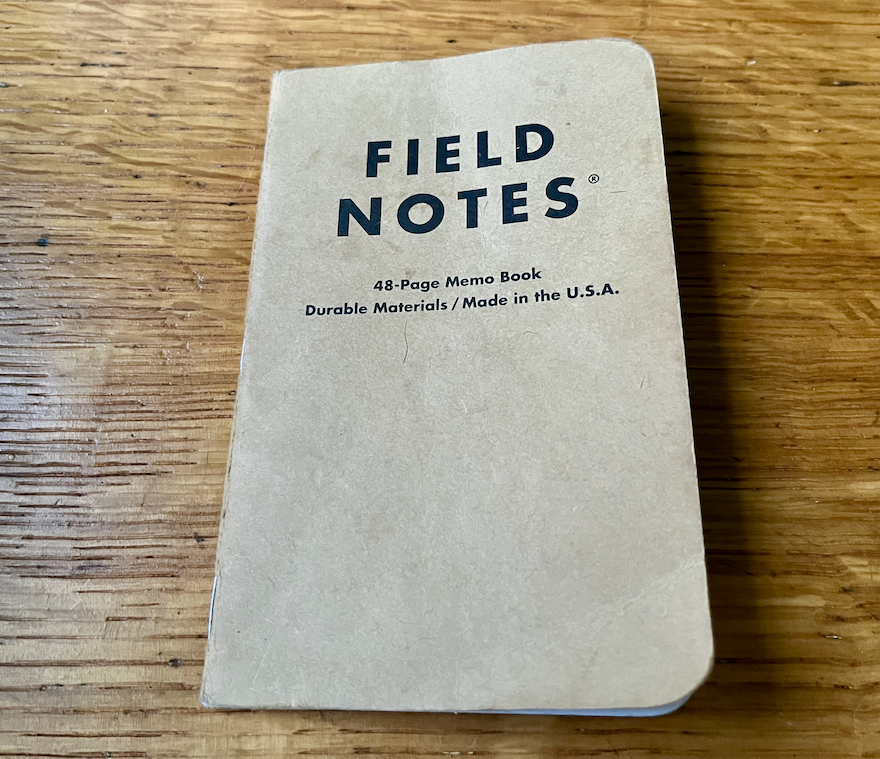
Putting to bed my second little note book where I recorded my comings and goings in case I needed to do COVID-19 contact tracing. Our chief public health officer suggested we do this in the early weeks of the pandemic and I stuck to it, for the most part. I have long kept a brief daily journal as well, recording weather conditions and highlights of the day, but this little pandemic record is all about practical movement and contact, not how I felt and experienced life.
While I would tell anyone who asked that I live in a remote place and don’t see that many people, I have filled 48 pages since May 2021 with my interactions and gadding about, both the well-worn paths to the grocery store, Samuel’s Coffee House and the homes of friends and family, and the unique experiences of harvesting birch bark with new friends and sitting with my mother in the hospital.
In a couple of weeks, once my chance of being a superspreader has hopefully passed, I will set this little record down under a pile of branches in the woods to melt back into the earth, as if it all had never really happened.
It didn’t say what they did at the Georgetown PO to keep the mail-seeking crowds away, but a polio outbreak meant strict public heath measures were in place across PEI 75 years ago. Vaccination has nearly eradicated polio worldwide, but there are still a few cases every year in Afghanistan and Pakistan.
I had a great-uncle who had polio, which left him with with he called a “crooked foot” and unable to do many things. He would have an interesting perspective on COVID-19 anti-vaccination protests.

By coincidence, today finds me being more Presbyterian than I have been in, well, forever. I was baptised and confirmed in that denomination, and my mother remains a steadfast adherent, but I stopped going to church in my teens when I received unsatisfactory answers to good theological questions. That was an upsetting decision for my parents, and I’m sure my mother hopes I will return someday. I can’t see that happening, but I learned, probably too late in life, to never say never.

In my ongoing whittling down of the stuff in our basement, I decided to send some copies of The Presbyterian Record from the 1950s and 60s to a better home. The national church archives had a complete set, but a church museum in Toronto said they could use them. These sat in the basement of our old house for four decades and in this house for nearly twenty years, and no one has even looked at them. It has taken all my willpower to not start reading them as I box them up as I’m afraid I will find some reason to keep them.
In other Presbyterian activity today, my mother’s church forwarded their annual report to her via my email. My mother has happily been the treasurer of one of her church groups since 1947, and her short report tidily sums up her long memory, the quiet deeds done by people of faith, and the once-in-a-generation-or-two impact of this pandemic.

This has been a challenging Monday morning, plans abandoned as priorities changed quickly.
I decided to take a few minutes to recalibrate and finsh reading a library book so I could return it tomorrow. I found this little note on the back of a library slip which, by the March 31 due date, means it was likely written just as PEI started to lock down and we searched for ways to express our concern for each other in this new COVID-19 time. I went from feeling resentful and harried to feeling present and calm in the space of a few seconds, the powerful combination of surprise and words bringing me back into my body and helping me to feel peaceful. The twists and turns of life never cease to amaze me.

I speak robin now. I’ve heard them singing outside my window my whole life. They wake me up and they lull me to sleep. It’s only this spring that I have finally been able to understand what they are saying.
The dawn chorus is easy. They are calling out to find a mate, to show they own a patch of forest or meadow. I am here, where are you? I’m the best, bet you are, too!
Right now the robins who nested in the red pine tree in our yard are busy all day finding food for their newborn floppy-necked babies. They still find the energy to sing morning and night. This is who you are, you are a robin. Every ounce of me honours every ounce of you.
In this time when we are thinking and talking about breathing and not breathing – don’t get sick, don’t make others sick, I can’t breathe – I stop breathing, and then I hear my life-long friend the robin:
Look up, this is all there is. Now, this is all there is. See, it’s gone, but you can catch the next now. Now.
Breathe.

My mother and I drove to our hairdresser’s house this morning at 8:30. The five minute drive takes us past almost all the places my mother has ever lived: her father’s house; the house she and my father built between her father’s house and their general store; her grandparents’ house at the corner of the Barlow and Murray roads. It was a gorgeous spring morning and our little EV slid along by farm fields and water.
We were our hairdresser’s first customers since mid-March. Mom and I donned our jaunty new cotton masks and waited in the car for Joy to wave us into her house. We sanitized our hands, ticked some boxes on a form saying we were not ill and hadn’t travelled outside the province, and descended the stairs into the salon. It’s always clean and tidy, but today it was absolutely sparkling! We had already washed our hair at home, as requested, so she just spritzed us with water and started cutting.
I’m not really that wrapped up in how I look – I am all about comfort, and my hair felt horrible and messy – but even I will admit it was great to look like myself again (Steven said my hair looked a bit like Jim Jarmusch’s earlier this week, so that needed to be fixed!). After we left, our hairdresser would have to clean all the surfaces we touched and get ready for the next customer, over and over all day. She is happy to be back to work, and we are grateful she has stayed in business.
Buried in the early shock of the COVID-19 pandemic shutdown was the exciting announcement on March 13 that areas of PEI with poor internet access would be getting proper high speed service by the end of June 2021.
We’ve been down this road a couple of times before and have been disappointed that it never came our way, but this time there are maps and lists and even talk of fibre op! We moved from dialup to 1.5 Mbps “high speed” at the end of December 2009 and that seemed like a miracle; 10 years later, it doesn’t seem as shiny and lovely. Here’s a speed test tonight:

For this “unlimited high speed internet” plus our home landline and my ancient phone plan (from 1999!) that doesn’t have any data OR texting, we pay $212.

If this promise of internet Nirvana wasn’t exciting enough, along comes Elon Musk’s SpaceX Starlink service, a plan to place thousands of satellites in low Earth orbit to make broadband internet available to the whole world by the end of 2021. Some of the satellites have been launched and are visible at night as a line of lights moving across the sky. They will be swinging by PEI tonight at 9:25 p.m., so I’ll be out having a peek at the future.